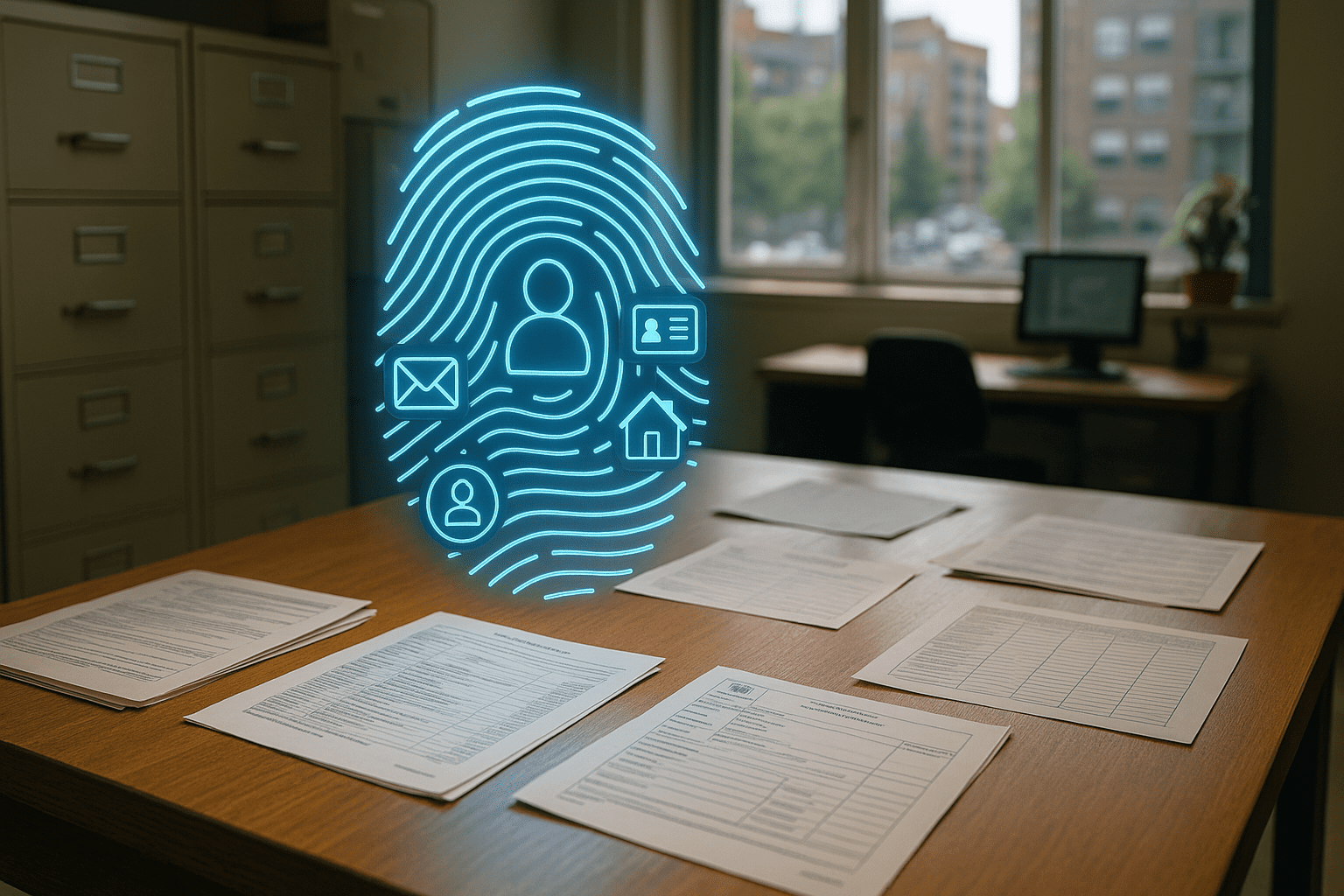
Public records have traditionally been boxes of information containing names, addresses, birth dates, and sometimes other identifiers that verify who individuals are. Over the years, these records have served as trusted sources for identity confirmation across government, business, and social services. Yet recently, the nature of data in these sets has expanded beyond the old formats. Biometrics, such as fingerprint patterns, facial recognition images, and iris scans, are progressively being integrated into public records, adding a richer, multi-dimensional layer of identity data.
The Quiet Arrival of Biometrics in Everyday Records
Biometric data itself is not entirely new in official contexts. Law enforcement and security agencies have long depended on fingerprints and other physical markers to identify people. Even so, these uses were normally confined to specialized, closed systems rather than broader public databases. What is notable now is the gradual merging of biometrics into public records that serve a wider range of civil and administrative functions.
This slow but distinct migration has been enabled by advances in technology. Sensors that capture biometric traits have grown more affordable, efficient, and easier to integrate with existing digital record-keeping. Alongside this, the growing urgency to combat fraud and identity theft has pushed agencies to seek more reliable methods of confirming identities. Textual information alone can sometimes be misleading or forged, but biometrics offer a unique biological signature, one that is harder to replicate or tamper with.
Real-World Examples of Biometric Expansion
Looking beyond theory, we see biometrics becoming increasingly visible in everyday public record scenarios. Airport security uses facial scans and fingerprint readers to track passengers, feeding into patterns of public record updates, even if indirectly. Some states incorporate biometric details, like photographs or fingerprints, into driver’s license databases. Certain voter registration systems now include facial images to minimize duplicate or fraudulent registrations.
These integrations do more than add another data point. They represent a significant shift toward anchoring identity on physical traits rather than solely relying on memorized or paper-based identifiers. In government services, where verifying identity is often the gatekeeper for social benefits, voting eligibility, or professional licensing, biometrics introduce a level of precision that textual data generally cannot guarantee.
Ripple Effects on Verification and Trust
The practical consequences of embedding biometrics into public records show up in various ways. Agencies benefit from stronger confidence that the identity presented belongs to the actual individual, which can reduce misuse of stolen or fabricated identities. For lenders, employers, or social service providers, enhanced verification means fewer cases of fraud slipping through checks based only on snapshots of history or personal documents.
Besides improving security, biometric verification can accelerate processes by reducing the need for extensive manual reviews. This helps in situations where quick, reliable authentication matters, such as emergency relief distribution or airport check-ins. Yet, the introduction of these technologies is not without hiccups. Biometric data capture can sometimes suffer from technical issues-lighting, angle, sensor quality-and biological changes over time, like aging or injury, can complicate recognition efforts.
Moreover, managing this type of data across interconnected systems raises questions about how to keep records updated and synchronized. If biometric information becomes fragmented or duplicated in different databases, the benefits of increased accuracy could be undermined by confusion or errors.
The Uneasy Intersection With Privacy and Oversight
Biometric data, by its very nature, carries special privacy concerns. Unlike a password or ID number, biometrics are intrinsic to the individual and cannot be replaced if compromised. The stakes therefore feel higher when this information enters publicly accessible or loosely regulated spaces.
Policy and regulatory frameworks around biometric data collection and use vary widely. Some jurisdictions enforce strict rules requiring consent, secure storage, and limits on sharing, while others have more permissive environments. This patchwork leaves room for debate about what responsible stewardship looks like in practice and which safeguards are essential to protect individuals.
Privacy advocates like the Electronic Frontier Foundation have raised alarms concerning expanding biometric databases, stressing the need for transparency and clear boundaries on how this sensitive data should be used. At the same time, official government pages such as USA.gov’s identity theft resources guide individuals navigating this evolving landscape, offering advice on protecting personal identity from misuse.
Seeing the Landscape Without Projections
>The integration of biometrics with public records is unfolding unevenly across regions and service areas. Some agencies embrace it fully, while others proceed cautiously or selectively. Observing this pattern is valuable for understanding how identity verification systems may develop in complexity and capability, balancing security with individual rights.
Standards-setting efforts like those spearheaded by the National Institute of Standards and Technology’s biometrics program offer a glimpse into the careful groundwork underway to make biometric data reliable and interoperable. Meanwhile, transparency initiatives and private sector policies continue to shape how biometric information is collected, stored, and shared.
On a broader level, the move toward multi-layered identity systems that mix biometrics with more traditional data reflects the real-world complexities people face when proving who they are. While convenience and verification accuracy stand to improve, so too does the imperative to watch closely for risks around privacy loss, data misuse, and exclusion.
In essence, the story of biometrics joining public records is about a broader cultural negotiation. How to bring emerging technologies into longstanding social institutions in ways that serve public interests, recognize evolving threats, and respect individual dignity. It is a quiet transformation happening behind the scenes with effects that reach deep into how identity will function in society for years to come.
Sources and Helpful Links
- Electronic Frontier Foundation providing analysis on biometric privacy and policy concerns
- USA.gov Identity Theft Resources, a government guide on protecting identity information in a digital world
- NIST Biometrics Program, detailing standards and research on biometric technologies