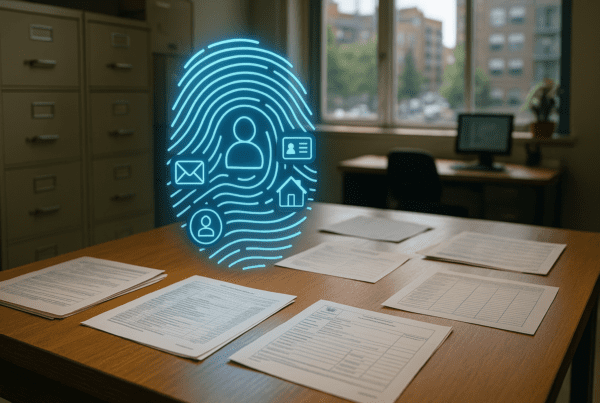

Public records and people search databases have always been riddled with data mismatches, incomplete entries, and inconsistencies. For anyone trying to verify an identity or reconnect with someone, these discrepancies create frustrating and sometimes misleading experiences. As technology evolves and expectations rise, the methods to handle these data issues are changing too. New strategies are being introduced that prioritize the realities of disjointed data, while blending sources more thoughtfully to reflect the complex nature of identity.
When Records Tell Different Stories
One of the most persistent challenges in people search is data discrepancies. A single person can appear in different records with variations in their name, address history, or even contact details. These differences are often due to changes over time, typographical errors, or diverse reporting standards by various agencies. For example, a John A. Smith might show up alternatively as J. Smith, Jonathan Smith, or even with a middle name mistakenly swapped into the last name field. Addresses often suffer from outdated information or different formatting styles, complicating automated matching.
Such irregularities may seem trivial, but they compound quickly when systems rely on exact matches to present results. Tools that haven’t adapted well to this complexity tend to either under-deliver-missing relevant matches-or over-deliver with irrelevant ones. The result is often a collection of records that leaves the user wading through noise rather than gaining insight, a problem that has long frustrated those handling sensitive searches for background checks, reconnecting with old contacts, or verifying facts.
Looking Beyond Simple Matches
Traditional people search engines focused on straightforward comparisons of names, birth dates, or social security numbers. While these elements are foundational, new approaches are layering in more nuanced signals. One growing trend is using relational data to supplement individual records. This means the system doesn’t just consider one identifier at a time, but looks at how people relate to households, employment histories, or associate networks.
For instance, knowing someone lived with a particular household or is connected to certain phone numbers lends extra weight to matching decisions. By incorporating these relational data points, search platforms can use probabilistic matching methods. These methods assign a confidence score to matches based on a broader context. It acknowledges that no record is perfect but multiple overlapping clues can produce a clearer picture.
In practice, this often reduces false positives and helps filter out similarly named individuals who might otherwise appear indistinguishable. It also supports queries where users may only have partial information, such as an outdated address or ambiguous name spelling.
Harnessing Machine Learning Without Losing Grounded Reasoning
Machine learning has entered public records search with promise, but its success depends a great deal on how it is implemented and trained. Unlike generic AI that processes vast amounts of data with little oversight, people search benefits most when machine learning models are trained with specific rules informed by human expertise and grounded in real-world data behavior.
The complexity lies in the fact that identity signals behave differently across demographics, regions, and data sources. A name matching rule that works well in one state may fail in another because of cultural naming conventions or varying data collection standards. Expert-guided learning models incorporate these subtleties explicitly.
Meanwhile, some platforms use adaptive algorithms that improve over time by learning from user corrections and confirmations. This feedback loop helps calibrate matching thresholds and reduce systemic biases. In the end, it’s less about trusting algorithms blindly and more about enhancing human judgment with smart, adaptive tools.
The Role of Transparency and User Control
As matching becomes more automated and opaque, users risk losing track of why or how particular results appear. A responsible people search strategy includes transparency about data provenance and matching logic wherever possible. This means allowing users to see which records contributed most to a match or why certain discrepancies were overlooked in favor of others.
Giving users control to adjust matching sensitivity or exclude certain data sources enriches the experience and builds trust. It respects that different searches have different thresholds for certainty-what might be acceptable in a casual reconnect versus a formal background check varies significantly.
This approach also nudges platforms to maintain cleaner data ingestion practices and invest in better record verification upfront. When discrepancies must remain, they are flagged clearly rather than hidden, allowing informed decisions.
Looking at Public Record Coverage and Collaboration
Underpinning all these strategies is the challenge of public record coverage. No single database has complete or perfectly up-to-date information. Increasingly, platforms look to integrate multiple data sources-government records, utility data, court documents, and consumer databases-to fill gaps and cross-verify facts.
This collaborative spirit often demands navigating varied privacy laws and licensing restrictions. Innovative data partnerships become essential, and they drive new layers of quality control. For example, periodic revalidation from official channels can highlight outdated or conflicting entries, prompting automatic updates or user alerts.
These efforts mirror broader trends in data ecosystems where interoperability and shared responsibility are necessary to improve reliability. They reflect the real-world nature of identity-it is not static or siloed but interconnected and evolving.
The ongoing challenge is balancing this complexity with user-friendly access and reasonable assumptions about data currency. It is no small task but one that continues to attract thoughtful experimentation.
Reflecting on What This Means for Users
Ultimately, people searching is an experience shaped by the limitations of human record-keeping and modern data technology. Understanding the persistent presence of discrepancies prepares users for the kinds of results they might see. New tools may lessen the frustration by interpreting these inconsistencies with more context and care, helping users feel more confident in what they find.
The journey toward better people search will likely involve incremental refinements-a mixture of smarter algorithms, improved data partnerships, and clearer communication. The result should feel less like a maze and more like a conversation, where identity emerges from many pieces rather than forced into a rigid pattern.
Exploring these innovations is a window into how technology can respect human complexity instead of obscuring it behind over-simplified rules. It sets the stage for future tools that do not just search records but interpret a living, breathing web of information in ways that actually help people.
More on these evolving practices can be found in technology and data governance discussions at places like the Federal Trade Commission or the National Institute of Standards and Technology. These organizations highlight ongoing efforts to improve data accuracy, privacy, and identity verification frameworks as foundational pillars in the people search space.
Resources like FTC Consumer Information also help users understand how public records and credit data intersect with identity searches. Meanwhile, sites such as Privacy Rights Clearinghouse offer consumer perspectives that ground these discussions in everyday data use concerns.
The careful dance between data imperfections and smarter aggregation continues to shape the future of people search. The improvements made are not about achieving perfection but embracing the nuanced reality of public data and allowing users better ways to make sense of it.
Each small step forward reflects a deeper acknowledgement that identity is layered, fluid, and inherently difficult to pin down with simple database queries. By meeting this complexity with thoughtful innovation, people search moves closer to serving real needs instead of merely chasing clean data.
Sources and Helpful Links
- Federal Trade Commission – Information on data accuracy and consumer protection related to public records and identity verification
- National Institute of Standards and Technology – Standards and research on identity management and verification technologies
- FTC Consumer Information – Guidance on credit reports and their role in identity verification and public data use
- Privacy Rights Clearinghouse – Resources focusing on consumer privacy and how public data is handled in searches