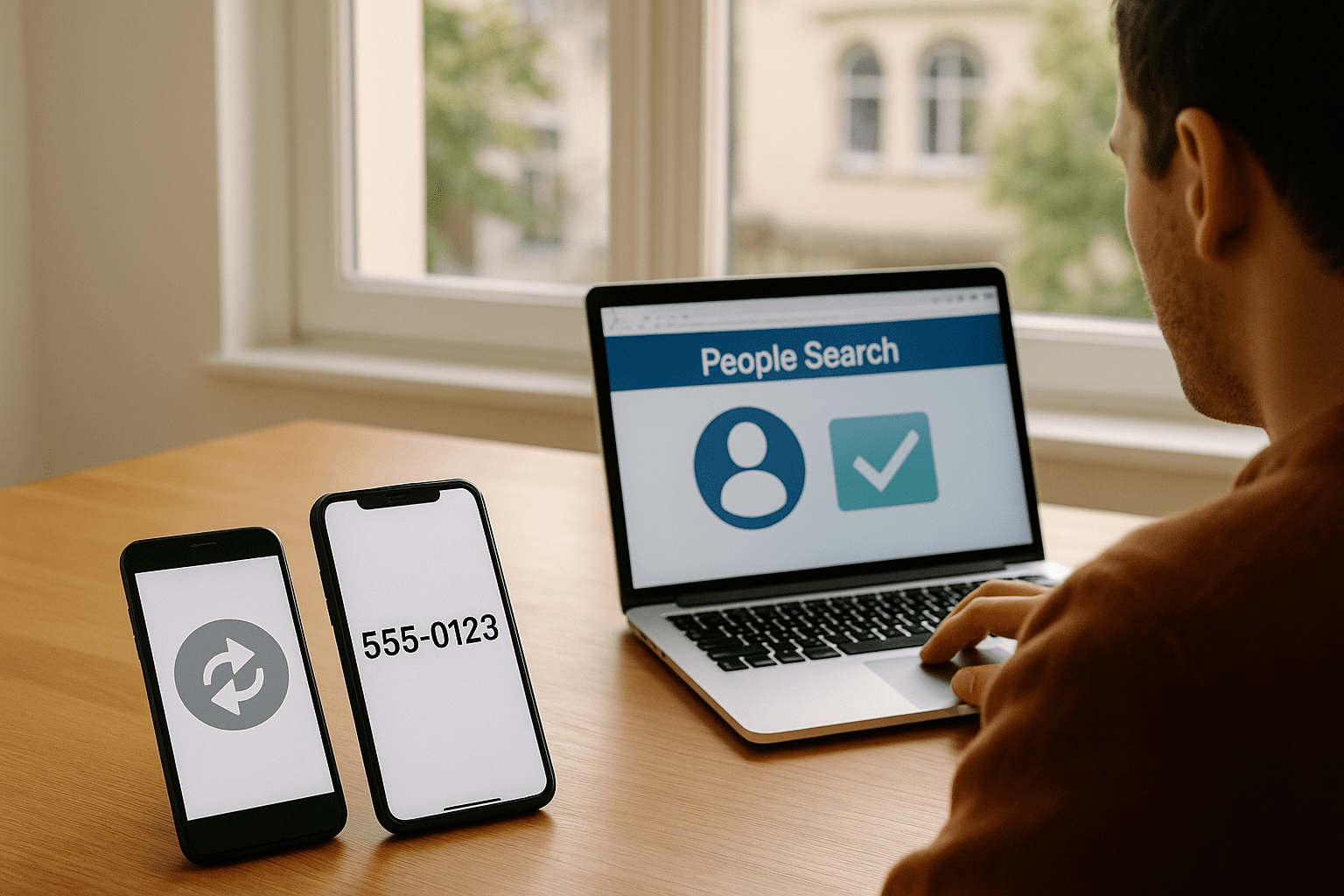
Phone number portability feels like a small convenience when you switch mobile carriers but keep your same number. Yet beneath this everyday benefit is a subtle but noticeable ripple in how identity verification systems and public record matching operate.
How phone number portability changes what contact data tells us
Traditionally, phone numbers carried more location and service information than they tend to now. When someone had a particular phone number, it often indicated which carrier they used or even the region they lived in. Systems designed to match records relied on this connection, both to verify identities and to link disparate datasets reliably.
With the ability to port numbers from one carrier to another, this geographic and carrier-based link begins to weaken. The same number might bounce between several providers over a few years or stay with a customer who moves to a different state, confusing attempts to tie the number to a fixed identity or address. Public record matching algorithms that once assumed stable, location-linked phone data confront ambiguous or stale signals.
Why this matters for identity checks in practice
Phone numbers remain a primary layer of verification in many identity processes – whether for consumer lending, rental applications, or background checks. They often help corroborate a name and address, providing a web of contact points. When the accuracy of that data frays, it changes the odds of a correct match.
This effect shows itself in a few ways. First, the so-called false negatives – where records that should match fail to connect – rise as phone numbers lose their stable association. Secondly, false positives can increase if an old carrier assignment misleads systems about current user data. Either outcome greases the wheels of identity friction, increasing manual reviews or causing denials based on unreliable signals.
The evolving role of phone data in an identity ecosystem
Rather than relying on phone numbers alone, identity verification models are gradually shifting toward richer, multi-faceted data approaches. They blend phone data with address histories, email records, device data, and behavioral signals to create a more robust identity profile.
The portability trend nudges identity managers away from simple phone number matching, pushing toward using dynamic reference databases that incorporate porting status and carrier change information when available. Providers like the Neustar Number Portability Database give insight on recent porting events, helping systems update their assumptions about phone number affiliations in real time.
When public records and portability come together
Public records tend to lag in capturing rapid changes. Address changes, new phone numbers, or porting status updates do not always sync instantly within databases that identity verifiers use. This delay means the impact of portability can exacerbate apparent data conflicts.
Because of this, verification systems increasingly emphasize corroborating phone data with contemporaneous address and contact records. Cross-checking can catch scenarios where a phone number ported to a different carrier conflicts with a last known address, signaling the need for deeper manual or technological review.
A growing number of platforms now employ machine learning to weigh different data points, including porting trends and historical patterns, to better predict when phone number data is reliable. This approach is a recognition that portability is a sustained factor affecting phone-based identity signals across regions and demographics.
A look ahead through the lens of portability and identity verification
Portability broadly empowers consumers and fosters competition, but it complicates the long-standing practice of using phone numbers as static identity anchors. For identity verification, it means evolving beyond simple matches and toward an understanding that phone data is fluid. This fluidity requires systems that can flexibly interpret changes and integrate multiple records with contextual awareness.
Investments in real-time porting data and composite identity profiling will remain essential to limit risks of fraud or rejection. At the same time, users trying to verify themselves or others may notice more steps or additional data requests as verification systems adjust to the nuances that portability introduces.
The intersection of portability and public record matching reveals how individual data choices and consumer rights shift the broader infrastructure of identity checks. Observing these changes provides a window into the evolving landscape of how we prove who we are in digital and real-world spaces.
Understanding the impact of phone number portability on public record match rates offers a clear reminder: identity verification lives within a complex web of dynamic personal data, rather than static numbers tethered to fixed locations.
As identity systems become smarter and more interconnected, the information they rely on will better reflect the realities of consumer behavior and technological change. Portability is one chapter in that ongoing story of adapting public data use to present-day needs and challenges.
For those navigating identity checks today, the advice remains consistent but layered with new considerations: confirm your phone and contact records are current, understand how your data may shift between services, and anticipate verification processes that look beyond a single data point.
This nuanced approach ultimately aims for verification that is both secure and accommodating, recognizing not only the technical challenges presented by portability but also the lived experiences of people who move, switch providers, or simply want to keep their number intact.
Looking into public records with an awareness of these dynamics deepens our appreciation of the quiet complexities behind seemingly straightforward identifiers like phone numbers when used in identity verification.
For further insights on how reliability of phone data is evolving in public record systems, organizations like the Federal Communications Commission provide detailed explanations on phone number portability rights and infrastructure. Privacy and data use resources such as Privacy Rights Clearinghouse explore user implications more broadly. Meanwhile, identity verification providers’ technical briefs, like those from Sift, illustrate how companies adapt to this evolving landscape.
Continued observation of this topic will shed light not only on challenges but also on innovative solutions shaping the future of identity confirmation in a connected world.
Sources and Helpful Links
- Federal Communications Commission, a government page explaining the rules and implementation of phone number portability for consumers
- Neustar Number Portability Database, a provider of data on phone number porting used to maintain updated linkage in verification systems
- Privacy Rights Clearinghouse, a nonprofit resource discussing privacy implications around phone number portability
- Sift Identity Verification, insights into technology adapting to changes in phone-based identity signals