Over the last few years, the availability of court records to the public has seen notable shifts. These changes in court records accessibility carry significance for anyone curious about how transparency in the justice system unfolds. Court documents, which once quietly sat behind physical barriers or paywalls, are finding new pathways to public access. This evolving landscape influences not only researchers, journalists, and legal professionals, but also everyday people trying to understand the background and dimensions of public events and individuals’ histories.
Access to court records is becoming more layered
What strikes observers first is that access is no longer uniform. Some jurisdictions have made steady moves toward digitizing court documents, making them searchable in online portals. Yet, this transition is far from universal or straightforward. In some states or counties, records remain tied to traditional in-person requests or physical copies. Others offer electronic databases but require detailed registration or fees for access.
These distinct approaches mean public transparency no longer functions on one neat continuum. Instead, it has become a patchwork of local policies, technological capabilities, and legal boundaries. For instance, a civil lawsuit’s basic filings might be readily viewable online in one court, while detailed transcripts or sensitive documents remain sealed or gated behind more complex processes.
Adding to this complexity is the rise of private companies aggregating court data, often charging for consolidated reports. While convenient, this trend raises questions about the quality control of data and who ultimately controls access to public information that used to be government-regulated.
Privacy concerns have reshaped the edge of openness
As digital courts emerged and records grew more accessible, concerns about privacy have pushed back on some aspects of transparency. Court systems are now navigating between two important but competing goals: providing open access to support accountability and protecting individuals’ personal information.
Recent policies in many jurisdictions have introduced more rigorous redaction practices. This includes masking sensitive details such as Social Security numbers, financial account info, and even addresses linked to individuals involved in cases. In some circumstances, entire case types might face restrictions-for example, juvenile cases or those involving victims of sexual offenses.
This shift represents a slow recalibration. The traditional image of court records as entirely public is adjusting to a reality where privacy interests weigh more heavily, especially in the internet era where data spreads rapidly and permanently. The balancing act is nuanced, with transparency advocates sometimes pushing for broader access, while privacy defenders emphasize safeguards.
Technology shapes who can engage and how deeply
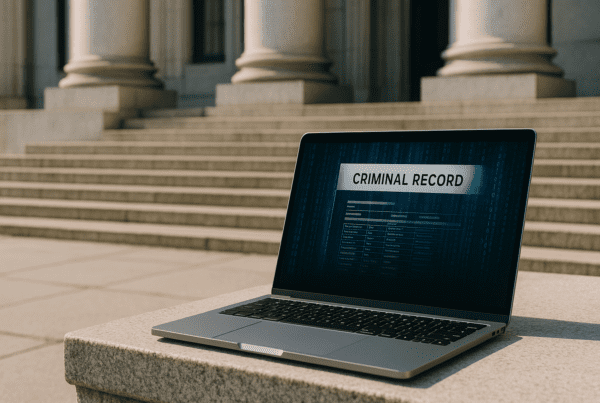
The availability of technology has played a major role in shaping court record accessibility. Online portals can offer keyword search, document downloads, and even integration with case tracking systems. This opens doors for investigative journalism and public watchdogs to track court activity more efficiently than ever before.
Still, this convenience is tempered by digital literacy and resource gaps. Not everyone can easily navigate electronic databases or afford subscription services from private aggregators. In addition, courts may limit bulk data downloads or impose restrictions meant to prevent misuse or overload.
The uneven technical landscape means that access depends increasingly on skills and resources, rather than merely on legal frameworks. Public transparency in courts now involves a digital ecosystem that can both illuminate and obscure, depending on the user’s capabilities and access points.
Broader implications for civic trust and information quality
Changes in court records accessibility carry broader implications beyond just retrieval of documents. Transparency in courts provides a cornerstone for civic trust, enabling people to see how justice is pursued and to hold officials accountable. When access fluctuates or becomes more complicated, it can challenge this trust.
At the same time, easier access can improve quality of public information. Researchers combining court data with other public records create deeper profiles for understanding social patterns, criminal justice outcomes, and institutional behavior. This can empower better policymaking and foster public dialogue.
Yet, the risk of incomplete or misunderstood data also grows. Without clear context or legal understanding, some published court information can lead to unfair stigma or errors. Responsible use of these public records requires more than just access; it requires thoughtful handling and awareness of their limits.
The subtle but meaningful shifts in how court records are handled illustrate the ongoing tension between openness, privacy, and practical realities of modern information management. Observing this evolution highlights how transparency is both a principle and a practice influenced by technology, policy, and society’s changing expectations.
As court systems continue to adapt, the public’s ability to engage and understand legal proceedings will depend on balancing these forces with care and clarity.
For those interested in firsthand exploration, many state court websites provide a starting place for accessing documents electronically, though they often caution about the scope and limits of available records. Private people search engines and public record databases also aggregate court data but vary widely in coverage and transparency guarantees.
Understanding court records is part of a larger picture where public documents intersect with personal privacy and civic oversight. Recent changes reflect an ongoing social conversation about who should see what, and how justice communicates with the public.
With access to reliable information becoming an increasingly essential part of participation in society, the nuances of court record accessibility deserve close attention beyond legal circles. It is this evolving reality that will shape how justice and transparency coexist in the years to come.
More details on court records and access can be found through official court administrative sites like the United States Courts public records page, which explains general principles and availability. For deeper insight, the National Center for State Courts studies court data accessibility trends and offers various resources. Those interested in privacy practices might explore resources at the Privacy Rights Clearinghouse, which discusses public records and privacy intersections. Additionally, the Georgetown Law library provides research guides on managing and using court records effectively.
Sources and Helpful Links
- United States Courts public records, overview of federal court records access and policies
- National Center for State Courts, research and resources on state court transparency and data access
- Privacy Rights Clearinghouse, information on privacy issues related to public records
- Georgetown Law library, research guides on court records and legal data use