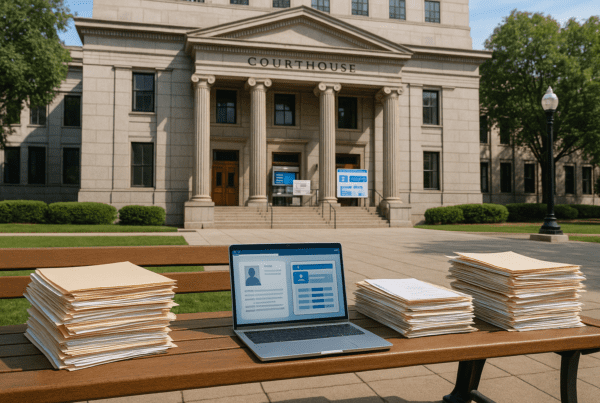

The process of legally changing a name goes beyond signing paperwork in a courthouse. It unfolds within a vast ecosystem of public records held by government agencies, courts, and various institutions. Accuracy in these records is crucial for the change to be recognized, respected, and effectively integrated into an individual’s identity.
When Public Records Reflect Identity, They Tell a Story Through Data
Public records form the backbone of verifying who a person is – not just their name but their legal existence within society. When a name change is processed, it must be reflected across multiple systems including court records, social security databases, credit bureaus, DMV files, and beyond. Each record acts like a thread connecting the past to the present, allowing services, institutions, or individuals to trace that continuity.
Inaccurate or inconsistent information disrupts this connectivity and sows confusion. Imagine applying for a job or securing a loan, only to find that your new name isn’t consistently displayed, or worse, linked with different birthdates or social security numbers. The roots of such confusion often lie in errors or delays in updating public records after a name change.
Legal Implications Can Surface When Details Are Not Harmonized
Legal procedures rely heavily on clear, consistent data. Courts depend on precise public records to rule correctly on matters involving identity. When names are mismatched or appear incorrectly post-change, disputes may arise about the legitimacy of contracts, property ownership, or even family law matters like custody.
Moreover, incorrect public record entries can complicate future legal name changes. If records do not accurately indicate previous changes, the new requests might face additional scrutiny, delays, or outright rejection. The cascading effect implies that an initial small data oversight could turn into prolonged bureaucratic challenges.
The Human Cost of Errors in Public Data Is Often Overlooked
Behind every record is a person navigating a mix of identity and social realities. For those who have undergone a name change due to personal, cultural, or gender affirmation reasons, accuracy in public records is not only a matter of legality but respect and dignity.
Errors can lead to painful misidentifications or force individuals to repeatedly explain and prove their identity. In cases involving international travel or immigration, mismatches in name data may even put people at risk of detention or denied access at borders.
Technology and Data Management Practices Are Evolving but Challenges Remain
With advances in digital record keeping and databases, it might seem that syncing changes across systems would be seamless. Yet, public record systems are often a patchwork of older and newer technologies, maintained by different entities with varying update cycles and levels of integration.
Efforts to standardize records and improve matching algorithms are underway, but human oversight is still crucial to correcting errors in name change data. Even with automation, the responsibility of confirming accuracy tends to fall on the individual who changed their name or the officials processing the paperwork. This reliance highlights ongoing vulnerabilities in public record management.
For example, the Social Security Administration requires verification through legal documents to update names, but other agencies might have lagging or incompatible processes. This disjoint creates gaps where records don’t reconcile or fail to reflect the updated name across the board.
What the Public Can Observe and Do in the Face of Record Discrepancies
One clear pattern with legal name changes is that verifying every related record is essential to avoid confusion down the line. Individuals often must proactively check court databases, credit reports, and state registries to confirm their new name appears correctly. Corrections can require follow-up visits or additional documentation, which adds time and frustration.
Awareness about how interconnected public records are can help with patience and persistence. It also encourages legislative discussions on improving how name change updates propagate through systems, reducing the burden on individuals.
Organizations like the National Association of Court Management provide overviews of court record handling, highlighting efforts toward better record accuracy and integration. Government sites such as the Social Security Administration and state vital records offices offer guidance on updating name changes properly for official recognition (see their guidelines for step-by-step processes).
In the larger picture, accuracy in public records about legal name changes touches something fundamental – the trust that a name reflects a real person consistently recognized by society and institutions alike. Without that trust, the paperwork process is incomplete and can ripple into unforeseen hardships.
What unfolds from these observations is a clear message about the value of vigilance and care when updating something as personal as a legal name. Moving beyond paperwork to ensure every record faithfully tells the story is a challenge that deserves attention from officials, technology architects, and the individuals involved in the process.
For those living through a legal name change, the experience becomes less about simply receiving a new ID and more about weaving a coherent narrative of identity through countless public record points. Each accurate entry strengthens that narrative, forming the legal and social foundation for the person they wish to be recognized as moving forward.
Understanding the complexities behind what seems like a straightforward legal act reveals the real struggles and importance of data accuracy. It shows that public records are not static files but dynamic reflections of identity evolving over time.
Continuing to observe and improve the mechanisms that keep these records accurate helps safeguard identity, legal rights, and the integrity of public information systems. It reminds us that behind every name in a record lies a human story and a need for precision in how that story is recorded and respected.
Individuals interested in learning more can explore resources on public record procedures and legal name changes available from local government portals and judicial websites, which provide ongoing insights into the evolving practices around this important aspect of personal identity.
Real accuracy is more than a technical requirement. It is a foundation for fairness, accessibility, and respect within society’s legal and social frameworks, especially in the delicate context of changing who you are called and recognized as in the eyes of the world.
Sources and Helpful Links
- Social Security Administration Guide to Name Changes, explains the process and importance of updating your name with SSA and related implications.
- National Center for State Courts on Record Keeping, discusses standards and practices in managing court records, including name changes.
- USA.gov Guide to Legal Name Changes, outlines steps and considerations for legally changing your name across various public systems.
- VitalChek Services, a resource for ordering official vital records necessary for name change documentation.