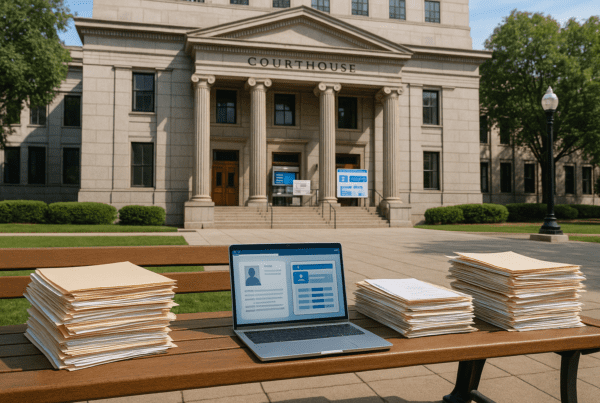

The practice of including summaries of court proceedings in people search reports brings together two complex worlds: the openness of public legal records and the sensitive privacy concerns surrounding personal information. It is an area where technical record access meets ethical and legal boundaries, leaving those who compile and publish this data carefully attuned to the risks and responsibilities involved.
The allure and challenges of court proceeding summaries
People search reports provide a snapshot of an individual’s publicly accessible history, often intended to help verify identities, reconnect contacts, or conduct background research. When courts are involved, their records naturally hold a rich trove of information. However, court documents and proceedings are not always straightforward to use. Summarizing them for inclusion in a report involves interpretation and condensation, which raises questions about accuracy and context.
For example, a simple mention of a court case in a person’s report might suggest wrongdoing or legal trouble, but without deeper context, it can mislead or unfairly influence the reader. Many cases resolve without conviction, or involve procedural details that do not reflect on character. This complexity underlines the need for cautious presentation rather than raw or sensationalist data dumps.
Privacy concerns hidden in public records
While court records are considered public, their use in aggregated reports is subject to privacy laws and evolving interpretations of what constitutes fair and legal disclosure. These concerns are especially pronounced in reports available online or accessible to a wide audience, where personal reputations can be affected.
Laws such as the Fair Credit Reporting Act (FCRA) put specific constraints on how consumer reports can use court information, particularly when the data influences decisions like employment or housing. Even outside FCRA’s scope, laws vary by state and country regarding defamation, the right to be forgotten, and limits on compiling sensitive personal data.
Another layer to consider is sealing or expungement of records, where courts have formally closed off access to certain cases. Publishing summaries from such sealed files is typically prohibited and can expose publishers to legal liability. This makes updating and maintaining database accuracy paramount.
The balance between transparency and harm
The transparency courts aim for through public records serves important civic functions: accountability, historical record, and trust in the legal system. Yet, when those records become part of consumer-focused reports, the original intent can become diluted or distorted.
Publishers face the ongoing challenge of deciding how much contextual detail to provide. Should reports include the outcome of a case, the charges dropped, or the nature of civil versus criminal proceedings? How to reflect ongoing cases without implying guilt? These editorial judgments carry legal weight, since misrepresenting court information can lead to disputes, complaints, or even lawsuits.
Legal requirements shaping content and distribution
In the United States, agencies producing people search reports that touch on court data often need to comply with the FCRA if their products are used for credit, employment, or rental decisions. This means providing consumers with access to their report, a means to dispute inaccuracies, and clear disclosures of the report’s usage.
Outside these strictures, state laws sometimes add layers of protection. California’s Consumer Privacy Act introduces requirements around consumer access and deletion rights, which can affect online people search platforms. Across jurisdictions, there is a patchwork of rules concerning how public legal information can be repurposed and what disclaimers must accompany it.
Moreover, the method of distribution-whether printed reports, online databases, or APIs-can influence what precautions must be taken. Online accessibility, especially when it is searchable by the public, demands greater caution due to the potential reach and permanence of information shared.
The slippery slope of interpretation and editorializing
Summarizing complex legal proceedings into digestible excerpts nearly always involves interpretation. The risk is that subtle legal nuances can be lost or inadvertently altered into misleading impressions. This is more delicate when the summary suggests conclusions about guilt, innocence, or character that courts do not explicitly state.
Publishers often need legal review or automated filters to ensure summaries use neutral, fact-based language without speculative or accusatory phrasing. Avoiding sensational tone or undue emphasis helps reduce legal exposures while respecting individuals’ rights. Transparent sourcing and linking back to original court documents, where permissible, provide readers with fuller contexts and reduce misunderstandings.
Even with best efforts, court summaries carry inherent risks. Errors, outdated information, or incomplete understanding can cause harm, ranging from minor embarrassment to serious reputational damage. Acknowledging these potential consequences is vital, rather than assuming public availability means unrestricted usage or impact-free sharing.
People search services like PersonZoom can illustrate the fine line between comprehensive background data and privacy respect. Their role often involves verifying identities through public records including court details while offering clear explanations about the nature and limits of that data. This balanced approach reflects broader trends in legal compliance and consumer awareness.
Beyond legal compliance, ethical considerations influence how court data is handled. Fairness to individuals and the avoidance of unnecessary stigma affect editorial choices and database management. Cultural differences in privacy expectations also mean what is permissible or acceptable varies widely, a factor global services must navigate carefully.
In the end, publishing court proceeding summaries as part of people search reports is not simply a question of data access but one of responsibility to truth, context, and individual dignity. Court records remain invaluable public documents, but their interpretation and use demand ongoing scrutiny from legal, ethical, and practical perspectives.
Looking ahead, increasing digitization of court systems and growing consumer scrutiny suggest the topic will evolve. Publishers must stay informed about legal changes and public sentiment to meet both compliance and trust standards.
Thoughtful curation of court data thus shapes not only what people see about others but also what those records say about the society that holds them.
Sources and Helpful Links
- Federal Trade Commission on Fair Credit Reporting Act – official FTC guide on the FCRA’s rules and consumer rights.
- American Civil Liberties Union on California Consumer Privacy Act – overview of CCPA protections and their implications.
- U.S. Courts on public records access – explanation of availability and use of court records.
- PersonZoom – example people search service with privacy and data accuracy focus.