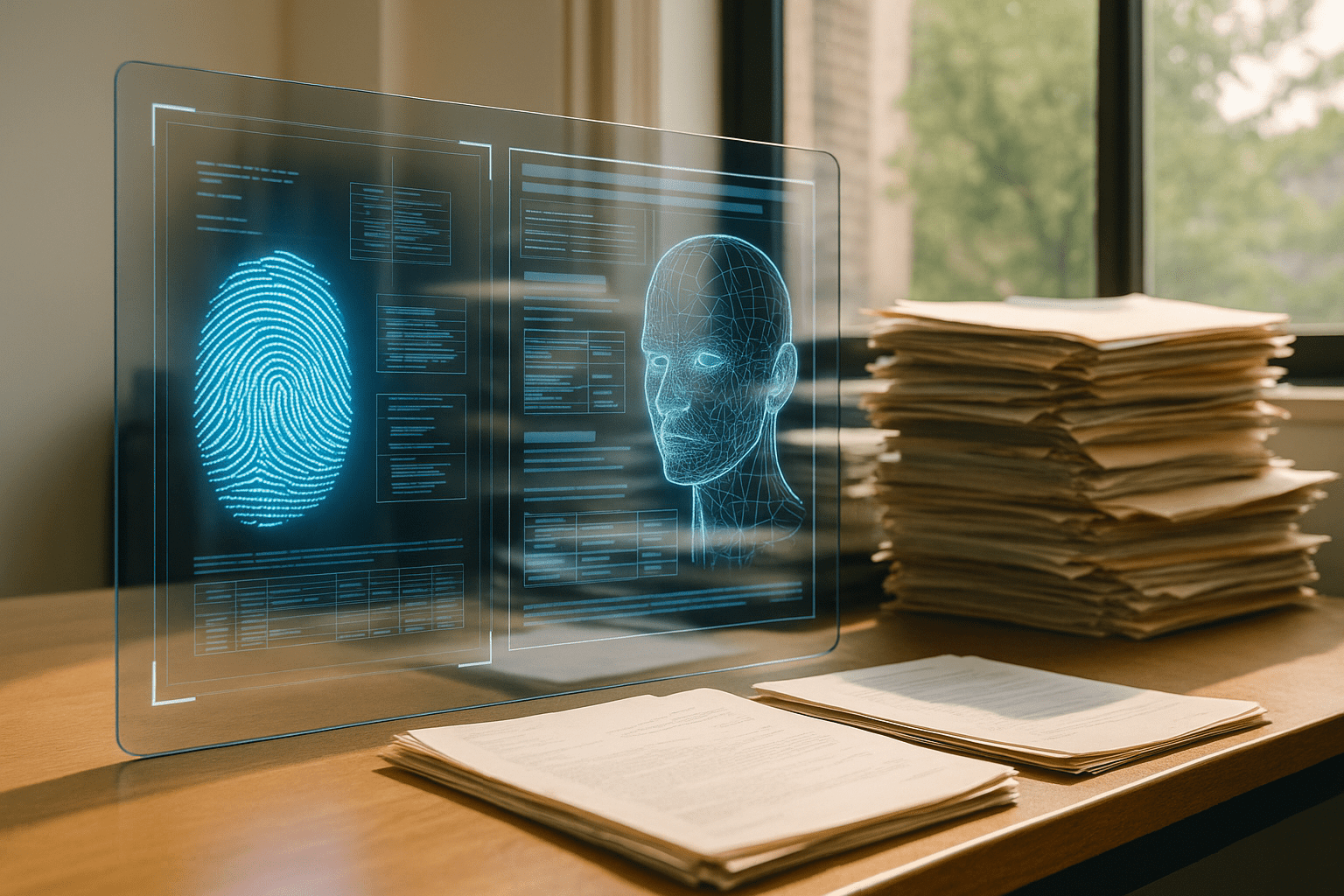
The process of combining public records with biometric data is moving from a niche application into a widespread practice across many industries. From law enforcement to healthcare, the growing availability and sophistication of biometric technologies such as facial recognition, fingerprint scanning, and iris identification are feeding into large-scale systems that rely heavily on public data repositories. This blending is changing how identities are confirmed and how information is cross-checked, revealing new patterns in data use and raising questions about privacy and accuracy.
When Identification Comes from More Than Paper
Public records have traditionally held information like names, addresses, birthdates, licenses, and criminal histories mostly in text-based or image-based formats. They form the backbone of identity verification online and offline. But these records alone often leave room for confusion, especially in cases of common names or incomplete histories. Biometric data adds a layer that connects uniquely to a person’s physical characteristics, providing a direct link that public records can’t match by themselves. Authorities and organizations increasingly look to cross-reference these sources to build a clearer picture.
Take, for example, a police department trying to verify a suspect’s identity. The police might access public records which list multiple people matching the suspect’s name and birth date in the same area. However, introducing biometric checks such as fingerprint or facial recognition can narrow down these matches with far greater precision. This practice isn’t just theoretical. According to the National Institute of Standards and Technology, integration of biometrics with databases from public records is an emerging standard in many investigatory systems today.
Biometric Data Gaining Ground Beyond Law Enforcement
It is not just government agencies experimenting with this approach. Healthcare providers also cross-reference biometric identifiers with public records to avoid medical errors or fraud. For instance, iris scans or fingerprints can help ensure that patient records are matched properly across different hospitals and clinics, especially in regions where electronic health records are otherwise fragmented. Insurance companies have similarly started using biometric authentication when cross-checking identity claims with public records to reduce fraud and streamline policies.
At the same time, there is an expanding role for biometric use in consumer technology where public data becomes a backdrop rather than the focus. Smartphone unlocking through facial recognition or fingerprint scanning, for example, relies on a kind of real-time personal biometric verification. Though these systems typically keep biometric data local rather than cross-referencing public records, the underlying technology shares common roots with larger institutional setups.
Data Privacy and Accuracy Remain Central Concerns
As this practice spreads, balancing the potential benefits with privacy risks remains an ongoing challenge. Public records by nature are designed to be open or accessible, but biometric data often carries sensitive implications beyond simple demographic details. Combining the two can create extensive dossiers on individuals, sometimes without clear consent or transparency.
Accuracy in both data types factors heavily into outcomes as well. Errors in public records – such as outdated addresses or mistaken identities – coupled with false positives or negatives in biometric scans can lead to misidentifications with serious consequences. The American Civil Liberties Union has highlighted these points in ongoing debates about regulating facial recognition systems and protecting civil rights.
Efforts are underway to introduce more rigorous standards and auditing processes. For example, some states are exploring legislation that requires clear disclosure about biometric data collection practices and limits on retention periods. The goal is to create systems that are both reliable and respectful of individual rights, though the path forward is complex because technology evolves faster than regulatory frameworks.
The Future of Identity Verification Feels More Tangled Than Ever
Looking at the broader context, what does the rise of cross-referencing public records with biometric data mean for everyday people? On one hand, it can reduce fraud, improve public safety, and streamline services that depend on robust identity proof. On the other hand, it deepens the data ecosystems surrounding us, sometimes in ways that feel opaque or hard to control.
As these two worlds continue to blend, questions about access, fairness, and oversight will persist. Whose data gets collected, how it is stored, and who can see it are topics likely to remain front and center in many policy discussions. Awareness and informed dialogue will help shape how this powerful combination is used responsibly.
Meanwhile, watching these trends unfold reveals a larger truth about the nature of public data and biometrics: neither exists in isolation anymore. Identity is becoming something constructed across multiple digital and physical traces. This multifaceted approach reflects broader shifts in technology and society, where personal information moves fluidly through systems designed to connect, verify, and sometimes control in unexpected ways.
Understanding these patterns matters not just for experts or policymakers but for anyone thinking about what their data says about them in the modern world.
More resources about biometric data and public records can be found in ongoing studies and reports by organizations like the National Institute of Standards and Technology Biometrics Program and civil rights groups monitoring privacy impacts as these technologies embed themselves deeper into daily life.
As this space grows, so too must the attention paid to how personal information is combined, protected, and sometimes challenged in a digital age. The widespread practice of matching public records with biometric data is a glimpse of a future where identity verification is less about isolated documents and more about a web of interconnected data points that must be navigated thoughtfully.
It leaves open a complex balance to strike, where technological possibilities meet social and ethical responsibilities – a balance that society will feel out cautiously and with careful reflection over the years to come.
Sources and Helpful Links
- National Institute of Standards and Technology – Overview of biometric data usage and associated challenges
- American Civil Liberties Union on Facial Recognition – Privacy and civil rights concerns about biometric surveillance technologies
- NIST Biometrics Program – Research and resources on biometric technology standards and applications