
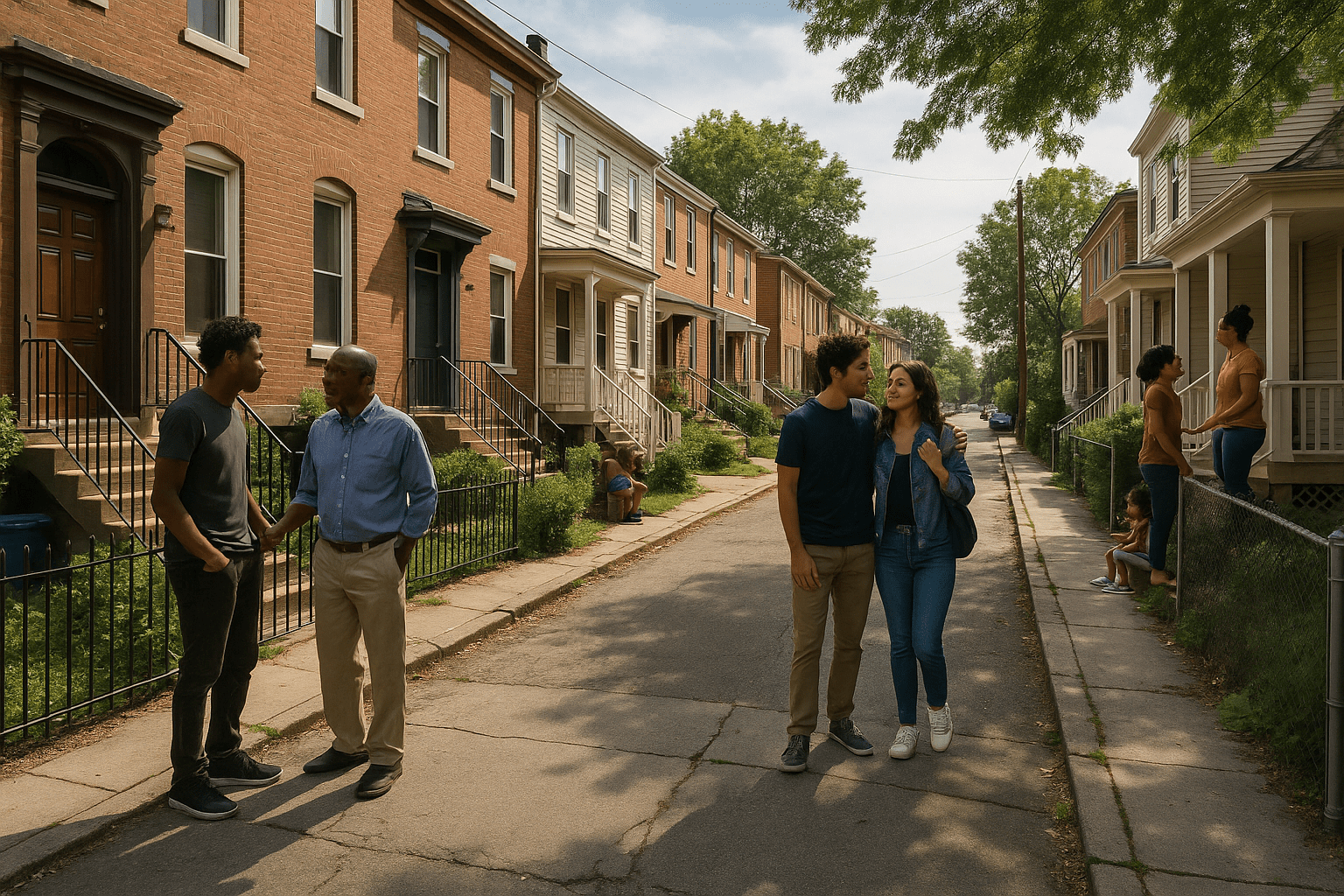
There is something quietly unfolding in the patterns behind where people live that public records are mapping all over the country. Increasingly, multiple households are sharing the same roof or residential property. This rise in multi-household living arrangements is visible through the nuanced details found in public records, which tell a story beyond census snapshots or surveys.
Shifting Footprints in Address Histories
Public records, such as property tax data, utility registrations, and voter registrations, provide small but telling clues about how households evolve at a single address. When multiple adults appearing in separate records or rolls share a single postal address, it points toward more complex living arrangements than the classic nuclear family in a standalone home.
In recent years, property records often show multiple names tied to one property parcel. Sometimes these names appear on deeds or lease agreements, sometimes in association with phone or electricity utilities. This patchwork, when observed across many records over time, displays a pattern of shared residence rather than purely individual households. Few public databases track multi-household occupancy explicitly, but the indirect connections mean record collectors and analysts can spot these pockets of shared living.
This phenomenon is not confined to urban cores or specific regions. Rural properties, suburban neighborhoods, and city apartments all exhibit variations of shared occupancy, though economic pressures tend to push higher prevalence in cities with rising housing costs. This raises questions about how economic and social factors are nudging living patterns away from single-family occupancy toward more collective arrangements.
Economic Realities Reflected in Rental and Housing Records
Over the past decade, rental and housing records have pointed toward a rise in households that pool living spaces. Lease filings, especially in metropolitan areas with tightened rental markets, show multiple adults signing leases jointly or different individuals registering utilities for the same apartment unit within overlapping time periods.
Beyond leases, eviction court records, housing assistance applications, and mortgage filings reveal socioeconomic pressures driving shared housing trends. When rental prices climb outpacing wage growth, households respond by combining resources. Public records related to housing assistance and local homelessness prevention often highlight multi-family or shared-residence strategies as adaptive behaviors.
It is also worth noting that census data, while less immediate than property records, has gradually started capturing categories that hint at multi-household setups. Tables showing ‘unrelated individuals’ living within the same housing unit or ‘group quarters’ populations provide a broader context for what granular public records display at localized addresses.
Social Dynamics Behind the Numbers
Public records alone do not explain the shifting social fabric behind multi-household living. Yet when combined with other social indicators-such as changes in family structure, migration, or education patterns-they can frame how lifestyles are adapting.
For example, public school enrollment records alongside address data sometimes reveal children from different households attending the same schools but living under one roof temporarily. Similarly, healthcare registrations can show multiple adult patients sharing an address yet maintaining distinct billing and insurance records. These intersections suggest a rise in complex family structures that include extended kinship, shared caregiving, or non-family members cohabiting out of convenience or necessity.
Moreover, generational data from public records indicate that Millennials and Gen Z adults are entering housing markets later or differently than prior generations, often choosing or needing to live with family or roommates. Aging populations also see more multi-household homes as seniors move in with relatives or shared caregivers.
A Landscape More Complex Than It First Appears
The term multi-household living might evoke images of several families crammed into one space, but public records show the reality is diverse and layered. There are cultural traditions that favor extended family households, economic adaptations that foster shared housing, and practical considerations in caregiving and companionship.
Even municipal governments and housing authorities increasingly recognize multi-household arrangements in their planning and codes, reflecting a growing official awareness of these living patterns. The slow emergence of data categories and regulations regarding ‘co-living’ and shared housing units marks this recognition.
By examining public records over time, one senses that these shifts are neither random nor temporary. Instead, they are embedded in ongoing demographic changes, the housing market’s fluctuations, and evolving social norms around how we define a household. Public records, at the intersection of individual lives and formal documentation, offer a window into this gradual but significant transformation.
For anyone curious about how contemporary living arrangements develop and persist, the raw breadcrumbs of public data-property records, utility filings, housing assistance reports, and voter registrations-provide a subtle but revealing trail. Although not always designed to capture the full narrative, these records, when pieced together carefully, reflect a new era of living that mixes economy, culture, and social necessity in palpable ways.
In exploring these evolving patterns of multi-household occupancy, one sees how people adapt pragmatically to changes in the world around them. The rise of shared residences speaks not only to economic pressures but also to social resilience, mutual support, and the ongoing reinvention of ‘home’ in contemporary society.
More insight into census data related to household composition can be found at the US Census Bureau. Property record databases such as PropertyShark provide searchable ownership and lease information that reflects occupancy trends. For further housing market context, the U.S. Department of Housing and Urban Development offers reports and data sets about rental affordability and housing assistance.
Finally, voter registration and utility data have been widely studied by independent researchers to observe multi-adult occupancy patterns, as explained in this analysis by the Pew Research Center.
Sources and Helpful Links
- US Census Bureau, detailed reports on household composition and living arrangements
- PropertyShark, database offering property ownership and lease records
- U.S. Department of Housing and Urban Development, reports on rental markets and housing assistance
- Pew Research Center, analysis of census data showing changes in household occupancy