
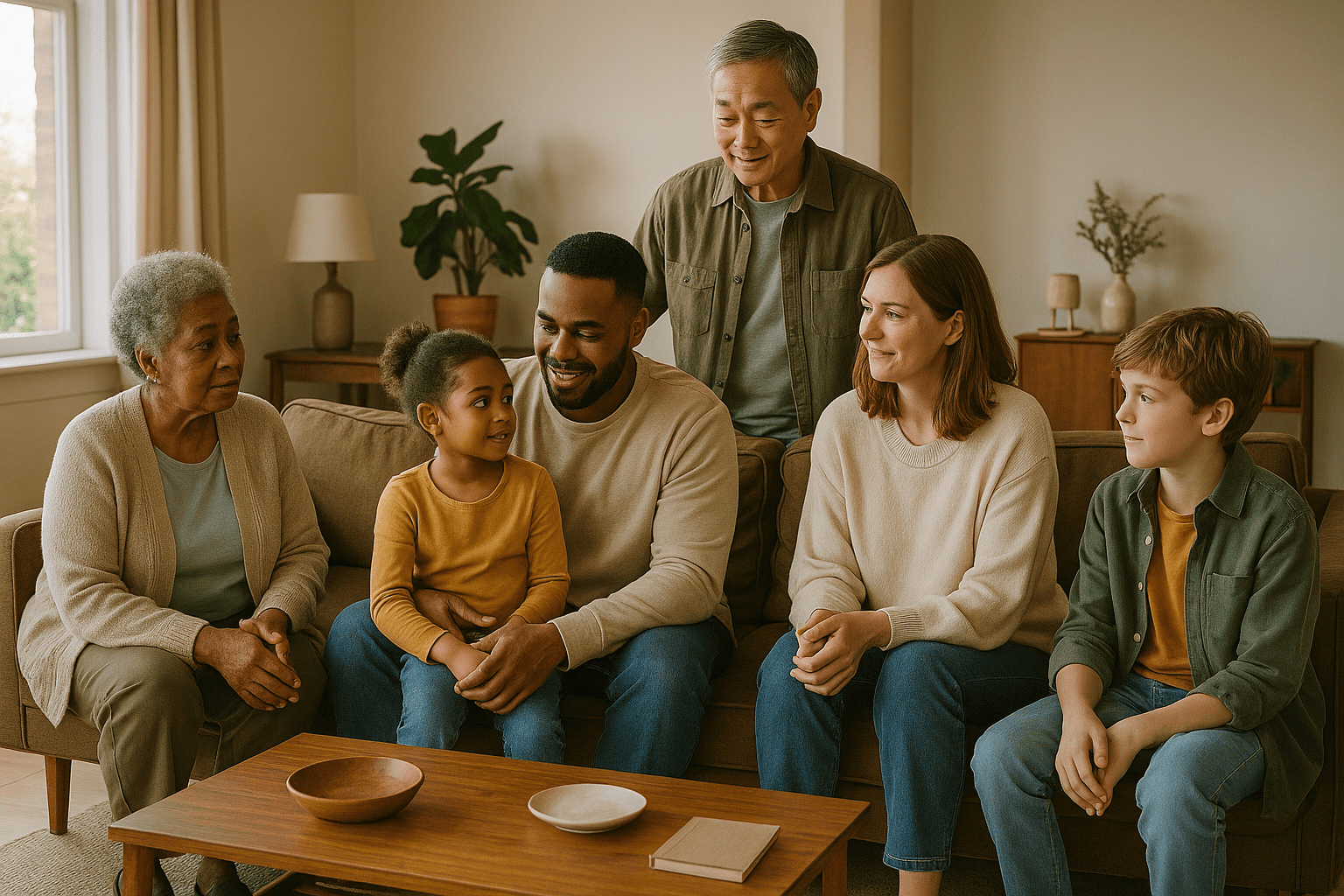
Families have never looked entirely alike, even if popular imagination often leans on neat definitions involving parents and biological children. Yet public records, those official documents that encode identity and relationship, have traditionally lagged behind the real-world diversity unfolding in households. Looking back over the decades of public record-keeping, what becomes clearer is how these records have changed, sometimes slowly and awkwardly, to accommodate evolving family forms.
The quiet shifts in record-keeping language and categories
When public records first formalized family ties, the focus rested heavily on nuclear family models. Legal definitions stressed husband, wife, and children, with other household arrangements relegated to footnotes or simply left unrecorded. Census data, vital records, and tax filings often reflected this, with paperwork designed to fit a mold rather than mirror messy realities.
However, over time, categorization in records has subtly expanded to include single parents, cohabiting couples, and other less traditional alignments. This can be seen in the progression of census questionnaires where, starting mid-20th century, questions about marital status and cohabitation began to diversify their answer options. Vital records started recognizing same-sex marriages in jurisdictions where laws caught up, and adoption records grew to reflect complex kinship beyond biological connections.
Even so, these changes do not always translate neatly in public document repositories or searchable databases. Some records systems continue to rely on fields that expect a spouse of the opposite sex or a specified parental relationship, which can create inconsistencies or gaps when someone tries to trace a family tree or verify identities in nontraditional situations. The structures underpinning record-keeping itself sometimes retain rigid definitions that resist the fluidity of modern family configurations.
When families blur lines between friend, partner, and kin
Nontraditional families often stretch beyond legal definitions, involving individuals who offer familial roles without official recognition. These might be close friends treated as siblings, chosen family among LGBTQ+ communities, or multi-generational households including extended relatives and unrelated caregivers. Public records typically falter here because they prioritize legal status or blood relations.
For example, a guardian or household member with no formal custody arrangement might appear in some records as merely a resident or neighbor, not reflecting the deep relationship shared with children or elderly family members. As a result, a person’s network of support and their true social identity may be incomplete or misleading when one relies solely on public data.
Instances such as these highlight the gap between the lived experience of family and the boxes public records impose. Researchers and genealogists face the challenge of reading between the lines, cross-referencing multiple document types to reconstruct a fuller picture. Address histories, probate records, or social service documents sometimes fill in these blanks, suggesting connections that go beyond what a marriage certificate or birth record can confirm.
The impact of technology and data aggregation on family visibility
In recent years, the rise of digital record keeping and online databases has transformed access to family-related records, but it has also exposed fragilities in how nontraditional families are represented. Automated systems often depend on fixed templates and algorithms designed for conventional family structures, which can lead to errors or omission of key relationships.
Yet technology also opens new doors to documenting complexity. Platforms that integrate public records with contact data, address history, and social media links can provide a more nuanced view of how people associate in everyday life. This reflects the way identity and kinship extend beyond legal status, incorporating social and emotional ties that may never appear in official paperwork.
This broader visibility raises questions about privacy and consent, especially when sensitive family dynamics are exposed without clear context. But it also offers a way for nontraditional families to assert their realities in the public record, challenging outdated assumptions and pushing record systems to evolve.
Looking at long-term patterns in family structures through records
Looking across generations of public records reveals patterns not just of individual family stories but of societal shifts. Increasing rates of divorce and remarriage, the legalization of same-sex marriage, acceptance of blended families, and growing recognition of non-biological caregiving all surface in these datasets over time.
Genealogists, social scientists, and legal professionals draw on this trend data to better understand how family life changes and how laws and services adapt. For instance, studies analyzing decades of census data demonstrate rising diversity in household types, which in turn influences policies around education, housing, and welfare.
Still, challenges remain in making public records fully reflective of modern family complexity. Ongoing efforts include redesigning forms, adopting inclusive language, and training officials in culturally sensitive data collection. Public awareness also plays a role, as more people seek to ensure their family identities are faithfully documented, despite past institutional limitations.
Holding onto human stories behind the records
Ultimately, public records are fragments of lives lived, shaped by bureaucratic processes that sometimes struggle to keep pace with social change. Nontraditional families remind us that identity and connection cannot be fully captured by categories, requiring patience and creativity to interpret the available data.
Stories hidden in adoption paperwork, guardianship files, and multigenerational household listings reveal the resilience and adaptability of family life. Each record invites curiosity and empathy, asking for understanding that goes beyond legal definitions.
Looking at public records with this awareness helps us see these documents less as static files and more as evolving narratives reflecting the many ways people come together to build belonging and care.
People exploring their roots or verifying connections benefit from engaging with multiple sources and acknowledging the incomplete nature of any single record. Nontraditional families may leave traces across unusual document combinations, such as school registrations, medical records, or property transactions, which together map a fuller story.
As public record systems continue to develop, the hope is they will better respect the reality that family, in all its forms, deserves recognition and clarity within the archives of our shared history.
For those working with public records on identity and family, resources such as the National Archives census guides and the U.S. Department of Health and Human Services adoption resources offer insights into documentation practices evolving alongside social change. Digital privacy organizations also provide perspectives on managing complex family information in today’s data environment.
Efforts to understand family through public records require us to appreciate both the limitations and the possibilities, knowing the records only tell part of the story. It is the lived experience behind the data that ultimately gives these documents meaning.
Whether tracing genealogy or exploring kinship networks, observing how public records adapt captures a small but important window into how our society continues to redefine what family means.
For more detailed information about census methods and family definitions, the National Archives provides useful explanations at their census records site. Resources for adoption and family services on the government HHS site clarify official pathways through family recognition. Privacy and identity organizations like the Electronic Frontier Foundation offer ongoing commentary about how data intersects with personal relationships today.
These resources help frame the larger picture where family and public data intertwine, evolving as society does, one record at a time.
Sources and Helpful Links
- National Archives Census Records – Provides detailed information about census data collection and its reflection of family demographics.
- U.S. Department of Health and Human Services Adoption Resources – Offers official guidance on adoption processes and records.
- Electronic Frontier Foundation Privacy Information – Discusses privacy challenges and policies related to personal data, including family information.