
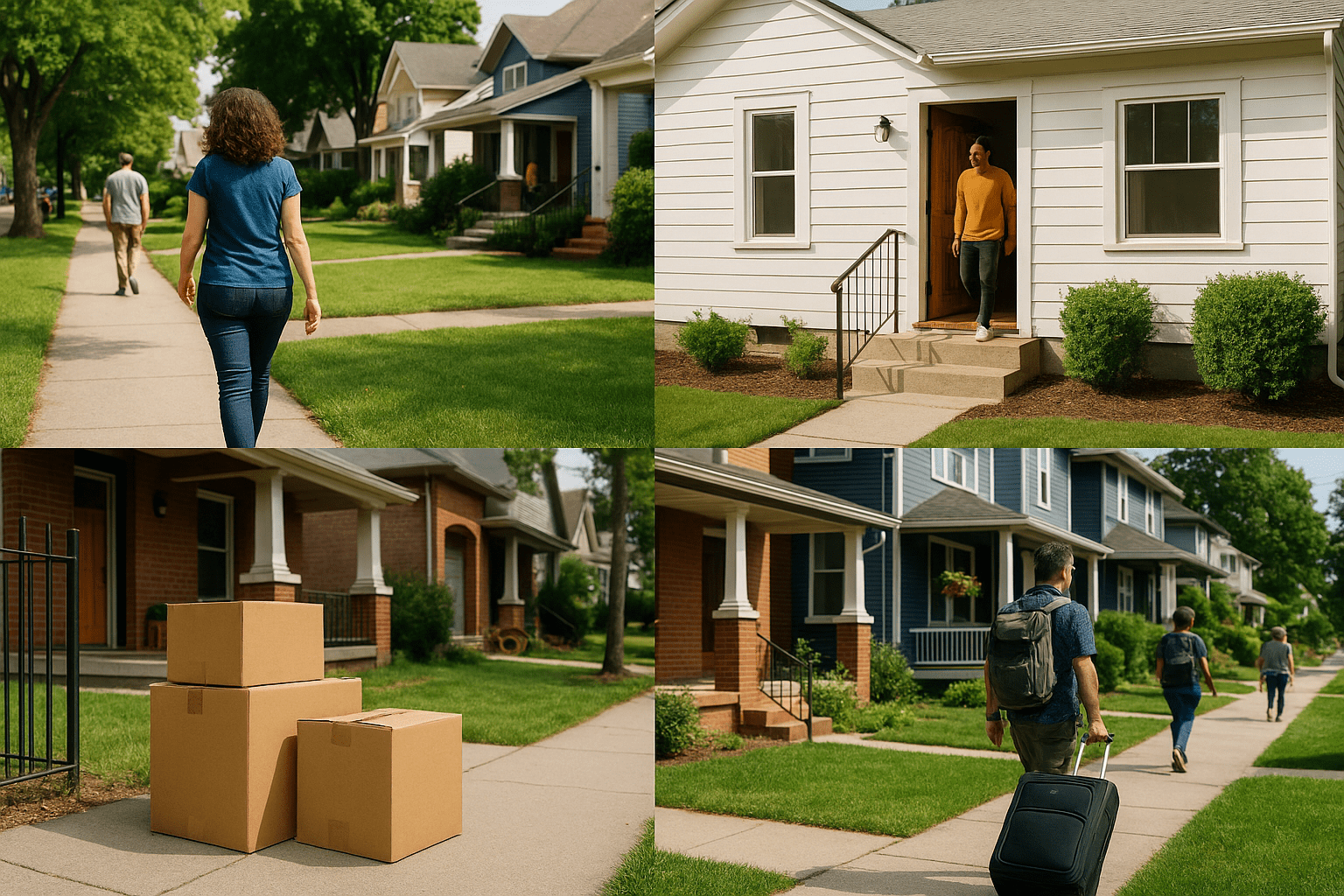
Watching the subtle movements of people on paper can often tell a story about society itself. Address changes recorded in public records capture more than just updated locations; they reveal the rhythms of communities adapting to economic pressures, family transformations, and evolving social networks. These records, often overlooked in their quiet formality, provide a window into how people relocate and how those relocations ripple across the social fabric.
When an Address Change Says More Than a New Zip Code
Most people think about an address change as a straightforward update: a family moves from one house to another, often nearby or across town. But patterns of these changes, when viewed across populations and time, hint at broader social dynamics. For example, a cluster of address changes within a single neighborhood can indicate a wave of residents leaving due to economic decline or rising housing costs. The public record trail of these moves outlines a community in transition, one where social ties may loosen or strengthen depending on who is arriving and who is leaving.
Conversely, stable address histories featuring few moves often correspond with long-standing community members invested in local schools, businesses, and social organizations. This stability has its own value, reflecting a population segment with deeper-rooted connections and perhaps generational histories. For instance, an elderly homeowner with decades at the same location paints a different social image than a recent renter hopping between multiple addresses within a few years.
Economic Underpinnings Visible in the Shuffle
The reasons people change address as gleaned from public record patterns are deeply tied to economic forces. Housing affordability, job relocations, and even foreclosure rates are mirrored in these sets of address changes. During economic downturns, a surge in address updates might correlate with displaced workers moving to cheaper neighborhoods or moving back with family.
Interestingly, certain industries also create predictable address change patterns. Military families, for example, often appear in public records with periodic moves every few years that reflect deployments rather than voluntary relocation choices. Similarly, higher education hubs record students and young adults with frequent address shifts during the academic year, providing a transient but structured pattern visible in public records.
Family Dynamics and Life Stages Reflected in the Data
Beyond economic and geographic factors, address changes tell stories about families and life stages. Moves that coincide with marriage, divorce, or the arrival of children often appear in address histories as well. A sudden change from a single-person household to a multi-person family address can indicate marriage or cohabitation, while splits can signal separations or new single-parent arrangements.
Similarly, young adults leaving parental homes or families selling long-held houses to downsize reflect natural life course transitions. Observing these shifts in public records offers an abstracted glimpse into the flow of personal relationships and household compositions. For those tracking genealogies or social histories, these address breadcrumbs become clues to understanding the human story behind data points.
Neighborhood Evolutions and Community Shifts
On a neighborhood scale, aggregated address changes paint pictures of growth, decline, gentrification, or stabilization. Real estate trends surface subtly through rising frequencies of moves into certain ZIP codes or communities, while departures reveal areas experiencing economic stress or population aging. Public record data tied to property ownership or rental changes complements these observations.
For example, a neighborhood experiencing gentrification might record an influx of new residents accompanied by an outflow of long-time inhabitants, visible in the contrasting address update records. Conversely, neighborhoods with high resident retention rates might show a consistent address pattern reflecting social cohesion and economic steadiness. These address data patterns offer urban planners, sociologists, and community observers concrete indicators of social transformation.
Limitations and Considerations in Interpreting Address Changes
It is worth noting that while public records provide valuable signals, interpreting address changes demands caution. Not every move reflects a significant social or economic shift. Some might be temporary or related to lifestyle preferences rather than economic necessity. Also, inconsistencies in data reporting and timeliness can obscure the full picture. Address change data usually lacks context about reasons or sentiments behind moves, leaving room for informed but careful interpretation.
Furthermore, access to such data varies by jurisdiction, and privacy rules shape the scope and detail available. Despite these limits, patterns emerging from address changes remain a compelling resource to observe social currents across time and place.
Ultimately, the quiet paperwork of address updates is a form of social and economic DNA. When aggregated and thoughtfully examined, it allows us to see how communities breathe and evolve, revealing stories beyond bricks and street numbers.
For ongoing insights about address history patterns and their implications, public record resources provide detailed data and analysis. Government registries and sociological research further illuminate these trends, offering a deeper understanding of human mobility encoded in seemingly simple address changes. Exploring the rich layers behind this data can uncover the very texture of modern social life.
Some useful places to start include state property record databases, university social science studies on mobility patterns, and online tools that aggregate and visualize address histories. These sources help connect the dots in a landscape shaped by movement, transition, and the unending quest for home.
Sources and Helpful Links
- United States Census Bureau – Migration Data: Official statistics on population movement and migration patterns.
- National Bureau of Economic Research – Residential Mobility and Housing Inflation: Research paper examining economic factors linked to address change trends.
- Population Studies Center – University of Michigan: Social science data and studies regarding residential changes and life course.
- Property Records Online: Centralized platform for accessing property and address histories nationwide.