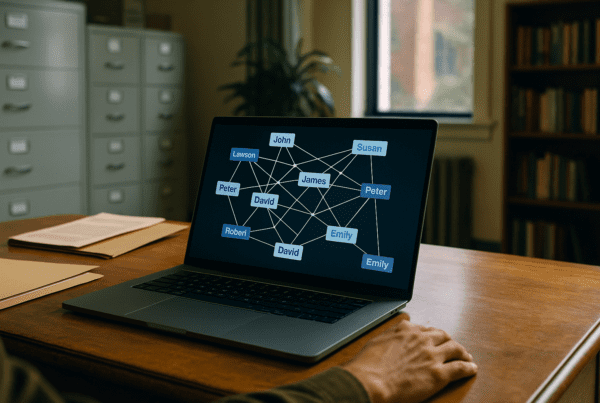
People who move frequently present challenges to anyone attempting to link digital identities through people search. Each change of address sets in motion updates across multiple public and private databases, but the records that emerge are often fragmented, inconsistent, or incomplete. Names may vary, contact information shifts, and relational ties change, creating a mosaic rather than a clear portrait. The experience of frequent movers reveals how identity is not a single fixed record but a dynamic set of data points spread across time and place.
Tracing Identities Through Shifting Locations
When someone stays put for years, public records tend to reflect a more linear story. A stable address connects to a consistent line of licenses, financial accounts, and other records without too many surprises. Moving frequently, however, layers complexity onto this story. Each new address creates a new data trail that often stands alone or overlaps in imperfect ways with old details.
Consider the combined effect of postal records, utility set-ups, voter registrations, and everything in between. These sources typically update independently, governed by local authorities or private entities that do not necessarily share data seamlessly. The result is a patchwork where multiple versions of a person’s identity co-exist, sometimes contradicting each other.
Adding to this complication is the use of different name versions. A person may be recorded as “Jonathan Doe” in one database and “Jon Doe” in another, or even “J. Doe” where limited space or formatting affects the record. This variation can cause confusion and lead people search platforms to flag multiple distinct results where there may be only one individual. It’s a subtle reminder that identity data is shaped by human error, local rules, and even user choice.
Piecing Together Cross-Jurisdictional Links
Frequent movers often traverse more than one state or county. This movement leads to scattered documentation as driver’s licenses, tax filings, and utility accounts may be registered in different places within a short timeframe. Unlike a seamless digital file that travels with a person, public records effectively take snapshots at different points, each subject to local regulations and practices.
Linking these snapshots requires cross-referencing details such as phone numbers, email addresses, social connections, and historical timelines. Without such context, it is easy to mistake overlapping records or miss connections entirely. This complexity is why some people search services dedicate significant effort to relational data, hoping to add layers that anchor identities across moves.
Yet the process is imperfect. When new roommates move in, when family members split households, or when telephone numbers change, relational clues become ambiguous. Situations like these highlight how identity is woven through social networks that are inherently fluid, not fixed or static.
The Subtle Role of Contact and Relationship Details
Contact information often functions as a key that helps relate fragmented records back to the same individual. A persistent phone number or email that appears amid different addresses suggests continuity even when names or spellings vary. Similarly, seeing the same family members or employers linked across separate records builds confidence in matching identities properly.
This relational weaving is foundational for people search tools that aim to provide coherent profiles for frequent movers. Databases integrating public records with contact sources, social connections, or employment data can reduce false splits where one person appears as several. They also help avoid false joins where data from unrelated individuals with similar names are mistakenly combined.
Still, relational data itself changes over time, reflecting life’s adjustments. Employment may end, families may grow or separate, and contact info such as mobile numbers can be reassigned. A person’s identity linkages in data are thus snapshots of a complex, evolving network rather than a simple chain of facts.
Privacy in a Patchwork of Public Records
One unintended advantage frequent movers might experience is their less visible digital identity due to scattered data. When public records do not easily interlink, it becomes harder for aggregators or unauthorized parties to track comprehensive profiles.
However, this same fragmentation brings difficulties for legitimate purposes like identity verification or reconnecting with someone lost to time. The tension between privacy and accessibility emerges clearly, raising questions about how to manage and respect personal data spread across diverse jurisdictions and platforms.
Efforts to consolidate identity records must balance efficiency with caution. Errors or outdated information can wrongly impact individuals, from missed employment checks to erroneous background reports. These consequences underscore the need for ethical standards and meticulous verification in people search services.
Seeing Identity as a Living Tapestry
At the core, understanding identities of frequent movers is about accepting that identity is always rich, complex, and shaped by real life events. It is not simply a file to be looked up, but a living tapestry of places lived, names used, contacts maintained, and relationships formed and reformed.
This perspective encourages a thoughtful approach to people search. Users should recognize that fragmented results often reflect the realities of mobility rather than inconsistencies or errors alone. Results require interpretation and patience, inviting curiosity about how a person’s story unfolds across time and space.
Those interested in further exploring how identity is constructed and searched in our mobile society may find valuable perspectives in resources like the FTC’s identity theft guide which offers insights into risks and protective steps related to identity data. Additionally, tracking population movement through U.S. Census migration data provides statistical context to the patterns that shape these identity linkages. Privacy advocacy organizations such as Privacy.org discuss the challenges and solutions balancing data use with individual rights.
Frequent movers illustrate that identities are never static but always in flux, shaped by the interplay of movement and record-keeping in a digital age.
Sources and Helpful Links
- FTC guide on identity theft, an official resource explaining risks and protections concerning identity.
- U.S. Census data on migration patterns, offering statistical context on population movement trends.
- Privacy.org, a nonprofit providing insights into data privacy and public record use.