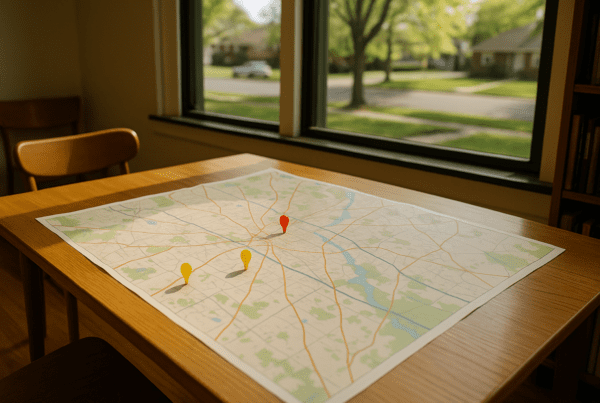
It’s not unusual nowadays to come across people who live part of the year in one state and spend the rest in another. Whether for work, family, lifestyle, or legal reasons, split residences have become part of the real world. This trend, however, can produce some layers of complexity when records try to capture an individual’s life on paper and in databases.
Residency Patterns and Record Shadows
Public records rely heavily on addresses to link identity, from voter registrations and driver’s licenses to property deeds and tax filings. When a person splits time between states, their digital and paper trail can show overlapping or seemingly conflicting locations. This becomes a puzzle for anyone trying to verify information or understand a person’s history.
For instance, a real estate record might show ownership or tenancy in one state, while employment records, court filings, or vehicle registrations appear elsewhere. Such divergence may hint at a busy lifestyle but also reveals how records can struggle to portray a straightforward picture. Some states are more proactive in verifying residency for specific records; others simply archive whatever comes through without cross-checking details.
This mismatch isn’t always a sign of error or deceit. It often reflects natural human movement and the administrative realities behind data collection processes. When someone maintains homes in different states or travels between them frequently, the official records will mirror that complexity. However, this raises questions about the clarity and accuracy of public information used by third parties.
Identity Verification and Split Residences
One major area impacted by split residences is identity verification. In an era where digital platforms often rely on location data for security and personalization, conflicting addresses can trigger flags or slow processes. For services that need to comply with legal regulations, such as banking or healthcare, confirming which state a person genuinely calls home is important but not always easy.
Public records serve as a foundation for these checks but do not always present a fully synchronized story. The National Driver Licensing Information System offers some clues about residency verification across states, since drivers generally must register their primary residence. Yet, people with multiple licenses or cars registered in different states complicate this schema. Similarly, voter registration rules usually require a single primary residence, but in practice, records sometimes show multiple entries due to address changes or delays in updates.
The mix of federal, state, and local databases means no single source fully captures the nuances of split residency. For verifying identity or avoiding fraud, this necessitates looking across records and understanding the context rather than accepting entries at face value.
Tax Implications and Official Addresses
Taxes add an additional layer to how split residences are recorded and interpreted. States have specific rules around domicile and residency for tax purposes, affecting income tax, property tax, and other obligations. A person living part time in two states may have to file tax returns in both, declare a primary state of residence, or juggle complex guidelines to avoid double taxation.
This tax behavior generates public records like tax filings or audited statements that add more location signals into the data ecosystem. For example, the IRS provides guidance on state residency and tax filing requirements, reinforcing how this aspect intersects with identity data.
These records may not reflect personal life entirely accurately but highlight how legal frameworks shape the traces left in official channels. Property owners might register homes in one state yet spend significant time elsewhere for work or family. Courts and agencies rely on some address as official contact information, which may lag behind reality or vary by document type.
Why This Matters for People Search and Data Accuracy
When users turn to public data to reconnect, verify, or research someone’s background, split residence patterns often explain what might look like conflicting entries. Recognizing this complexity helps set realistic expectations about the story records tell. No single address might fully capture a person’s daily reality, especially if they consciously maintain several homes or move frequently.
This understanding is also important for privacy and security: mixed location signals can both protect and expose individuals in unintended ways. Agencies and services processing public records need to interpret these data points carefully, avoiding misuse or misinterpretation.
Research and investigative platforms like PersonZoom aim to map these connections clearly, showing address histories alongside relational links and other identity signals to help users piece together the broadest possible perspective. This approach acknowledges the fluidity in modern living rather than forcing rigid categorization.
Looking Ahead to More Dynamic Records
The rise of remote work and flexible lifestyles suggests that split residences will grow more common rather than fade. Public records and data systems will need to adapt by allowing for layered or fuzzy location data rather than insisting on single points. Such flexibility would better serve both individuals and institutions relying on these records.
Technology that links disparate records more intelligently and provides context rather than just isolated facts will improve clarity and reduce confusion. Until then, people searching through public records should approach address information with patience and nuance, understanding that lives rarely fall neatly within political boundaries.
In the meantime, insight into split residences offers a lens into how identity and location intertwine in complex, sometimes contradictory ways. This is a natural reflection of how people live in the real world, with all its movement, change, and duality.
Observing these patterns in data can help make sense of what otherwise looks like fragmented or confusing records. It reminds us that at the heart of every address in a public record is a person navigating space and life that cannot always be easily boxed.
As you sift through records or consider people search results, the overlapping footprints of split residences stand out as a common theme but also a crucial insight into the nature of identity and address in a mobile society.
Public data continues to evolve slowly alongside human behaviors, weaving together the usual with the unusual. Recognizing this interplay opens a grounded window onto the complexities hidden beneath the surface of simple address fields.
For those relying on public records, this means embracing complexity as part of the story rather than seeing it as error or mischief. Split residences are not an anomaly but a lived reality that public records increasingly reflect, imperfectly but informatively.
In this way, they become a reminder of the intertwined narratives that define who people are, where they belong, and how they move through lives that cross state lines more often than ever.
There is much to learn from examining these record patterns carefully, and encouraging transparency, accuracy, and patient interpretation will remain key as data meets the fluid nature of modern living.
Ultimately, the story of split residences is the story of how public records attempt to keep pace with a changing world without losing sight of the real people behind every address.
For deeper explorations of identity signals and data behavior in public records, platforms like PersonZoom provide tools and context to trace these movements and connections with care.
Sources and Helpful Links
- USA.gov – Driver Licenses and Identification, overview of residency requirements for driver’s licenses across states
- IRS – State and Local Taxes, guidance on state residency taxes and implications
- PersonZoom, people search and public records aggregator focusing on identity signals and address histories