
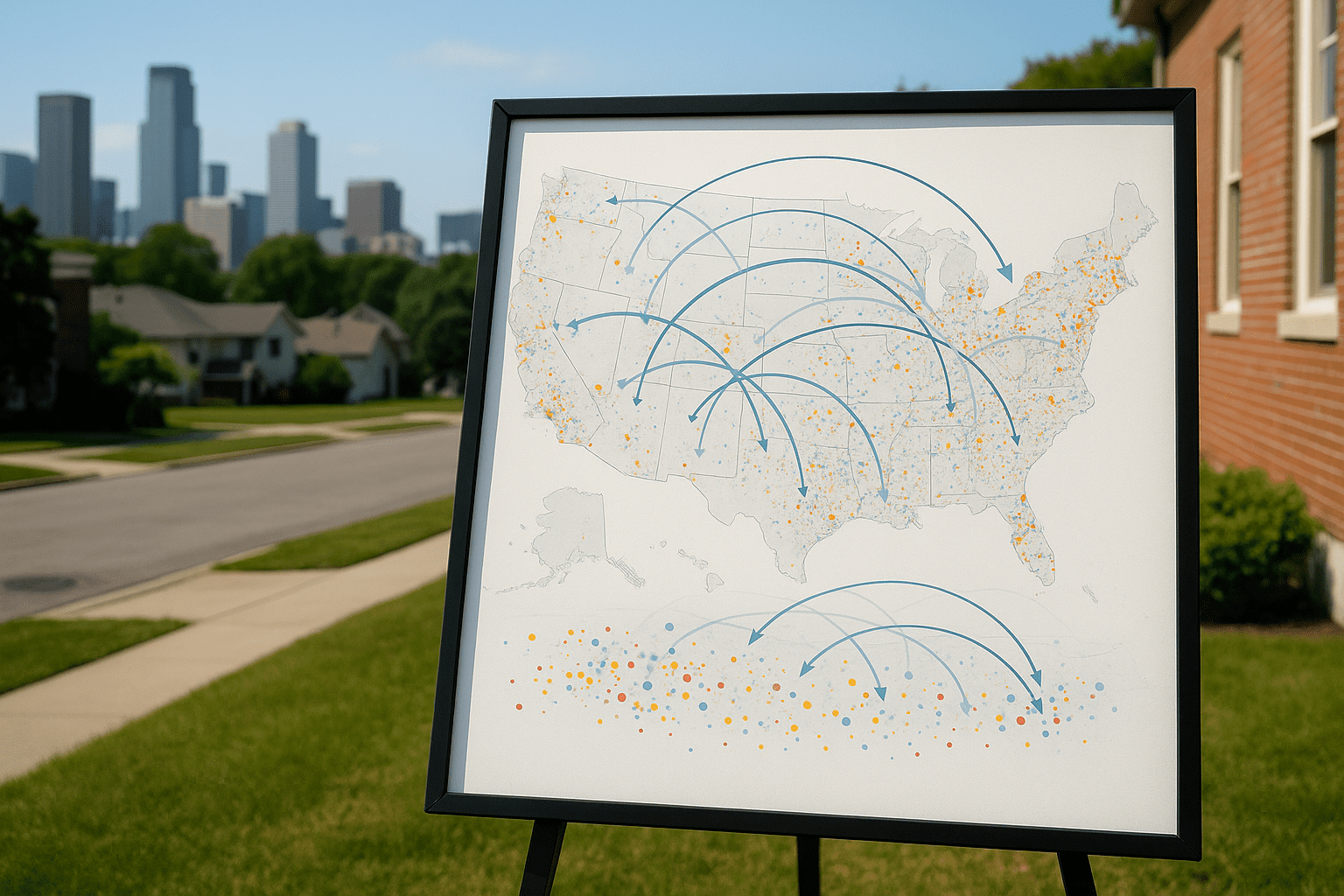
Economic crises trigger waves of change that ripple quietly through the fabric of communities. Beyond headlines about markets or unemployment rates, the ways people respond often show up in the simple act of moving: leaving one address behind, seeking a new one, forging paths that public records dutifully log. These records, from property deeds to utility account openings, capture snapshots of how populations reorient themselves after shocks to the economy.
Reading the Small Signs in Official Data
When the economic ground shakes, people do not just stay put. Filing changes of address with the postal service, selling homes, closing or opening utility accounts – these mundane bureaucratic acts combine to form a trail. These trails allow observers to reconstruct population shifts from a bottom-up perspective. The 2008 financial crisis, for instance, saw surges of foreclosures in costly metro areas pushing people outward toward more affordable towns or neighborhoods. By examining patterns in rental registrations or property transactions, analysts identified changing epicenters of residential demand, a reflection of job losses and shifting affordability.
This kind of detailed tracing outpaces conventional sources like census counts, which update only every ten years and rely on self-reporting. Public records, refreshed continuously through municipal and state agencies, provide a more immediate glimpse at how economic pressures shape human movement.
Economic Push and Pull Etched in Migration Data
Moving is never just about geography; it is a response to forces pulling someone toward opportunity or pushing them away from hardship. Public filings related to business licenses, vehicle registrations, and property titles act as clues to these invisible forces. Places investing in new industries or offering economic incentives often gain new residents, shown by upticks in these filings. Conversely, towns facing factory closures or budget constraints typically lose population, a pattern echoed in declines in utility hookups or lease signings.
It is important to note how these records reveal more than just numbers. They suggest stories about what drives people to risk starting over elsewhere: jobs, housing, family networks, or social services. These human motivations ripple through data patterns in subtle but detectable ways.
The Layered Complexity Behind Migration Trends
Decoding migration from public records requires careful interpretation. Moves may be delayed in reporting, or a person’s records might scatter if they move across jurisdictions. Temporary relocations for seasonal work complicate the picture, creating movement that looks like migration but cycles back. Economic crises frequently intersect with other disruptions such as natural disasters or policy changes, layering influences that must be teased apart.
Researchers typically blend multiple data streams to get clearer pictures, cross-referencing address changes against employment data or housing permits. This multidimensional approach helps tease out socioeconomic dynamics rather than mistaking one-off data blips for larger trends.
Migration Data as a Lens on Community Fortunes
The practical value of following migration through public records goes beyond academic curiosity. For policy makers and planners, these patterns shape decisions about schools, transit, healthcare, and housing. Rapid influxes of residents can strain resources but also signal economic revitalization. Declines in population often lead to shrinking tax bases and challenges for local businesses.
Communities that successfully rebound from economic shocks frequently reveal themselves in the data by attracting consistent waves of new registrations or property transactions. These places tend to offer affordable housing, maintain flexible social networks, and cultivate economic diversity. In this way, public records provide a window into resilience, highlighting which places convert adversity into opportunity.
Looking historically across decades shows how migration flows follow broader economic cycles. The records quietly narrate the enduring human search for security, belonging, and livelihoods amid uncertain conditions. They document how neighborhoods expand, contract, and transform as people respond to circumstances beneath their feet.
Those interested in digging deeper into migration patterns and their connections to economic events can explore resources such as the U.S. Census Bureau migration reports which provide robust data sets capturing national movement trends. Complementary analysis from the Migration Policy Institute sheds light on how migration links with policy and economic context. Meanwhile, the National Archives offers important access to historical census and public data, ideal for those tracing migration across longer stretches of time.
Sources and Helpful Links
- U.S. Census Bureau – Official reports and data on population migration trends in the United States.
- Migration Policy Institute – Analysis linking migration patterns with economic and policy factors.
- National Archives – Resource hub for census records and public data access.