Public records serve as vital tools for confirming who someone is across many situations, from background checks for new jobs to reconnecting with family members. However, when an individual uses several aliases, the clarity of these records can blur, creating difficulties that ripple through verification systems and everyday searches. It becomes clear that multiple names linked to a single person do more than just complicate a search, they challenge the entire concept of identity consistency in public data.
The Many Faces Behind One Name
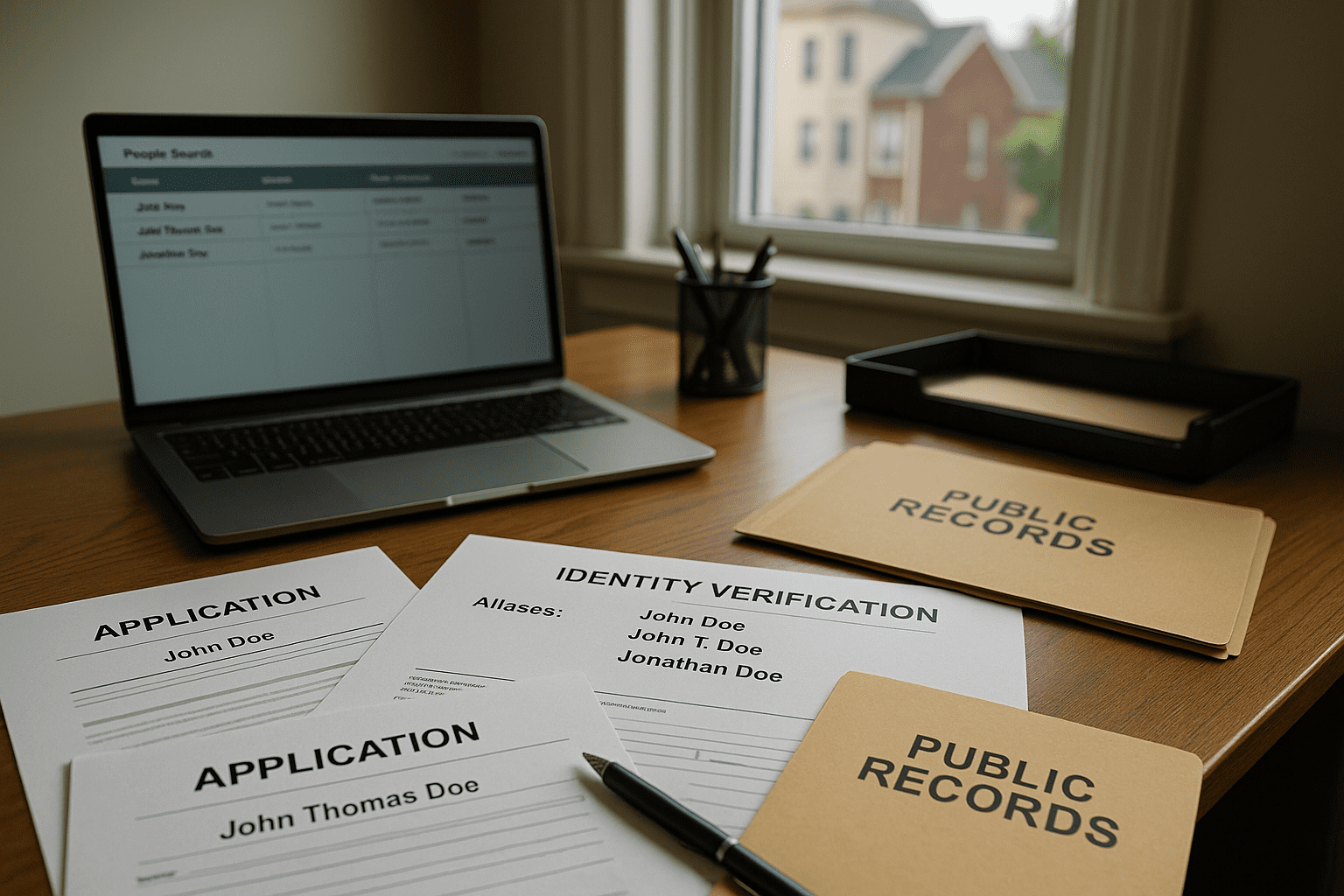
Aliases are not just casual nicknames or simple typos in a record. They include an array of name variations such as legally changed names, maiden names, stage or professional names, nicknames, and sometimes deliberately chosen identities for privacy reasons. Imagine someone listed under a birth name on government paperwork, a married name in family-related filings, and yet another variant in professional licensing databases. These snapshots rarely align in neat rows, forcing anyone examining records to piece together a puzzle with parts that look similar but do not quite match.
Connecting these aliases often leads to conflicting details-different addresses, phone numbers, or other contact information might appear across various records. This inconsistency can raise suspicion during verification, prompting questions of fraud or error. On the flip side, frequent moves, changes in service providers, or life events explain some discrepancies. This delicate balance in interpreting mismatched data means verifiers have to walk a fine line. Taking information at face value may exclude crucial matches, while too much tolerance might conflate separate individuals. It is a test of both technical and human judgment.
Verification Processes Struggle with Fragmented Identity Traces
The process of verifying identity generally depends on pulling together records from diverse sources. Multi-alias profiles disrupt this effort by scattering relevant information across disconnected datasets that don’t always communicate. You might find criminal records under one name, property ownership under another, and professional certifications in a third. Each of these isolated pieces contributes to the overall identity picture only if they can be accurately linked.
Automated systems involved in background checks often use strict matching algorithms that look for exact name matches. As a result, valuable context may slip through the cracks if a name variant is overlooked. More complex alias linkages that require probabilistic or pattern-based matching are still developing and face limits imposed by privacy laws and data quality issues. Thus, the presence of multiple aliases frequently obscures the full scope of a person’s background, leading to incomplete or skewed reports.
This scenario forces verification professionals to conduct extra manual reviews, comparing secondary details such as date of birth, social security numbers, or known familial connections. These effort-heavy steps slow down processes and increase cost. And even with careful analysis, public records themselves may be outdated or contain errors that leave final conclusions uncertain. The challenge is real and ongoing.
The Ripple Effects on Trust and Everyday Safety
Beyond professional contexts, anyone using online tools for people search notices how aliases can cloud understanding. Social media profiles, white pages, and networking sites often list different names for the same person, leading to confusion or mistrust. A simple task like confirming a former classmate’s contact information or verifying a neighborhood contractor becomes unnecessarily complicated. This illustrates how ubiquitous name variations affect daily life.
There are also more significant concerns where safety is a priority-healthcare, financial services, and law enforcement face risks from unlinked aliases. Those trying to evade legal consequences or bypass restrictions might exploit the fragmentation of public data. When aliases are not consistently connected, these systems are vulnerable to impersonation or concealment, which threaten the protections designed to keep people safe.
Legal frameworks attempt to maintain reliability by requiring updates for name changes. However, databases across federal, state, and local levels often fall out of sync. This lag means multiple names can remain active for months or years, further complicating verification for lenders, employers, or government agencies seeking a current snapshot.
Adapting Verification Tools and Human Judgment
Recent developments in verification technology aim to address these frustrations. Integration of biometric data, artificial intelligence, and enhanced database cross-referencing allows a more flexible approach to alias matching. Instead of relying solely on exact matches, systems increasingly use pattern recognition or probabilistic assessments to connect records that belong to the same person despite different names.
At the same time, these innovations meet boundaries-privacy concerns and legal regulations restrict how much data can be combined or analyzed without explicit consent. Verification experts emphasize the continued importance of confirming multiple identity clues simultaneously, such as combining name variations with birthdates and family information, to build a more reliable profile.
Ultimately, no matter how advanced the technology, the human element remains crucial. Understanding that aliases naturally arise from complex life events, legal processes, or personal choice allows for more measured interpretation of inconsistent records. This mindset prevents premature conclusions that might unfairly penalize individuals or allow risky ones to slip through unchecked.
For anyone involved in people search workflows or identity verification, the key is patience. Recognizing aliases as part of an individual’s varied identity story rather than immediate red flags helps deliver clearer, fairer outcomes. It is less about erasing multiple names and more about mapping how they relate within the broader context of a person’s life and public footprint.
With ongoing efforts to improve data sharing, match accuracy, and legal frameworks, the goal is a safer and more transparent public record environment. Until then, the multi-alias challenge remains a testament to the evolving, often messy reality of identity in the digital age.
Sources and Helpful Links
- USCIS Alias Definition – Official explanations regarding aliases in immigration records.
- Federal Trade Commission on Identity Theft – Insights into how multiple identities affect fraud and protection.
- Consumer Financial Protection Bureau on Background Checks – How public records and aliases influence reporting and verification.
- National Institutes of Health on Record Matching Challenges – Academic take on matching identities across multiple data sources.