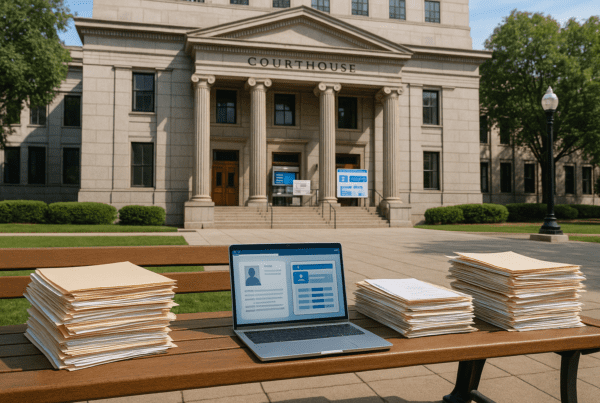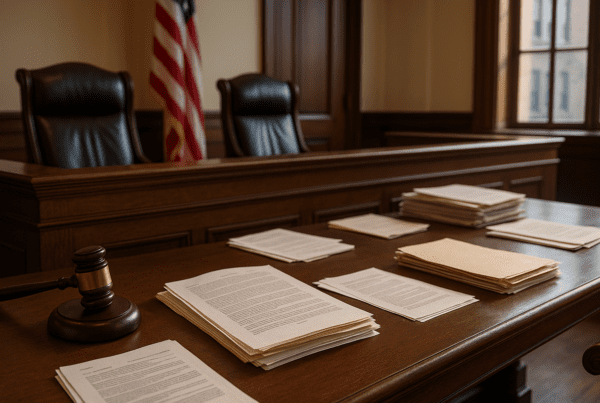

Public records quietly shape much of what we learn about the past and present. These records stand as preserved pieces of human activity, guarding everything from property transactions to court cases. Yet what endures in these archives is tightly influenced by data retention policies, the often unseen rules that govern how long records remain available. These policies are not just administrative formalities, but active forces molding the accessibility and completeness of public archives over time.
The Unseen Forces Behind Record Duration
When thinking about public records, it is easy to assume they simply accumulate endlessly, available whenever needed. The reality differs considerably. Data retention policies act as frameworks that define how long different kinds of records must be retained before they can be disposed of, anonymized, or otherwise restricted. This process involves careful weighing between preserving valuable history and respecting privacy rights, alongside practical concerns such as storage capacity and cost.
These policies can vary drastically by region, the type of record, and the legal context. For instance, financial documents might be held firmly for a set minimum period like seven years to satisfy tax regulations while criminal justice records may have much longer or more conditional retention schedules. Such variations determine what remains accessible to the public or disappears into obscurity, influencing not only today’s information seekers but future historians.
Varied Retention Across Multiple Layers of Government
Adding to the complexity is the patchwork nature of public record retention policies across different government bodies. State, municipal, and federal agencies often follow divergent rules, shaped by their unique missions, resources, and local laws. For example, one city might digitize and retain property records indefinitely, while a neighboring jurisdiction discards them after a decade. These discrepancies ripple out to affect the consistency and reliability of public records databases.
Resource disparities among agencies also play a hidden but significant role. Smaller or underfunded governments may rely on aging physical archives that are difficult to preserve or scan into digital form. Meanwhile, policies intended to protect personal data, especially in light of frameworks like the European Union’s GDPR or California’s CCPA, encourage cautious approaches that can limit how much personal information stays accessible over time.
Technology’s Impact on Record Preservation and Access
Technology has both amplified and complicated the longevity of public records. Digital archiving provides scalable storage and easier retrieval, but it also carries risks. Migrating older paper records into digital formats can lead to data loss, either through errors during conversion or obsolescence of file types. Maintaining digital archives indefinitely requires ongoing investment in infrastructure, software updates, and cybersecurity measures.
At the same time, advances like distributed backups, automated integrity checks, and cloud storage improve preservation prospects where resources allow. These technological tools can help safeguard data for future generations, but uneven funding means not all governmental bodies can implement them equally. This uneven digital transition introduces disparities into how well public records survive and remain accessible.
The Real World Effects on People Searching for Records
For those relying on public records, the outcomes of retention policies become tangible. One might find a detailed court judgment effortlessly online in one jurisdiction, while in another, similar information may be inaccessible or heavily redacted. Such inconsistencies make people searching for background details, property history, or genealogy face unpredictable experiences. Records available today may later disappear if retention rules mandate removal or archiving conditions change.
This dynamic is also felt by researchers looking to analyze trends over decades. Gaps emerge in datasets as records are purged according to temporal rules, resulting in incomplete narratives. The variable preservation practice also means the collective memory held by public archives is shaped as much by policy decisions as by the events recorded within them.
Navigating Tensions Between Privacy, Transparency, and History
Retention policies exist at the intersection of competing values. Societies generally want transparency and access to public information while increasingly demanding privacy protections. Data privacy legislation pushes agencies to carefully limit data retention, sometimes requiring that personal details be deleted after certain periods or that potentially sensitive information be shielded. Meanwhile, historians and public interest advocates emphasize the importance of keeping records intact for accountability and research.
Emerging debates suggest exploring more granular or conditional retention frameworks, offering individuals greater control over how long their data persists. Some voices advocate periodic review and potential anonymization instead of outright deletion, to protect privacy without erasing historical context. How governments balance these concerns will continue to shape the trajectories of public archives.
Tracing the Hidden Shaping of Our Shared Records
Monitoring how data retention policies develop offers insight into what histories remain visible and which slip away quietly. These rules are fundamental cogs determining the longevity of the public archives that so many depend upon. They reveal the priorities of governing bodies at a given time and the ongoing tension between remembering the past and managing information responsibly.
For anyone exploring public records, appreciating the influence of retention policies can clarify why some documents feel readily available and others vanish or are harder to find. It also invites reflection on the societal trade-offs made to preserve privacy, resource capacity, and historical heritage.
Sources such as the National Archives’ Records Management guidance provide authoritative perspectives on federal record retention practices. The International Association of Privacy Professionals’ GDPR overview explains how privacy law shapes data handling approaches globally. Meanwhile, the USA.gov public records section offers practical details about accessing government-held information and the variability across jurisdictions.
These sources together help anyone interested in public records or data persistence understand the complex weave of policies, technologies, and values that determine how long history stays within reach.
Sources and Helpful Links
- National Archives Records Management, official guidance on policies affecting the retention of federal records.
- International Association of Privacy Professionals GDPR overview, explanation of privacy law impacts on data storage and retention.
- USA.gov Public Records, overview of public record access across US government agencies.