
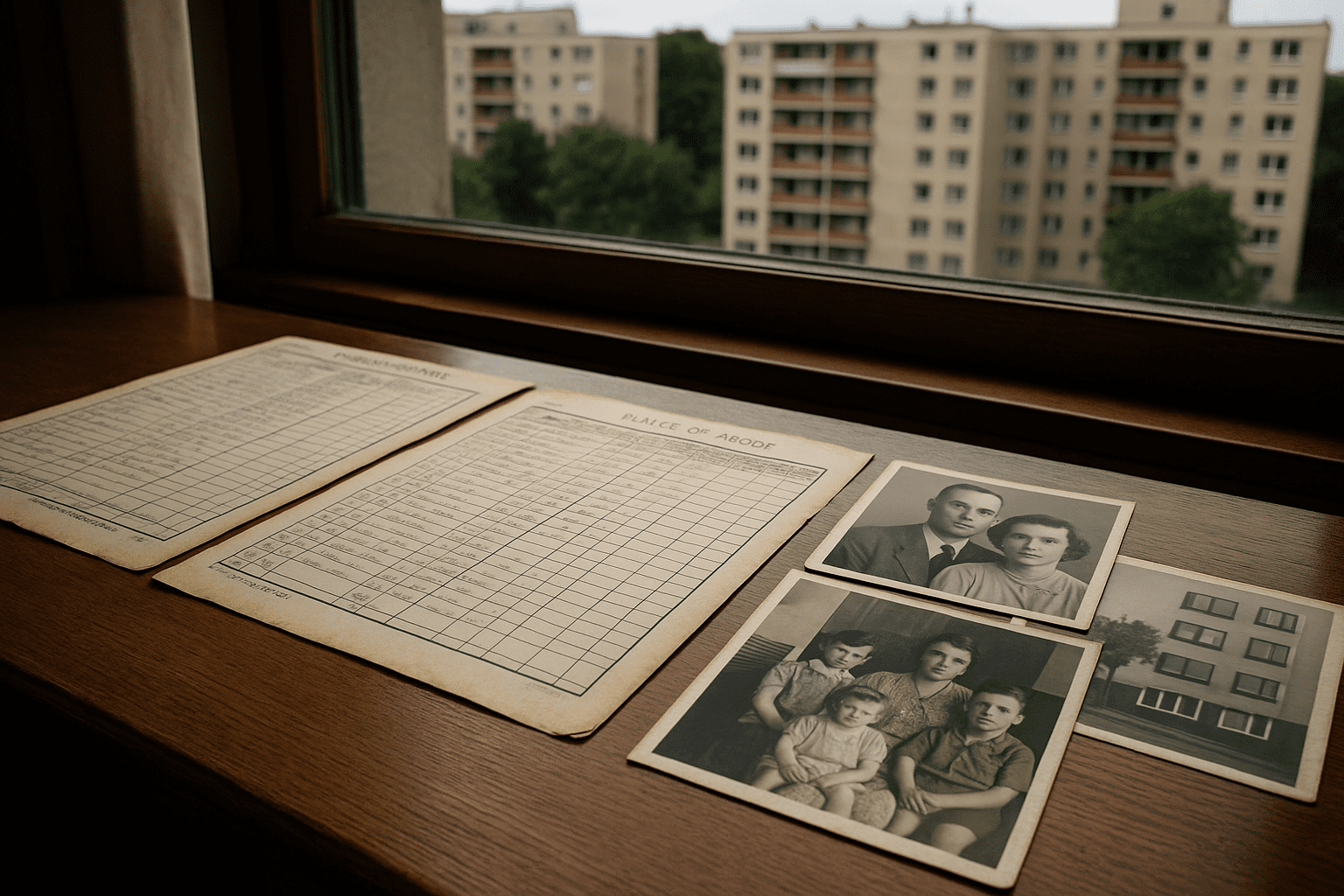
Browsing through public records feels like stepping into a quiet archive of everyday life, with the walls lined by the subtle details of household structures evolving over time. From census data to property deeds and city directories, these records quietly document the shifting architecture of family and living arrangements. They capture how households have transformed in size, composition, and purpose over many decades.
When Families Were Larger and More United Under One Roof
Going back several decades, public records often show families living with more members under one roof. Census data from the mid-20th century reveals households where grandparents, parents, children, and sometimes extended relatives made up a single living unit. Economic necessity and cultural norms played key roles in keeping these larger, multigenerational homes common. A newspaper article published in the 1950s described family households as vibrant hubs bustling with life and shared responsibility, a sharp contrast to some more recent trends.
This snapshot is reinforced by a look into property tax records and city directories which list residents sharing the same address, often showing multiple adults of differing ages cohabiting in the same dwelling. Sometimes, these records indicate boarders or lodgers, which was a popular way for families to supplement income and maximize space.
The Gradual Shift Toward Smaller, Nuclear Households
As the decades passed, public records began to reflect changes in household composition influenced by economic growth, increased mobility, and changing cultural expectations. Census figures from the 1970s onward capture the rise of the nuclear family as the dominant model. Smaller households with just parents and children becoming the most common.
Property ownership records during this period often show a tendency toward single-family homes, which shaped the way families organized their living spaces. Rental agreements and lease filings offer further clues, highlighting how younger adults started moving out earlier and forming their own households separate from extended family.
Interesting patterns emerge when these records are paired with social news sources. Announcements regarding weddings, divorces, and relocations all play a part in the ebb and flow of household makeup. The records document transitions in family life-children growing up, marriages forming new households, or separations rearranging existing ones.
Diversifying Household Types into the Modern Era
More recently, public records demonstrate an even wider diversity in household composition. With shifts in social attitudes, economic pressures, and demographic changes, families today can be found in a mix of forms beyond the traditional nuclear setup. Census data shows cohabitation arrangements, single-person dwellings, multi-generational homes reappearing, and non-family households such as roommates or group living situations.
Eviction records, rental applications, and housing authority databases trace the rise of urban living trends and the challenges of housing affordability. They suggest how economic factors put pressure on individuals and families to rethink who shares a home and why. Meanwhile, property transactions and mortgage records can indicate whether homes are owned or rented, hinting at longer-term stability or more temporary living arrangements.
Connecting the Pieces for Genealogy and Social Research
For genealogists and social historians, this evolution of household composition is more than just numbers. Each record opens a window into how ancestors and communities adapted to their times. By piecing together census returns, voting registrations, and address directories, it becomes possible to see not just where someone lived, but how their social environment and family networks changed.
Researchers often rely on the layering of multiple public records to make sense of household shifts. For example, comparing marriage certificates with census records can clarify who joined or left a household. School enrollment lists might suggest the presence of children, while tax records can point to the economic status and size of a residence.
Clearly, these documents serve as a collective diary that chronicles the ebb and flow of family life across generations. By analyzing them, observers gain a clearer picture of social mobility, migration, and the evolving concept of what it means to share a household.
Patterns That Reflect Broader Social and Economic Trends
It is telling that the story told through a stack of public records often echoes well-known societal shifts. For example, after major wars or during economic downturns, more extended families come together, sharing resources and space. During booms, there is often an expansion of nuclear households and individual living arrangements.
Public records from the U.S. Census Bureau, collected every ten years, provide a detailed and continuous record that researchers frequently turn to. They pool together information on household size, composition, and relationships, forming a comprehensive dataset that has expanded from basic enumeration to a complex portrait of American family life.
The ever-growing availability of digital record databases further enriches how these documents can be accessed and cross-referenced. Archival sites hosting historical census data or property records enable users to track the same address, or family name, appearing repeatedly yet evolving through the decades.
Understanding these patterns also helps in recognizing when a change in household composition signals larger cultural movements, such as increasing divorce rates, rising single-parent families, or the widespread acceptance of diverse family arrangements.
Observing the evolution of households through public records reminds us that families are dynamic entities shaped by countless influences over time. These records offer a steady account of the personal and social shifts quietly unfolding behind closed doors, helping us piece together the lived experiences and identities behind the public data.
For those curious about tracing family stories or understanding broader demographic trends, delving into public records reveals more than names and dates. It reveals the rhythm of changing lives, the expansion and contraction of households, and the ongoing negotiation of what it means to live and belong together.
Public records remain an invaluable tool for mapping these changes, slowly but surely capturing the complexity and humanity of household evolution. Each document contributes a small chapter to the unfolding story, connecting the past with the present in tangible, meaningful ways.
Exploring the layers of these records is a trajectory through time that highlights the adaptability, resilience, and diversity of families and households. This glimpse into the collective memory is one that continues to grow richer as more data is digitized and made accessible for discovery.
For further insights on how public records reflect society’s fabric, sources like the U.S. Census Bureau provide an extensive hub of demographic data, and history-focused organizations offer context on how family structures have shifted in the United States. Additionally, FamilySearch is a valuable resource for genealogical data that ties into household compositions across generations. For property and address history, sites like Library of Congress public records collections help trace the historical footprints of residences and their occupants.
Sources and Helpful Links
- U.S. Census Bureau – The primary source for demographic and household data collected systematically across decades.
- FamilySearch – A free genealogy platform that aggregates records relating to family histories and household structures.
- Library of Congress public records collections – Offers access to historical documents including property and residential records.