Public records have long served as vital markers in understanding identity, history, and connections among people. These official documents-be they court records, property deeds, or vital statistics-offer structured data that helps paint a picture of individuals. Yet, there has always been a limit to how much static records tell us about the fluid, ever-changing aspects of a person’s public presence. This is where social media footprints come into play, quietly reshaping how searches for public records can unfold and what they reveal about identity.
Tracing the Digital Echoes Alongside Records
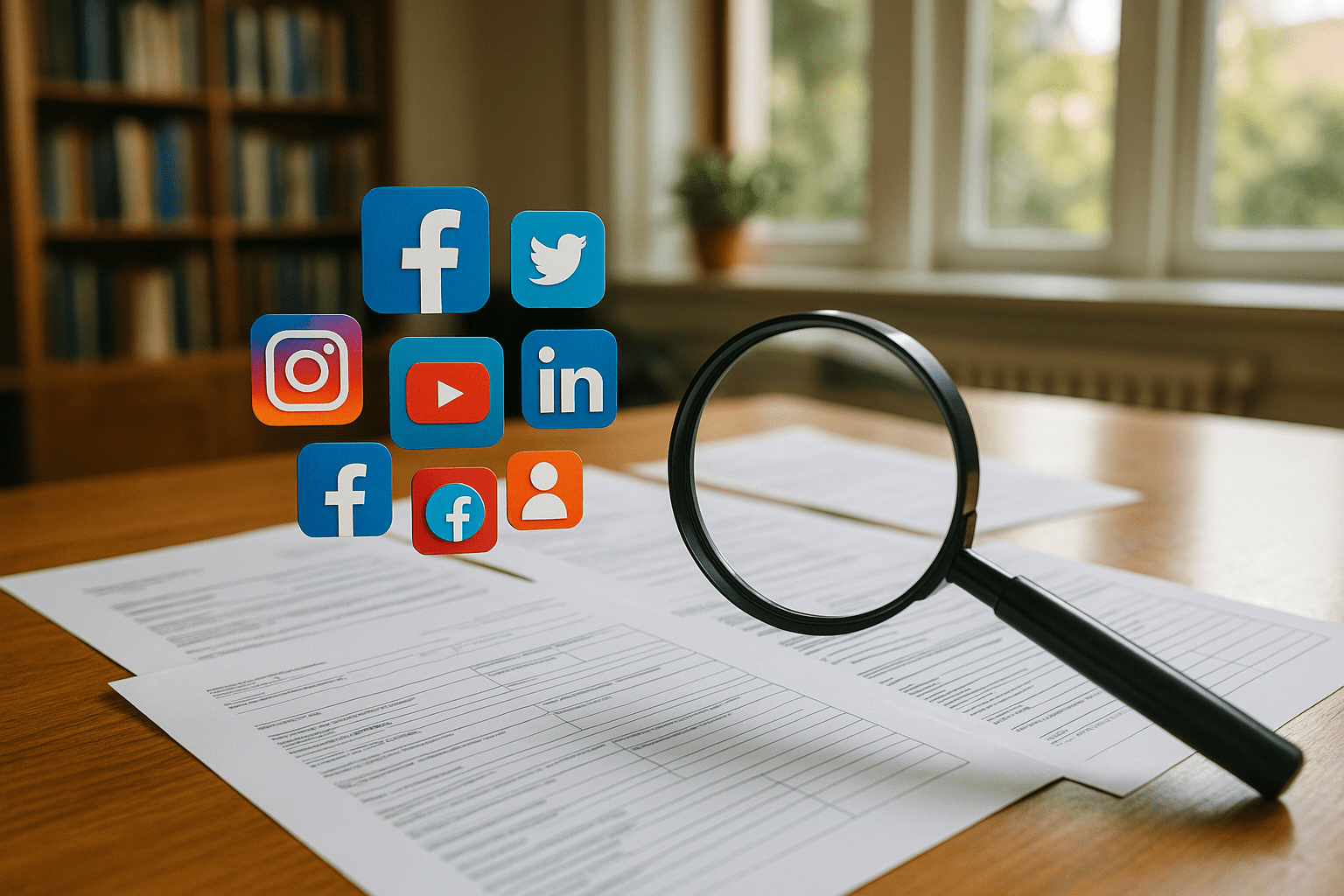
Every time someone updates a profile picture, comments on a post, or changes a location tag on a social platform, they are leaving a digital echo. These social media footprints accumulate across platforms-Facebook, Twitter, LinkedIn, Instagram, and a growing constellation of niche networks-providing a tapestry of signals. Unlike traditional public records that often require days or weeks to become accessible or updated, social media inputs can be almost immediate, reflecting recent whereabouts, relationships, and activities.
In a practical sense, these footprints offer a complementary layer for public records searches. They add real-time context to official data, often bridging gaps in logic or timeline inconsistencies found in traditional records. For instance, a long-gone address in property records may contrast with a current location consistently shown on social media posts. Seeing where and how a person interacts within digital communities can nudge searches toward more accurate or recent information.
The Rise of Social Media in Background and Identity Checks
Employers, investigators, or even individuals seeking to reconnect with lost acquaintances have increasingly turned to social media as a valuable resource during background checks. The appeal lies not only in the depth of personal and professional details available but in the capacity to cross-verify information. Social profiles often fill in the blanks where public records remain silent or outdated, offering clues about occupational roles, educational history, or social stability.
This trend is not without complications. Privacy concerns weave naturally into the fabric of decoding social media data within public record contexts. Platforms frequently change privacy settings, limit data sharing, or enforce paywalls controlling third-party access. Moreover, information that seems straightforward, like a mutual friend’s comment or a tagged photo, may require careful interpretation to avoid misreading social nuances or conjuring assumptions.
Balancing Accuracy and Interpretation in a Digital Age
Accuracy emerges as a central challenge when integrating social media footprints with public records. While traditional public records are curated and verified by government entities, social content is self-published and can range wildly in reliability. For example, a user might exaggerate credentials on LinkedIn or share outdated information on Facebook. Parsing such content alongside verified public records demands a nuanced approach, rich with cross-checking and an awareness of data context.
Interestingly, the digital signals sometimes expose contradictions worth investigating. Variations in name spellings, differing birthdates, or conflicting addresses between a government record and a social media profile spark questions rather than answers. This ambiguity illustrates the tension between static records and dynamic social content, underscoring the need for thoughtful synthesis rather than blind reliance on either source.
What Technology Brings to the Table
Recent advances in artificial intelligence and data analytics have played a significant role in weaving social media footprints into structured public record searches. Algorithms trained to recognize named entities, relationships, and behavioral patterns across large datasets are becoming more adept at connecting dots that human researchers might miss or take much longer to uncover.
These technologies can extract relevant data from sprawling social media content, filtering noise and reducing manual labor. By matching digital identities with official records and spotting linkages among location tags, event mentions, or mutual associates, computer programs offer a more integrated view. Yet, technology also amplifies potential pitfalls such as false positives or privacy violations, urging continuous oversight and conscious ethical considerations in its application.
Looking at ongoing developments, agencies and private services that specialize in people search are increasingly incorporating social media analysis as a standard component in their offerings. This shift reflects a broader understanding that identity today is partly algorithmic, partly social, and always multiplex.
A Layer of Human Judgment in an Automated World
Despite the allure of digital tools and social media scanning, human judgment remains irreplaceable. Experienced analysts bring attention to cultural subtleties, recognize patterns of intent or deception, and interpret seemingly contradictory information with awareness of context. This human element acts as a vital filter against overconfidence in raw data, especially when social media can confuse as much as clarify.
The evolving relationship between social media footprints and public records searches shows a gradual blending of these worlds. The difference comes down to blending structured, regulated data with the messy realities of digital life. Both sources contribute unique pieces to the puzzle of identity, but neither alone offers a complete picture. When both are thoughtfully combined, the resulting portrait is richer, more current, and better equipped to meet the complex questions of our time.
Overall, the conversation around social media’s role in enhancing public records searches is still settling into place. Many users and professionals remain cautious about privacy and data integrity. At the same time, the potential for improved accuracy and nuance in understanding who people are and how their public footprints evolve remains promising.
As the digital landscape continues to shift, so too will the ways we search, verify, and connect records. Keeping a watchful and adaptive eye on these changes helps ensure that we do not lose sight of the human stories behind the data while navigating the expanding world of public records and social signals.
For those who rely on public records for decisions, reconnections, or investigations, social media is now a companion piece rather than just an afterthought. It reminds us that behind static pages and official filings, there are living narratives shaped daily by the digital traces people leave behind.
Exploring these digital footprints alongside traditional public records is becoming part of the modern toolkit for anyone curious about linking identity to reality in an age flooded by information.
Understanding this intersection is not about surrendering to the overwhelming flow of data but about recognizing how distinct streams of information create a fuller, more human picture when thoughtfully combined.
Gradually, social media footprints are finding their place in the rhythm of public records searches, quietly transforming how we perceive and uncover the multifaceted identities of our time.
Sources and Helpful Links
- USA.gov Official information on accessing and understanding public records in the United States.
- Federal Trade Commission Privacy & Identity Online Guidance on privacy considerations with online data, including social media.
- Google Scholar Access to academic research on social media’s role in identity verification and data analysis.
- National Academies Press Discussion on public access to government information, providing context for data transparency.