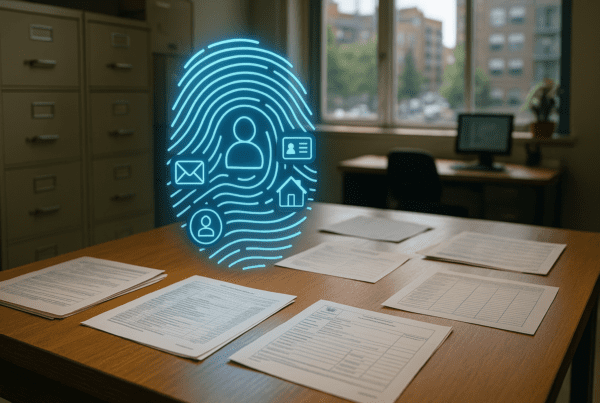

Technology’s steady march into the world of identity resolution has quietly redefined how we connect dots across diverse databases. What once relied on simple matching of names or social security numbers has expanded into complex patterns interpreted by algorithms that sift through oceans of data.
Stepping beyond traditional boundaries
For decades, identity resolution operated on relatively straightforward principles, matching identifying information from one database to another. These methods often struggled with common challenges such as variations in name spelling, outdated contact details, or even data entry errors that introduced enough noise to confound matches.
Technological advances have introduced more nuanced techniques, including machine learning models that find subtle similarities and inconsistencies across records that human eyes might miss. For example, instead of relying solely on exact text matches, systems now analyze patterns within data fields like address history, employer changes, or familial links to create probabilistic connections between identities.
This shift has meant a transition from deterministic frameworks-where the match is either exact or not-to probabilistic models where a match can have varying degrees of certainty based on multiple data points. These models weigh evidence across sources, accommodating imperfect or incomplete information without discarding potentially valuable records.
Connecting fragmented data sources
One persistent obstacle in identity resolution remains the fragmented nature of data itself. Information is often scattered across government databases, credit bureaus, social networks, and publicly available records that do not speak the same language. Data privacy regulations also limit how datasets can be combined or shared, adding layers of complexity to the task.
Emerging technologies have pushed forward standards and interoperability tools to bridge these gaps. APIs and secure data exchange protocols facilitate controlled sharing of information between systems while preserving privacy requirements. This allows platforms specializing in identity verification or fraud detection to pull from multiple repositories with updated access controls rather than working from isolated snapshots.
For instance, natural language processing (NLP) techniques help standardize unstructured data-like free-text address fields or comments-into usable formats. Similarly, advances in entity resolution algorithms parse through variations in name formats (such as initials, nicknames, or suffixes) to prevent common pitfalls in matching.
The role of biometrics and alternative signals
Beyond traditional identifiers, newer layers of identity signals have started to influence cross-database resolution. Biometrics such as facial recognition or fingerprint data introduce unique, hard-to-fake markers that can instantly link records tied to the same individual, especially in sectors like border control or financial services.
Although biometric data is sensitive and subject to strict regulation, it exemplifies how the concept of identity is evolving beyond name and number matches toward more holistic verification. Other signals like device fingerprints, behavioral biometrics, or networked device data provide indirect but powerful clues to resolution tasks in digital environments.
These alternative signals also raise important questions about privacy, consent, and data governance. The balance between effective identity resolution and protecting individuals from intrusive surveillance remains a subject of active debate, especially as capabilities outpace legislation.
Learning from data patterns and anomalies
The increasing sophistication of analytic methods means that identity resolution no longer looks only for positive matches but also analyzes negative space-patterns of absence, inconsistencies, or anomalies across datasets. For example, detecting fraudulent identity claims may hinge on observing mismatches in address histories or sudden, unexplained changes in associated contact details.
Machine learning models excel at uncovering these subtle signals by training on vast historical datasets and evolving their parameters as new data arrives. This adaptive quality is vital given the dynamic nature of identity information, where people move, change names, or acquire new affiliations regularly.
Identity resolution solutions increasingly incorporate feedback loops where human reviewers verify uncertain matches, then feed their decisions back into training data. This hybrid approach blends computational speed with human judgment, helping to refine accuracy over time.
Looking at practical implications
For everyday users and organizations relying on identity verification, these advancements mean access to more reliable and comprehensive profiles. Businesses reduce risks related to fraud and compliance, while consumers benefit from smoother verification experiences when opening accounts or accessing services.
However, the same complexity calls for caution. Dependence on automated systems can introduce errors or false positives if models are not properly calibrated or if data quality is poor. Transparency about sources and methods is essential for trust. Efficient identity resolution must respect privacy laws and ethical boundaries to avoid misuse or unintended biases.
While the field continues evolving rapidly, the fundamentals remain grounded in practical observation of how identities manifest in the real world through public records, address histories, and relational connections. Technology amplifies our ability to see these signals more clearly, but their meaning always depends on careful interpretation and context.
In that sense, the story of cross-database identity resolution reflects a human journey across wired, data-rich landscapes. It is about making sense of scattered clues, bridging divides without sacrificing respect for personal privacy, and shaping tools that adapt as identity itself shifts with changing social and technological environments.
As we watch these trends, the ongoing dialogue between innovation, regulation, and practical use will shape how identity resolution serves us all, balancing efficiency with fairness in the ways we connect information and people.
It is worth remembering that technology alone does not deliver perfect identity matches; it magnifies what data already reveals and what the analysts and systems interpret. That makes thoughtful application an enduring need alongside technical progress.
For those interested in the nuances of data linkage, understanding record sources, and evolving digital identity methods, keeping track of these technological impacts is an invitation to look beyond mere matching to a deeper understanding of how identities resonate across the data landscape.
After all, identity in the digital age is not merely a static attribute but a dynamic web of signals, growing richer and more complex as technology uncovers new layers of connection.
Sources and Helpful Links
- Federal Trade Commission on Identity Theft and Data Privacy Government resource outlining protections and challenges in managing identity data.
- NIST Entity Resolution Project Research on methods and standards for linking records across data sources.
- IAPP Guide to Linking Digital Identity Data Explainer from a privacy perspective about digital identity linkage and its implications.
- Wall Street Journal on Biometrics and Privacy Insightful coverage on emerging uses of biometric data and privacy concerns.