Names are among the most personal aspects of identity, yet public records reveal that the way names are recorded is anything but straightforward. As time passes and documents multiply, subtle differences in spelling and presentation emerge, showing how difficult it can be to pin down a single, stable identifier for a person.
Small Shifts That Multiply in Impact
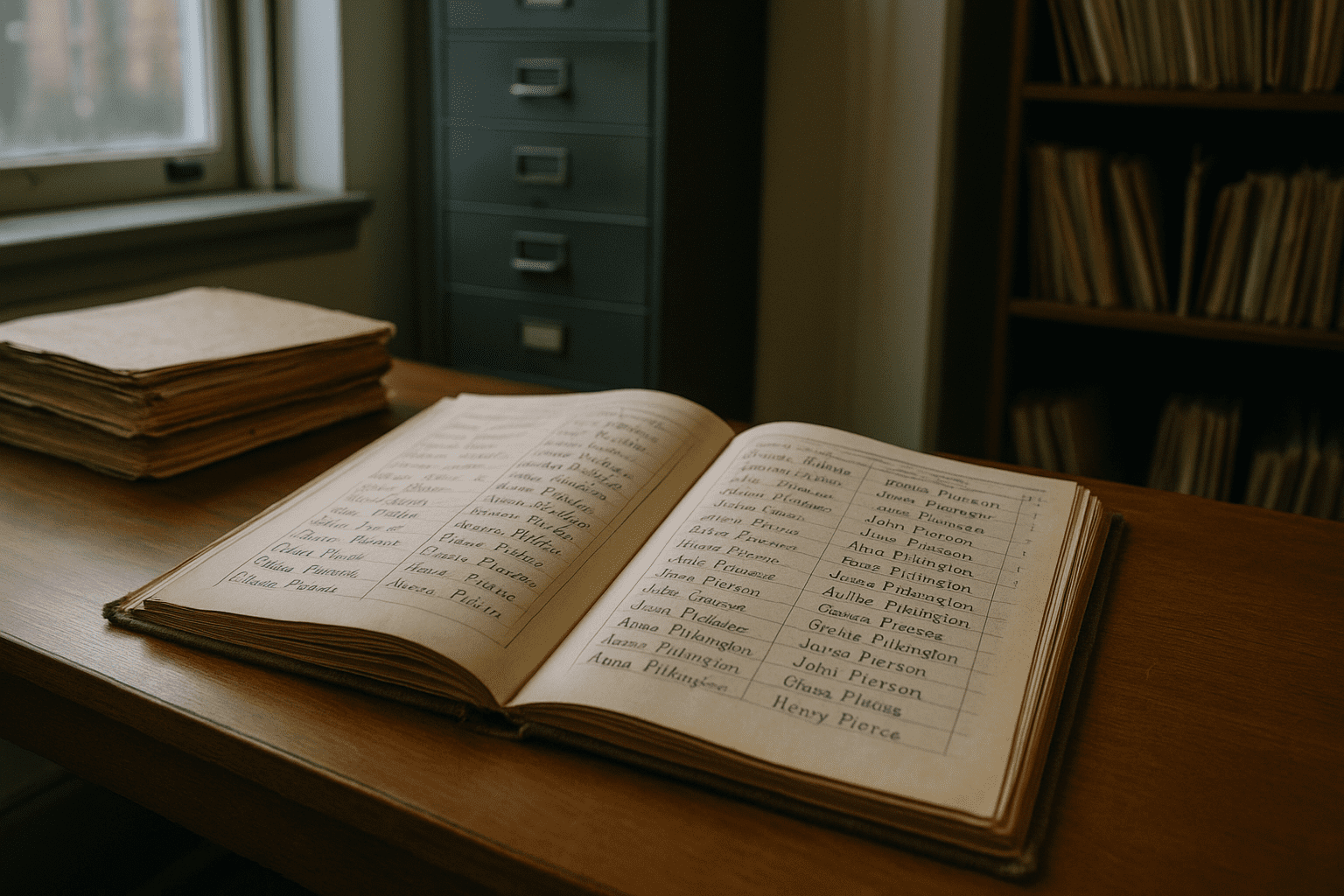
One of the most common patterns observed in name records is the variety of spellings that accumulate around a single individual. A name like “Catherine” might appear as “Kathryn,” “Katherine,” or “Cathryn” in different contexts across digital or paper records. These variations can stem from simple transcription errors, phonetic spellings, or deliberate changes made by the person or their family over generations.
From a public records perspective, even a minor discrepancy can fragment identity signals. A birth certificate might differ from a marriage license or a property deed by just one letter, but the data systems referring to these documents may treat these as distinct identities. This fragmentation can create confusion, leading to challenges for those trying to verify someone’s history or background.
Beyond simple spelling differences, public records also reflect cultural and generational naming trends. Some families adopt flexibility in how surnames are presented (such as choosing between hyphenated, combined, or separate last names), while others see first names shifted to nicknames or alternate forms within official documents. Observing these records over time reveals patterns where family traditions, linguistics shifts, and personal identity changes entwine.
The Role of Record-Keeping Systems in Identity Complexity
Data entry practices influence name variations profoundly. In many older or manually kept public records, handwriting quality and recording habits contribute to inconsistent entries. An “Elizabeth” might be recorded as “Elisabeth” simply because a clerk misread a letter, or a name could be truncated to fit space limits on forms. These inconsistencies then propagate as copies or transcriptions get made.
In digital databases, systems often rely on exact text matches unless they incorporate fuzzy matching or phonetic algorithms. However, public agencies and private data collectors vary widely in their adoption of such technologies. As a result, some systems mistake the variations as multiple individuals, causing identity confusion that affects background checks, genealogical research, or legal processes.
Privacy and administrative policies add another layer. Sometimes the choice to use initials, middle names, or suffixes (like “Jr.” or “III”) depends on regional customs or regulations, further complicating the trail through public records. These factors illustrate how identity, as reflected in names, is inherently dynamic.
Cases Where Name Variations Amplify Real-World Consequences
Consider situations where people seek to reunite with long-lost relatives or verify the authenticity of acquaintances for safety. Variations in name spellings can obscure true connections, leading to mistaken identities or missed links in family trees. Public records that differ in capturing the same person’s name can generate multiple profiles that are difficult to reconcile without additional contextual data.
Identity confusion becomes more consequential in professional or legal environments. Background checks for employment, housing, or services often depend on aggregate data from various public records, where slight name inconsistencies can cause delays or denials. Similarly, law enforcement agencies may spend valuable resources untangling whether records with similar but varied names refer to the same individual or different people.
These issues underscore the importance of cross-referencing supplementary data points like date of birth, social security numbers, or addresses. But they also reveal a lingering challenge: name variations, by themselves, are misleading signals that complicate identity verification processes in everyday life.
Understanding the Human Story Behind Record Variations
Names carry social, cultural, and familial significance beyond a string of characters in a record set. Variations often reflect life changes, such as marriage, divorce, or personal preference. For example, moving from a formal “Robert” to a familiar “Bob” in different documents reveals personal choices and social context captured imperfectly by official systems.
Immigrant populations offer another important perspective. Names undergo transformations to fit alphabets and phonetics of new countries, leading to versions of a name that differ greatly from original forms. The public record reflects these shifts, sometimes erasing or altering original identity markers in ways that challenge genealogical tracing or legal name consistency.
These layers of variation are reminders that public records are not simply neutral data points. They are a patchwork reflecting real stories, social evolutions, and administrative complexities that affect how identity is seen, understood, and sometimes confused.
Looking at records over periods and across jurisdictions reveals patterns not only of data challenges but of human behavior adapting to changing circumstances. It brings a more nuanced understanding of identity as something fluid and contextual, rather than fixed and absolute.
Searching for Solutions Amid Ongoing Data Challenges
There is growing recognition among data managers, genealogists, and privacy advocates that new approaches are needed to untangle name variation puzzles. Improved data standards and adoption of unique identifiers that go beyond names can help reduce confusion. Technologies like machine learning are being applied to link variant records more effectively by incorporating multiple attributes rather than relying on exact name matches.
Nevertheless, technology alone cannot fully resolve these identity puzzles. Human oversight, improved data literacy, and an appreciation for the complexity behind names remain critical. For users of people search tools or public record databases, awareness of these patterns is crucial to interpreting results with care and patience.
Public records paint a story as much about data systems as they do about individuals. The ongoing interplay between variation and identity reflects an evolving landscape where clarity is often provisional, shaped by both human practices and administrative frameworks.
Ultimately, exploring name variations in public records offers insight into the imperfect and ever-changing nature of identity documentation. It is a reminder that behind every name are lived experiences and shifting contexts that shape how we are seen through official eyes.
For those navigating this complex terrain, patience and a critical eye become as valuable as any database search or algorithm. Understanding the stories beneath the variations helps make sense of what at first seems confusing or contradictory, revealing identity as a richer, more human dimension than any single record might convey.
As people, families, and societies continue to change, so will the names recorded in official documents, carrying traces of history, culture, and personal choice. These variations may challenge public records professionals and users, but they also offer a window into the fluid, layered nature of identity itself.
Exploring these public record quirks is not just about data accuracy. It opens a dialogue about how we understand individuality and connection in a world of shifting names and records.
In a sense, name variations remind us that identity is both deeply personal and complicated by wider systems and histories, which is something to approach with curiosity, vigilance, and respect.
For deeper context on record keeping and identity issues, official resources like the National Archives and the U.S. Census Bureau provide guidance on data standards and name usage patterns. Privacy-focused organizations such as the Electronic Frontier Foundation offer insights on personal data challenges, including identity confusion related to public information.
Meanwhile, genealogical sites and databases help illustrate how name variants affect family research, helping users understand the real-world implications of inconsistent records.
These perspectives together help frame the ongoing story public records tell about names, identity, and the realities of maintaining clarity in an imperfect data world.
As research continues, so will efforts to smooth the gaps created by name variations, but the human nuances captured in those changes will always remain part of the record.
That rich complexity is exactly what makes exploring public records both challenging and fascinating, revealing the many dimensions of identity beyond a single name.
Sources and Helpful Links
- National Archives: Researching Names – A guide to understanding name variations in historical records.
- U.S. Census Bureau: Genealogy Resources – Offers information on how names and identities are recorded in census data.
- Electronic Frontier Foundation: Privacy and Data – Privacy advocacy focusing on personal data challenges including identity issues.
- FamilySearch Blog: Name Variations in Genealogy – Discusses why name variation occurs and how it affects family history research.