Public records often feel like a patchwork quilt of human stories, stitched together through countless papers and digital entries. Yet among the names, dates, and addresses, it’s surprisingly common to find tangled threads where identities do not align properly. Mismatches in public records can arise from simple errors to deeper confusions, and untangling them is a painstaking task made even more complicated by the sheer scale of available data. Emerging artificial intelligence (AI) methods are beginning to reshape this landscape, surfacing new possibilities for identifying these mismatches faster and more accurately than before.
When Records Don’t Match Up, What Is Really Going On?
Humans are fallible and so are data systems. Identity mismatches creep in for various reasons – a misspelled name, an outdated address, people with common names blending into one another, or even mixed records from relatives sharing similar details. Physical paperwork, manual data entry, inconsistent formatting, and lack of standardized identification add layers of difficulty. Historical records and modern digital databases often coexist without seamless integration, amplifying the risk of errors.
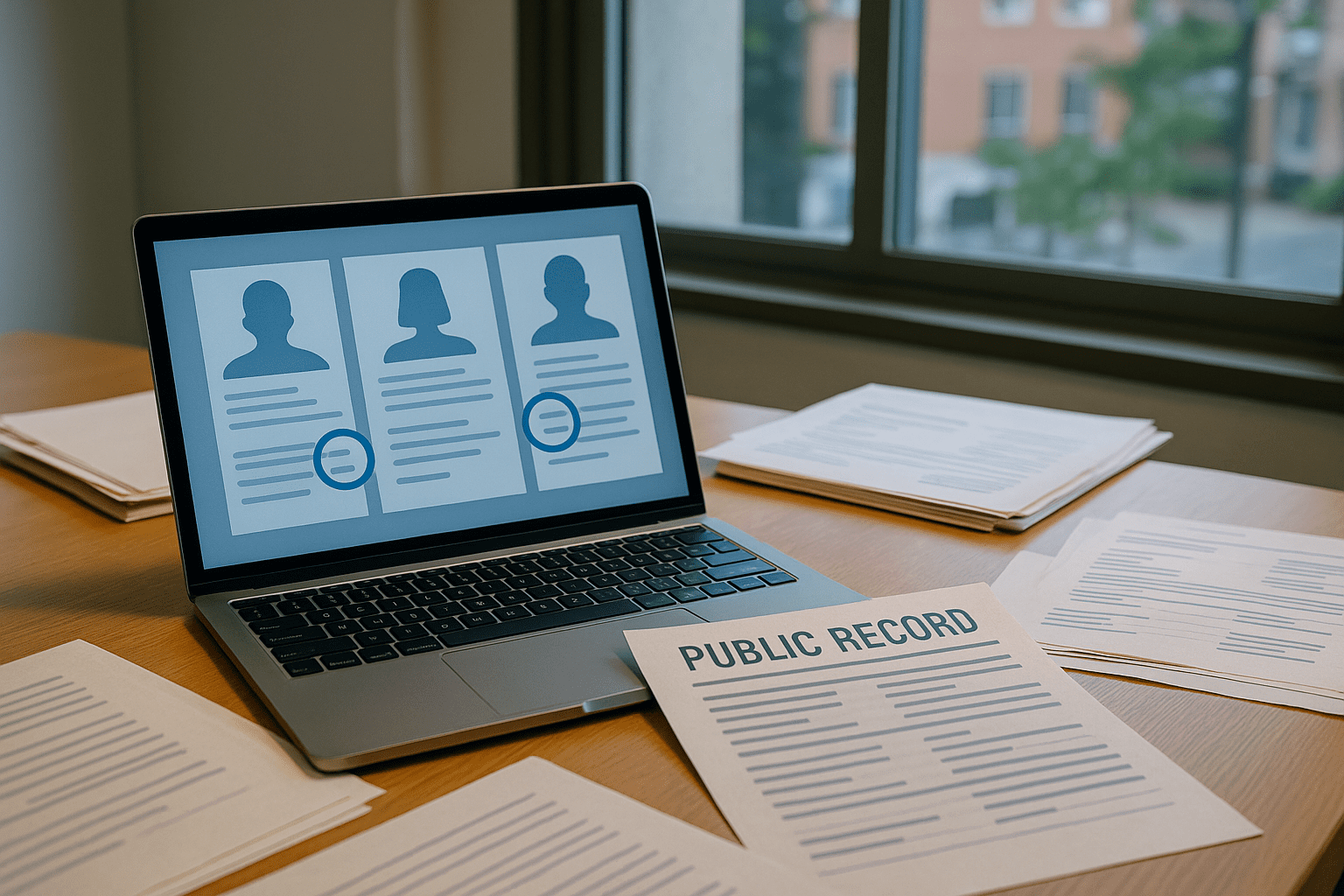
This complexity means that mistakes in identity matching can propagate widely, affecting everything from background checks and legal proceedings to genealogy and credit reporting. The errors can be subtle and persistent, leaving users uncertain about whether they’re looking at a single individual or a jumble of unrelated identities grouped accidentally.
The Rise of AI: Turning Data Complexity Into Clarity
Large volumes of public records present a daunting challenge for traditional manual verification methods. AI offers a toolkit to sift through this complexity using algorithms that learn patterns, spot anomalies, and predict connections. What sets AI apart is its capacity to analyze multiple data points simultaneously, recognizing nuances that often slip past human eyes.
Machine learning models can be trained on verified data samples to understand common patterns of errors – for example, typical misspellings, transposed digits in phone numbers, or shifts in address formats. Such models evolve by feedback, improving their accuracy over time. Natural language processing (NLP) helps make sense of unstructured texts within records, identifying key personal details embedded in disparate formats and facilitating comparison across sources that were never designed to talk to each other.
By consolidating disparate public data into cohesive profiles, AI tools help reduce confusion over which records belong together. This is especially useful in regions where identity documentation lacks uniformity or in datasets spanning multiple decades with evolving naming conventions and geographic designations.
Beyond Simple Matching: Detecting Mismatch Patterns and Anomalies
AI does more than just match names or addresses. Today’s approaches also look for irregularities that suggest mismatches. This might include unnatural clustering patterns where one identity appears with two conflicting birthdates, or temporal impossibilities where records show overlapping life events in different locations.
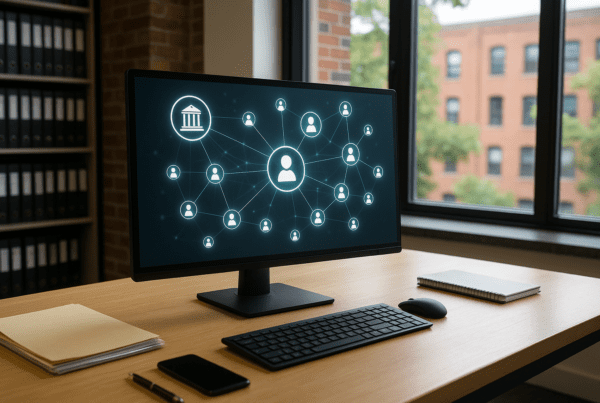
Graph databases combined with AI can trace relationships between people, addresses, and phone numbers. When contradictions arise – such as family members recorded inconsistently or a single phone number associated with multiple unrelated individuals – these flags invite deeper examination. Such patterns would be laborious and time-consuming to detect with conventional methods.
Moreover, AI models enable probabilistic assessments. Instead of rigidly declaring two records as a perfect or failed match, they assign confidence scores that help investigators weigh evidence and prioritize cases needing human review. This harmonizes automated scrutiny with careful judgment rather than aiming for unreachable infallibility.
Ethics and Privacy: Navigating the Sensitivities of AI in Identity Work
While the promise of AI in refining public record accuracy is compelling, it brings important ethical questions. Data privacy concerns cannot be overlooked, and transparency around how AI models make linkage decisions is critical. Users of these tools must be aware that algorithms reflect the quality and biases of underlying data, which requires ongoing scrutiny and adjustment.
Disentangling mismatches should reduce harm caused by errors, but when AI misclassifies individuals or unfairly merges profiles, the consequences can ripple through people’s lives. Balancing innovation with responsible use demands rigorous governance, audit trails, and avenues for individuals to correct or contest their records.
Recognizing that each public record stems from real human experience helps ground AI applications in respect for individuals while harnessing technology’s scale and speed.
A Part of a Larger Puzzle
The integration of AI for detecting mismatched identities in public records does not signal an end to the labor-intensive nature of data verification. Instead, it supplements and reshapes efforts, enabling researchers, institutions, and consumers to handle complexity more effectively. The tools do not replace curiosity, skepticism, and care – qualities essential to interpreting identity data thoughtfully.
Together with advancements in data standards and cooperative frameworks for information sharing, AI can help build a more reliable foundation for identity verification. This progress matters because accurate identity records underpin trust in social services, legal systems, financial institutions, and community networks.
For those navigating or managing public records, the evolving role of AI invites a new mindset towards identity data – one that embraces nuance, prioritizes integrity, and remains attuned to the imperfect but indispensable human stories behind the numbers and names.
For more about how artificial intelligence interacts with public records and identity verification, official resources like those from the National Institute of Standards and Technology provide detailed insight into biometric and identity research. Privacy considerations and best practices in data handling are discussed by organizations like the University of British Columbia Privacy Office. To understand how machine learning can be applied specifically to record linkage and data matching, the Springer Link chapter on Machine Learning for Record Linkage breaks down the algorithms involved.
Meanwhile, practical perspectives on addressing identity mismatches in public records can be found through sites like the Federal Trade Commission, which also discusses protecting oneself from identity confusion and fraud.
These resources offer a grounded understanding of the intersection between technology, identity, and data integrity as this field continues to evolve.
Sources and Helpful Links
- National Institute of Standards and Technology – Offers research on biometric personas and identity verification methods.
- University of British Columbia Privacy Office – Provides privacy best practices and guidelines for data use.
- Springer Link – Machine Learning for Record Linkage – Discusses AI algorithms used in data matching and record linkage.
- Federal Trade Commission Identity Theft Resource – Covers risks and protections related to identity errors and fraud.