
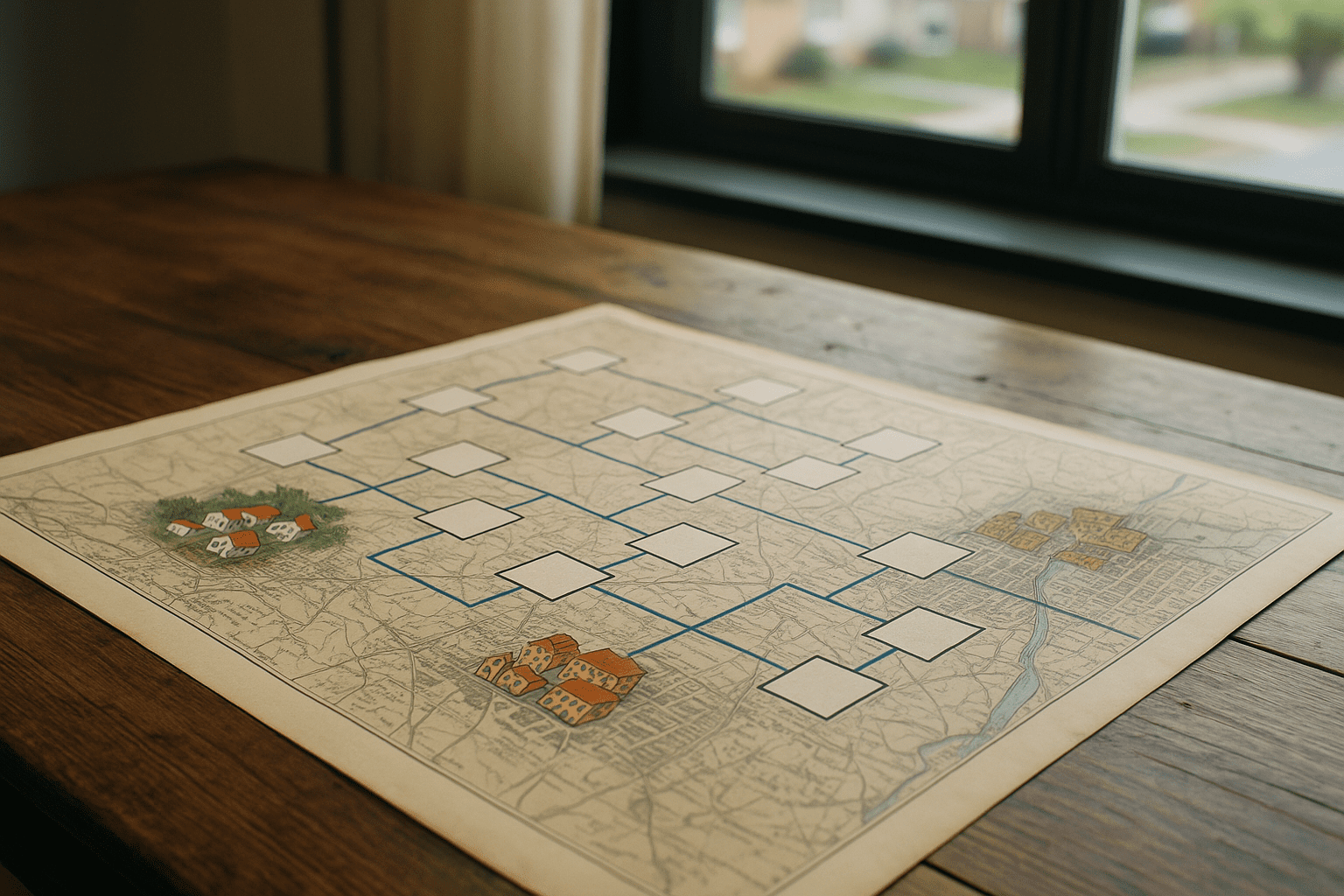
Exploring public records from a genealogical standpoint uncovers a quietly persuasive trend: family members frequently cluster in specific geographic areas over many generations. These connections, visible in documents such as censuses, land deeds, and marriage licenses, offer a window into how families maintain a sense of place despite wider social changes. This recurring pattern speaks of culture, economics, and the human inclination to hold on to places rich with personal and communal meaning.
The Roots That Deepen Where They Stand
When you sift through census reports and property transactions, what stands out is the way relatives often lived just a few miles apart, their ties never stretching far from the land their ancestors settled. This is most evident in rural regions where farming and land inheritance shaped daily life. Many families preferred to keep property within the kin group, passing it down to the next generation and staying close to neighbors who were relatives. This gave rise to a patchwork of kinship spread over a small area, a form of social safety net anchored in physical place.
Vital records like birth and death certificates underscore this geographical closeness. They reveal how families clustered in a shared zone across time, securing housing and land adjacent to other branches of the family tree. Such patterns challenge assumptions of constant outward migration, showing instead how stability and rootedness defined many family histories.
Social Networks and Economic Forces Holding Families Together
The reason families often lived within a manageable distance surfaces more clearly when public employment documents and business records enter the picture. Local economies created jobs that made it practical for kin to remain nearby. A family member’s workplace in a mill or cottage industry could serve as a magnet for others, who sought familiar surroundings alongside a livelihood.
Marriage records also illustrate the social fabric woven by long-standing connections, where marriages between members of neighboring families cemented social bonds and helped keep property within an extended family. Probate files offer further detail, showing how estates passed along predictable lines and how family units managed their affairs collectively. These visible threads in public archives display how community, economy, and family life were intimately linked by geography.
Change Comes Slowly, but it Comes
Despite these resilient local clusters, changes did occur as new opportunities emerged in growing cities and industrial centers. Various migration records show whole branches of families moving away, seeking work or education in places far from their ancestral homes. Even so, many families held on to their original locales as a point of reference. When younger generations returned or stayed connected through visits and communication, the cluster effect often reemerged.
Looking at educational and military service records adds nuance to this picture. Children might attend schools in town for some years but live with relatives nearby, and enlistment or service often meant temporary departures. Still, public records frequently indicate these episodes as pauses rather than permanent breaks, as families remained linked to their home regions over decades.
Modern Technology Highlights Old Patterns
The digital age has transformed how genealogists and researchers perceive family geography. Online mapping tools alongside digitized public records now enable the visualization of family clusters through time and space with remarkable clarity. Platforms that correlate census data with voter registrations, property deeds, and phone directories allow for a dynamic view of how families moved, stayed, or returned.
Websites like FamilySearch bring together diverse datasets to show ancestor residences as part of a lived community rather than isolated points. This approach reveals the interplay between individual choices and broader social or economic currents, offering a richer understanding of how geography shaped family stories. Even though records can be incomplete or fragmented, digital tools help piece together the mosaic of these enduring family landscapes.
The Unseen Stories Within Addresses and Dates
Behind every household address in public records lies a narrative about belonging and the tug of familiar surroundings. Families clustered across generations reflect a balancing act between the urge to explore new horizons and the pull of home. These patterns speak to everyday realities-where trusted neighbors become kin, and family history unfolds not just through names and dates, but through shared locations and intertwined lives.
For many tracing their ancestry, these geographic clusters are a meaningful reminder that family history is more than a timeline. It is geography in motion, with lanes traveled repeatedly or rediscovered anew. Public records, in their quiet way, document this continuous thread, showing how families navigated time and place together, often choosing proximity as a form of resilience.
For those curious about discovering these connections, the United States Census Bureau’s genealogy resources offer useful historical population data. The National Archives provide access to a host of migration and census records that illustrate family movements. Meanwhile, FamilySearch presents tools to explore ancestral residence and ties through various public documents. For insights into early American family geography, American Ancestors offers resources focusing on land and probate records within historic communities.
Sources and Helpful Links
- United States Census Bureau Genealogy Resources – A repository of population data valuable for tracing familial geographic patterns across generations.
- National Archives Genealogy Records – Official census and migration records that help document family clustering and movement.
- FamilySearch – A comprehensive genealogy site offering tools for exploring and understanding ancestral residence patterns.
- American Ancestors – Insights on family geography and historical community records in early America.