
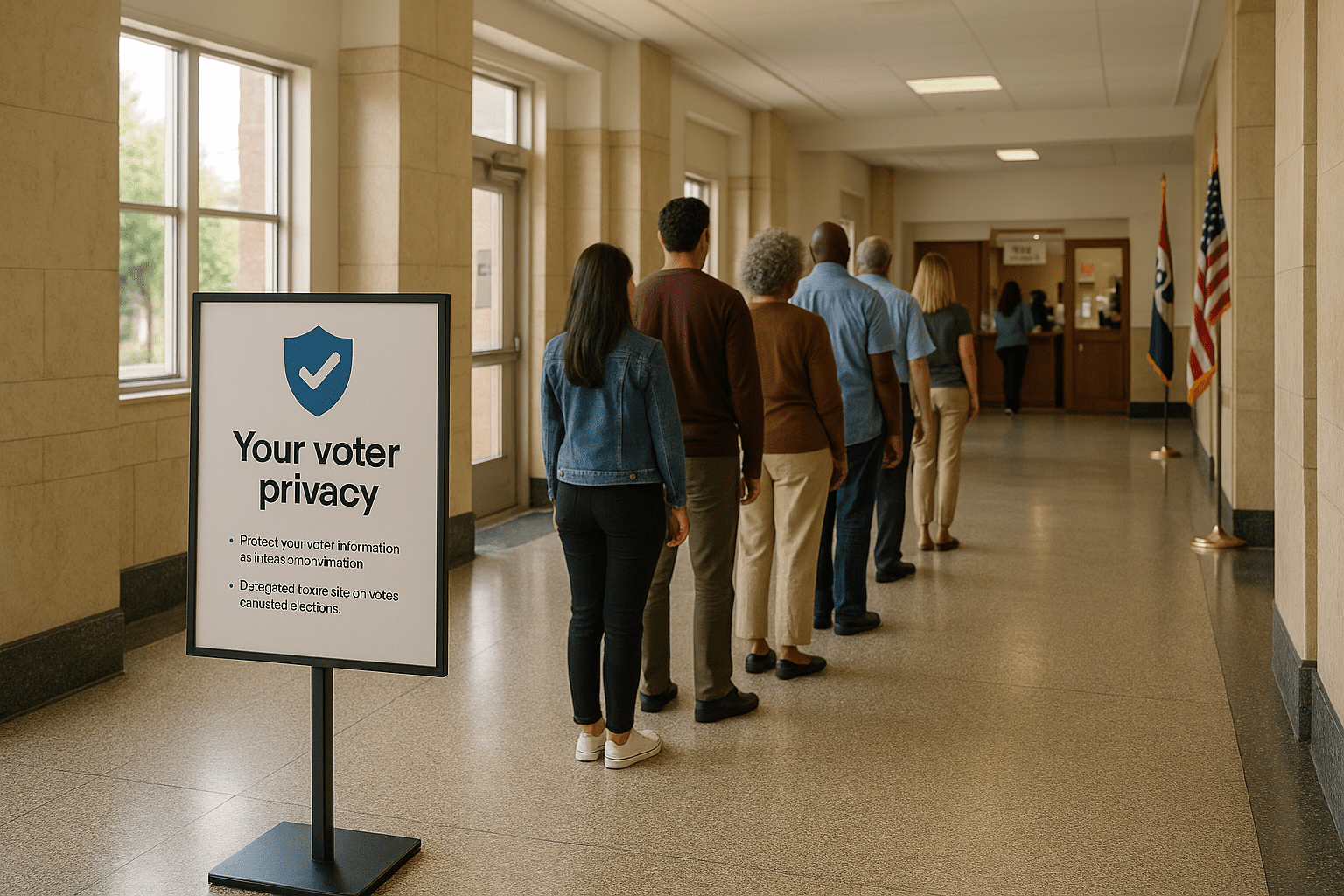
Privacy laws affecting public records have taken center stage in recent years, and voter registration data sits at a curious crossroads. This data has long stood as a public resource, essential for transparency in elections, fraud prevention, and community engagement. Yet emerging state privacy statutes are increasingly limiting who can see this information and how it can be used. Watching these changes unfold sheds light on a broader tension between promoting open government and safeguarding citizen privacy.
A subtle but serious reconfiguration of transparency
Traditionally, voter registration lists have been accessible by law to political campaigns, journalists, researchers, and everyday people seeking to verify voter information. These lists often include names, addresses, party affiliation, and voting history excluding ballots themselves. While the public nature of this data has always raised concerns, the ease of access was taken almost for granted by many involved in civic processes.
What strikes observers now is how much state legislatures have started adjusting these rules. While some changes are aimed at restricting commercial vendors from mass data scraping or curb potential harassment risks, others lean towards fundamentally redefining what voter rolls are supposed to be: less a public ledger, more a regulated, privacy-conscious database.
This shift has not unfolded uniformly, which contributes to a patchwork of rules that directly affects how voter registration information can be used and by whom. Such changes complicate efforts by watchdog groups or journalists trying to ensure election integrity or spot irregularities since the official rolls may no longer be so openly available. The balance between protection and openness feels less stable than it once did.
The varying landscape across states
Looking across the country reveals a spectrum of approaches. For example, states like California have introduced statutes placing significant limits on data resale and broader uses of personal information, including voter data. Georgia, in contrast, has taken a slightly different path by enhancing security protocols and controlling data verification processes, rather than closing access outright.
Meanwhile, newer privacy laws inspired by frameworks such as the California Consumer Privacy Act (CCPA) or Virginia’s Consumer Data Protection Act build new expectations around transparency and consent for personal data usage that touch voter records in indirect ways. These laws often require careful recordkeeping about data requests and impose penalties for unlawful sharing. As these protections expand, even traditional government datasets come under closer scrutiny.
The practical consequence of this patchwork is that political campaigns, advocacy organizations, and data brokers must navigate a complex legal landscape when sourcing voter registration data. The federal level has remained mostly hands-off in regulating these specifics, leaving states to set their own course. This autonomy yields a confusing map for anyone seeking accurate, timely voter lists for legitimate purposes.
Implications beyond the immediate elections cycle
On a broader scale, these legal changes reveal a shift in how voter data is perceived in terms of personal identity protection. Once considered public in much the same way voter participation records are public, this data now shares more characteristics with broader personal data regulated under privacy laws. The consequence is a potential chilling effect on openness since agencies may err on the side of withholding information or complicating access protocols to avoid liability.
At the same time, there is a real risk of excluding some legitimate actors from accessing voter data needed to promote electoral participation or hold government accountable. Nonprofits and journalists frequently rely on these records to verify candidates’ claims or contact voters for education efforts. When data access becomes uncertain or costly, these activities become more challenging.
Regulators, meanwhile, are walking a tightrope attempting to shield residents from threats such as doxxing or data misuse while preserving public oversight of electoral processes. The nuanced demands of voter privacy and election integrity do not always align neatly.
Looking at the role of technology and data handling
Advances in technology add a further layer of complexity. Sophisticated algorithms can cross-reference voter data with other publicly available records to create detailed profiles that were unimaginable just a decade ago. These developments invite scrutiny but also raise urgent questions about who should control access and how privacy can be preserved in a digital era.
State election officials increasingly rely on secure digital platforms to manage data and respond to access requests. The policy decisions built into these systems affect not only compliance with new laws but the speed and transparency of information sharing. Ongoing discussions about auditability, encryption, and access logs play into these evolving dynamics.
Meanwhile, the continuing debate in courts and legislative sessions about what constitutes public information highlights a growing awareness of data’s value beyond traditional civic uses. Voter registration data, once seemingly straightforward, now sits at the intersection of public trust and personal rights in ways that call for ongoing observation and evaluation.
As more states refine their privacy rules, it becomes clear that the treatment of voter registration data will remain an evolving area for public record research and election transparency. Watching this impact unfold shows a complex dance between protecting individual privacy and sustaining the openness that underpins democratic participation.
For those involved in people search or public records research, awareness of these shifting rules is becoming essential. Understanding why access may be restricted, and how that aligns with broader privacy trends, offers useful context for interpreting available voter data. Ireland, for example, has distinct transparency and privacy frameworks that demonstrate how varying cultural and legal attitudes shape public data management globally, worth noting for comparison.
All these developments suggest that voter registration data access in the United States is no longer simply a matter of public record, but a nuanced topic requiring careful navigation by users, overseers, and lawmakers alike.
Sources and Helpful Links
- National Conference of State Legislatures – Overview of voter registration privacy laws and state regulations
- U.S. Election Assistance Commission – Information on voter list maintenance and voter registration policies
- Privacy Rights Clearinghouse – Summary of consumer privacy laws affecting data access
- Brennan Center for Justice – Research on privacy considerations for voter data usage