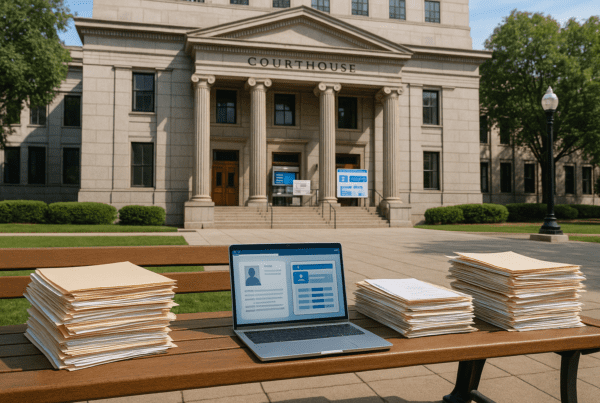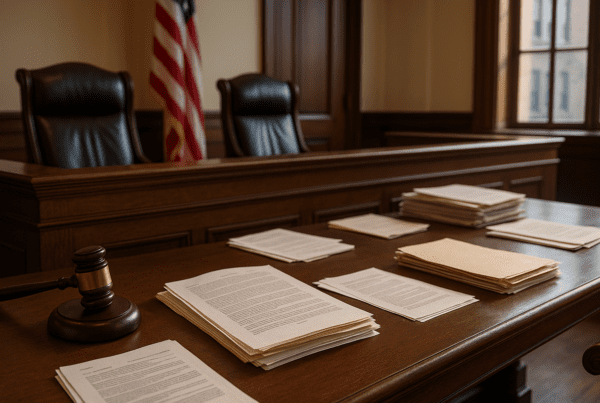

When people look up someone through a people search service, it can be tempting to include court record summaries as a way of providing quick insight on legal history. Court records are officially public documents, so the assumption often is that sharing their summaries is no different from sharing any other piece of public information. Yet the reality is more nuanced. The legal implications of presenting court record summaries in people search reports echo broader tensions between public access, privacy, accuracy, and fairness.
The complexity behind public court records and privacy
One might think public records are simply public, and thus free to share in any form. But even though many court records are open to public inspection, privacy laws and regulations do sometimes limit how that data can be disseminated or repurposed. Sharing a bare summary of a case can strip away important context, creating misunderstandings or unfair characterizations of the person named. Indeed, courts and legislators grapple with balancing transparency and protecting individuals from harm caused by misuse of their records.
For example, some jurisdictions have rules restricting commercial use of certain court data or require providers to clearly state the source and accuracy of records included in people search results. These laws reflect concerns about outdated or incomplete information being recycled without recourse. Privacy advocates have also pushed for masking or redacting personal identifiers in sensitive proceedings, particularly in cases involving juveniles, victims, or sealed matters, underscoring that not all public court records are automatically fit for general sharing.
Many of these protections take shape in the form of statutes like the Fair Credit Reporting Act (FCRA) in the United States, even though court records themselves are outside what is traditionally considered a “consumer report.” Still, when companies use court summaries as part of background checks or influence decisions related to employment or housing, they risk crossing into regulated territory where consent, accuracy, and dispute rights become critical.
What does accuracy really mean in a court record summary?
A court record is often a complex legal document containing detailed pleadings, motions, rulings, and outcomes. When distilling this into a summary for a people search report, there is an inevitable loss of nuance. One might focus on charges rather than their final disposition, or miss appeals and expungements that change the significance of the underlying event.
Errors in extraction or interpretation can mislead the report user into taking a false impression as fact. Imagine a scenario where an individual was acquitted or had charges dropped, yet the summary references the initial allegation without update. This creates reputational risk and potential liability for people search providers. Courts have occasionally ruled on cases where dissemination of partial or inaccurate court information harmed an individual’s opportunities or led to defamation claims.
Ensuring accuracy means more than just faithfully copying text from records. It involves maintaining currency, clarifying context, and ideally linking to the original documents for independent review. Even so, people search services tend to limit detail for brevity and readability, adding layers of editorial choice that complicate the legal standing of shared summaries.
The emerging landscape of regulation and compliance
Across states and at the federal level, evolving policies are shaping how court records can appear in third-party reports. In the United States, initiatives to modernize public records websites aim to increase transparency. However, alongside this push, regulators like the Federal Trade Commission have scrutinized how consumer reporting agencies incorporate court data in tenant screening and employment checks.
The interplay of freedom of information laws, data protection rules, and anti-discrimination laws creates a patchwork that people search companies must navigate carefully. For example, the risk of violating Fair Housing Act provisions by sharing records that disproportionately impact protected groups has led some providers to limit or eliminate certain court data from their results.
Some states impose their own limitations on redistributing court records or mandate opt-out rights to individuals. This adds operational complexity and legal risk, especially for services aggregating vast amounts of record summaries from multiple jurisdictions. Many providers turn to compliance specialists and legal counsel to build frameworks that reduce exposure while maintaining as much usefulness as possible.
What users and subjects of reports need to consider
For individuals using people search services, awareness of the limitations and legal landscape is crucial. Court record summaries in a report should not be treated as definitive proof without checking the original documents or seeking legal advice. They serve as one piece of a broader picture and should be viewed with an understanding of potential gaps or errors.
Meanwhile, people named in these reports face challenges in addressing inaccuracies or seeking remedies. Unlike official court records, which can sometimes be corrected or sealed through formal processes, summaries compiled by private companies may have limited pathways for correction. This underscores the importance of transparency around sources, update cycles, and dispute mechanisms.
Consumers trying to reconnect with someone or verify identity will find that knowing the legal boundaries around court record summaries helps set realistic expectations. Privacy rights, evolving legislation, and data accuracy all shape the experience in subtle but meaningful ways.
Services like the Federal Trade Commission’s guidance on personal information also provide broader context on protecting data and understanding rights when using or appearing in people search reports. Meanwhile, courts themselves often maintain portals to review case information, which remains the most direct source of truth.
A carefully balanced approach over easy sharing
The inclination to include court record summaries in people search reports reflects a demand for accessible information, but legal considerations counsel caution. Sharing such summaries carries risks if done without clear accuracy standards, compliance with privacy laws, and sensitivity to context. The tension between the public nature of court records and an individual’s right to fair treatment is set to continue shaping this area.
For providers, taking a thoughtful, legally informed approach is not only a regulatory necessity but a way to maintain trust. For users, understanding that court record summaries in people searches offer a snapshot rather than a comprehensive picture helps in forming fair judgments and respecting privacy. Ultimately, court data is one thread in the fabric of identity information that requires careful weaving.
For those interested, resources such as public health legal information sharing guides and Department of Labor details on FCRA can shed light on the regulations that have influenced how court records should be handled in third-party reports.
The practical challenge remains translating complex legal data into accessible summaries without crossing lines that may expose providers or unfairly impact individuals. The landscape remains dynamic, underscoring the value of vigilance, transparency, and respect for privacy rights.
In the end, sharing court record summaries in people search reports is not merely about publishing facts. It involves navigating a web of legal, ethical, and practical roadblocks that reflect society’s ongoing effort to balance open justice with personal dignity.
Sources and Helpful Links
- Federal Trade Commission – Personal Information Security Clarifies consumer rights regarding personal data and usage in reports.
- NACCHO – Legal Considerations of Public Information Sharing Overview of legal contexts in sharing sensitive public data.
- U.S. Department of Labor – Fair Credit Reporting Act Details on the protections and limits surrounding consumer reporting acts relevant to court data.
- CourtListener A searchable repository of court records and case opinions for independent review.
- United States Courts – Court System Basics Explains the nature and availability of public court records throughout the federal system.