
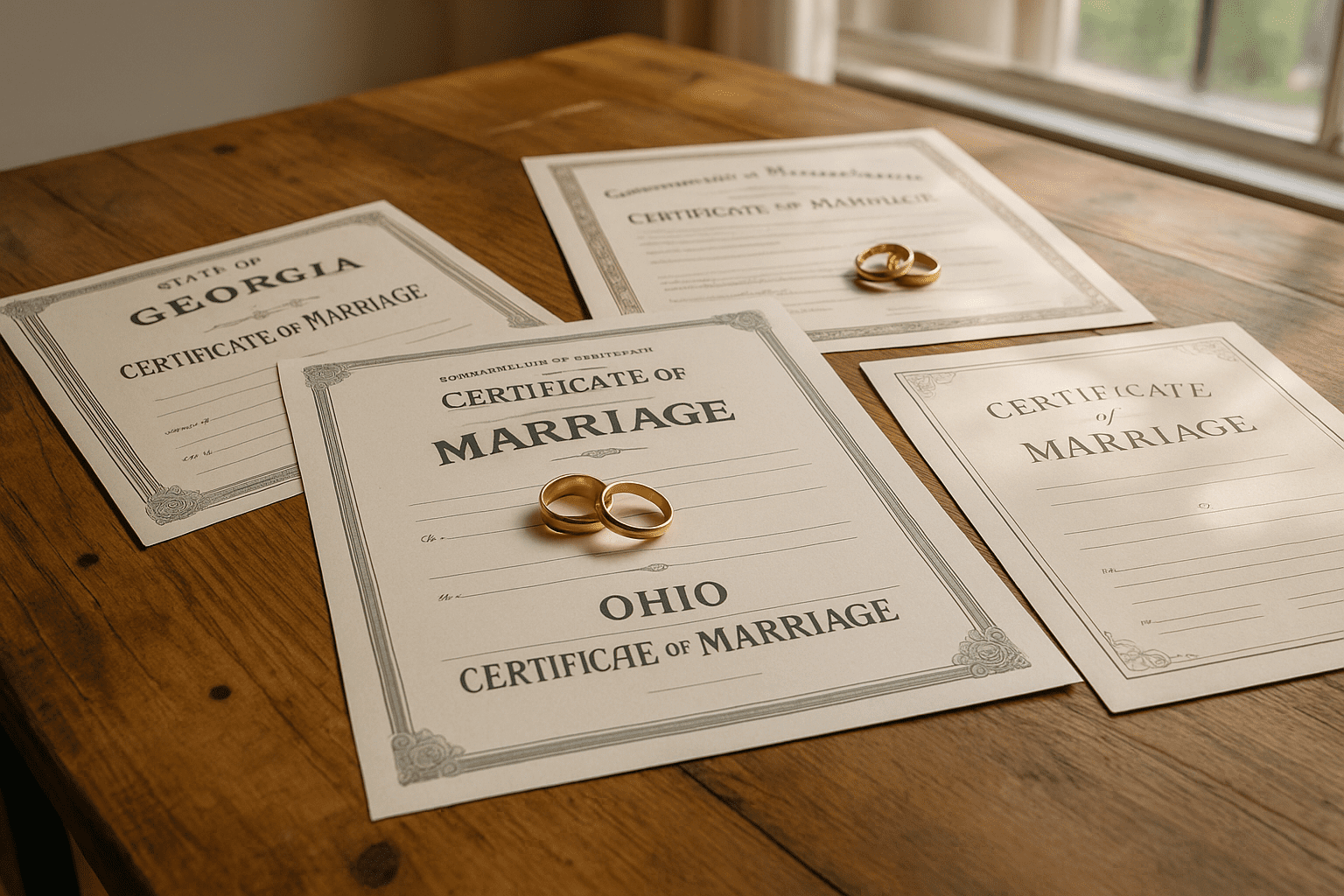
Marriage has long been a central feature of American life, but looking over the details captured in public records, it is clear that the institution no longer follows a uniform path. Instead, it reveals a patchwork of patterns and changes that vary widely across states, reflecting differences in culture, economy, law, and social values. These records, often seen as mere administrative paperwork, quietly detail sweeping shifts in how people approach marriage, how long unions last, and who is getting married.
Rising Ages Reflect Broader Social Currents
Marriage certificates offer an early hint at a central change: Americans are increasingly postponing tying the knot. This trend toward later marriage has steadily gained ground over decades, as confirmed by the CDC’s comprehensive data. The median age for first marriages now stretches into the late twenties and early thirties in many states, especially in urban and economically diverse regions.
The reasons behind delaying marriage are numerous and interwoven. Extended education periods keep many young adults focused on academics or skill-building longer than before. Careers often take priority, and the personal valuation of financial and emotional stability before marriage has risen. These are not uniform choices, however. States where traditional family models and earlier marriages once dominated now also show signs of increase, though they tend to lag behind major metropolitan states.
Marital Duration as a Window into Economic and Legal Complexities
Public divorce records also provide revealing context about marriage longevity, and here, regional distinctions come into clearer focus. For example, some southern states report shorter average durations for marriages ending in divorce compared to parts of the Northeast or West Coast where unions appear more durable. These patterns invite speculation about the influence of state-specific divorce laws, economic pressures, and social safety nets that shape decisions around commitment and separation.
In areas with greater economic challenges, where income inequality is more pronounced and social services less available, early divorces seem more prevalent. That suggests money and stability strongly intersect with marital success. Court filings, which many researchers rely on, map not just divorce timing but also remarriage trends, which often reflect shifting expectations about emotional recovery and the nature of new partnerships.
Demographic Shifts and Their Stories Written in Public Records
Marriage records capturing demographic details such as race, ethnicity, or gender identity tell a complex story about evolving social dynamics. The rise in interracial marriages, documented extensively in places like California and Hawaii, points to increasing acceptance and demographic blending over time. Additionally, the legalization of same-sex marriage in 2015 created a new chapter in matrimonial history, with states that adopted the laws early often showing rapid growth in same-sex marriages documented in official records.
Understanding these demographic shifts requires more than just numbers. Public records intersect with immigration flows, urbanization trends, and varying levels of cultural openness. They also highlight how marriage serves as a marker for social inclusion and identity affirmation, responding over time to legal changes and evolving societal attitudes.
The Gaps That Public Records Can Only Hint At
While public records provide a structured overview of marriage trends, they rarely reveal the personal narratives behind the numbers – the reasons individuals choose to marry or divorce, or the quality of those relationships. Many factors impacting marriage, like cohabitation without legal marriage, remain largely invisible in official documentation.
Geographical disparities in record-keeping, reporting delays, and unreported unions or separations further complicate the picture. Therefore, while valuable for spotting broad trends, these records are better understood as pieces of a larger social puzzle rather than definitive biographies of marital lives.
Organizations such as the Population Reference Bureau play an important role in connecting these raw data points with insightful social analysis. Their work helps translate public records into a nuanced understanding of how marriage adapts to ongoing changes in economic circumstances, cultural values, and law.
The evolving stories these records tell demonstrate that marriage in America is far from static. It flexes and adjusts, shaped by people’s lived realities and the environments they inhabit. From age to duration, from demographics to legal frameworks, the institution continues to reflect the rhythms of society’s transformations, state by state and generation by generation.
Sources and Helpful Links
- Centers for Disease Control and Prevention Marriage and Divorce Data – Official statistics on marriage and divorce trends across the US.
- United States Census Bureau on Marriage and Divorce – Demographic data and analysis on changing family structures.
- Population Reference Bureau Fact Sheet on US Marriages – Analysis linking public records with social patterns.