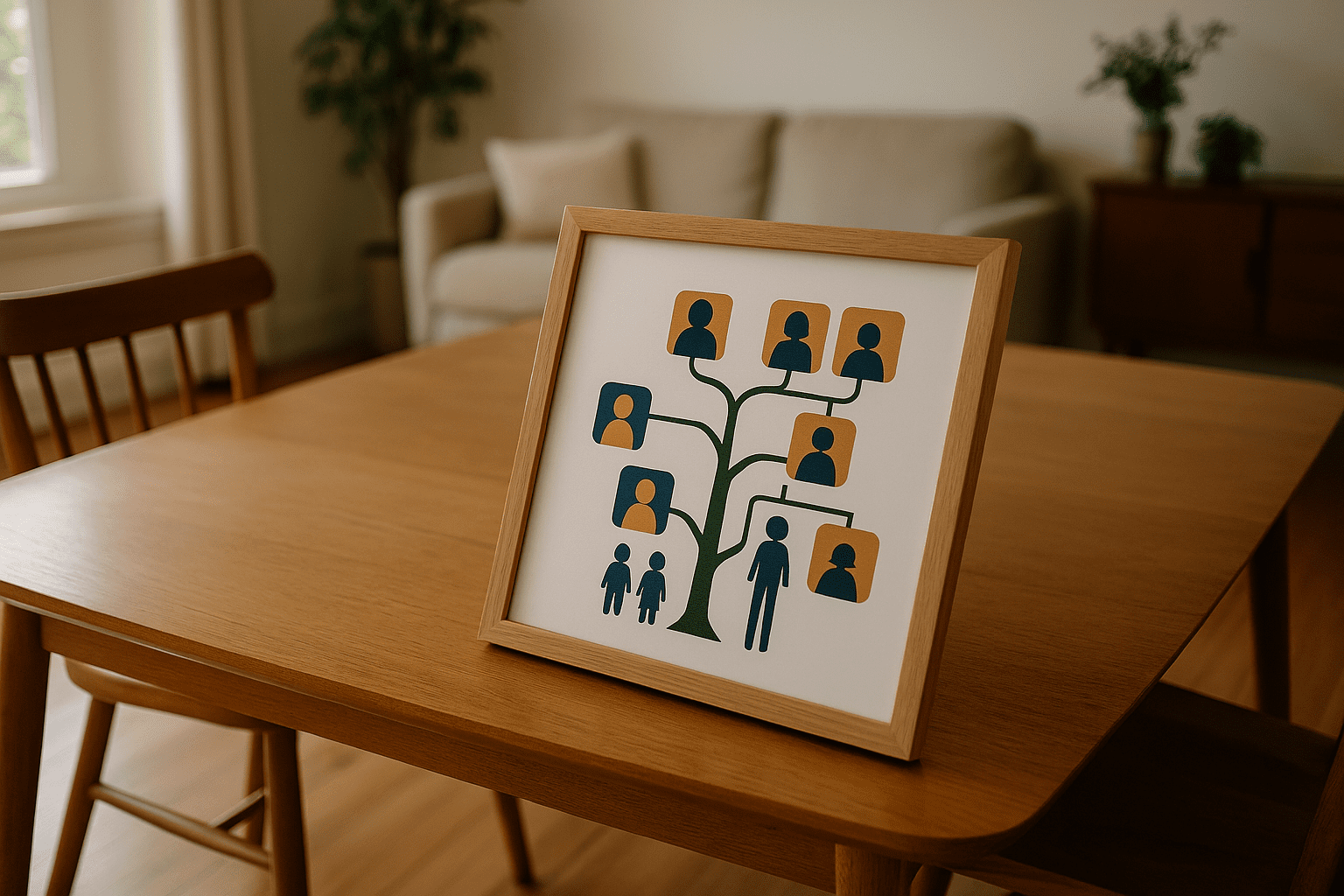
Public records have historically served as a formal snapshot of family identities. Documents like birth certificates, marriage licenses, and adoption papers capture legal milestones that contribute pieces to the story of families. With the ways families live and connect continually shifting, however, these static records struggle to fully reflect what family really looks like today.
Noticing the Variety Beneath Household Labels
When you take a closer look at public records over recent decades, the idea of a typical family has stretched to encompass many forms. The once-dominant nuclear family has quietly broadened to include single parents juggling multiple roles, unmarried couples living together by choice, and households built through remarriage or informal arrangements.
This wide mix means that some public records only hint at family complexity rather than revealing it. A birth certificate can confirm who the legal parents are but often cannot express the deeper social realities, such as whether a parent shares custody or is one among several caregivers. Adoption papers establish legal parentage but may not capture ongoing ties that feel just as significant.
It is worth noting that laws surrounding marriage, divorce, and parentage have evolved slower than family forms themselves. Public record systems are often still grounded in rules designed for more traditional family models, which complicates how records communicate kinship in practice.
Unraveling Identity: Interpreting Records in a New Context
Anyone delving into these records today faces the challenge of interpreting what family means across various social and legal divides. Cases involving surrogacy, co-parenting without marriage, or families united by close friendships rather than blood ties require extra attention to what the documents reflect and what they leave out.
Genealogical researchers find these issues appearing frequently when lineages seemingly falter-missing parents, changes in surnames, or legal guardianship that obscures biological relationships. These gaps highlight how the records come from moments fixed in time and may not keep pace with ongoing family dynamics.
Modern data tools also illustrate the limits of traditional records. For example, aggregating address histories with birth records and court documents can suggest movements and connections within family networks, but the insights remain shaped by what categories those records allow and how the data was gathered in the first place.
Public Records as Mirrors of Social Change
Record-keeping agencies sometimes adapt their practices to reflect evolving social views. Some places now offer gender options beyond male and female, recognizing identities that challenge binary categories. Similarly, official records increasingly acknowledge same-sex marriages and more diverse guardianship arrangements.
Despite these developments, change happens unevenly. Different states, counties, and agencies might implement updates at varied rates, leaving some datasets more inclusive than others. This patchwork nature demonstrates how public records do not just passively hold facts but are also shaped by contemporary cultural and political forces.
That means when using public records for family research or identity verification, understanding their historical and legal context is essential. The records are artifacts of the time and place they come from as much as they are windows onto personal lives.
Stories Hidden Between the Lines
Public records capture formal aspects of family but cannot fully express the emotional bonds, struggles, and evolving relationships behind the paperwork. Divorces registered on official forms may conceal continued cooperation or hardship between parents. Adoption papers might fail to reveal ongoing connections or the influence of extended kin.
In sociology and family studies, families are understood as social constructs that reflect both personal choices and cultural shifts. Public records provide partial glimpses along this continuum but rarely offer the whole view. Recognizing that can encourage more compassionate and informed uses of these documents for genealogy or personal history.
This perspective also underscores the value of combining public records with oral histories, letters, photographs, and community knowledge. These sources together reveal the textured reality of family life that changes over time and resists simple categorization.
Ultimately, the stories around family in public records remind us that no document can fully capture the lived experience of kinship. Instead, they invite closer reading and thoughtful interpretation to appreciate the human narratives woven through legal facts.
Considering how family has evolved highlights the importance of patience and nuance in working with public records. Whether reconnecting with relatives or piecing together personal history, seeing these documents as part of a broader social fabric rather than final statements brings richer understanding along the way.
As families continue to change in shape and meaning, public records also face ongoing moments of transformation. Their future may involve newer forms of recording and acknowledgment that better reflect the fluid nature of kinship in the 21st century and beyond.
Through all these shifts, the connection between lived family realities and their representation in public archives remains an area ripe for continued observation and study, especially as technology and social values move forward.
While a birth certificate may remain a foundational document for identity, the broader story of family goes well beyond any single form or file. Grasping that allows us to approach public records with both respect for their importance and awareness of their limits in telling the full human story.
In time, the dialogue between family life and its documentation will likely continue to deepen, shaping how we understand identity, heritage, and belonging in the years to come.
Observing these themes through real records and personal narratives helps sharpen awareness of what public data captures, what it omits, and how interpretation plays a crucial role in making sense of complex family histories.
Every researcher or individual working with family records navigates this ongoing interplay. It is both a challenge and an opportunity to appreciate the richness behind what on the surface can appear as dry, legal documents.
Through this lens, public records become not just tools for verification but gateways to exploring the evolving tapestry of family across generations and cultures.
Attention to these details fosters a grounded, patient perspective that balances fact-finding with listening to the subtle human elements that history and records alone cannot fully convey.
Sources and Helpful Links
- National Center for Health Statistics official site offers comprehensive information about vital statistics and public birth records.
- FamilySearch provides extensive genealogical data and resources for exploring family histories beyond public records.
- Nolo on Parental Rights details legal perspectives on parentage and family law changes impacting public record interpretations.
- American Bar Association family law resources explain evolving legal frameworks affecting family definitions in public documents.
- American Association for Public Opinion Research explores the role and challenges of public records in social research and data accuracy.