
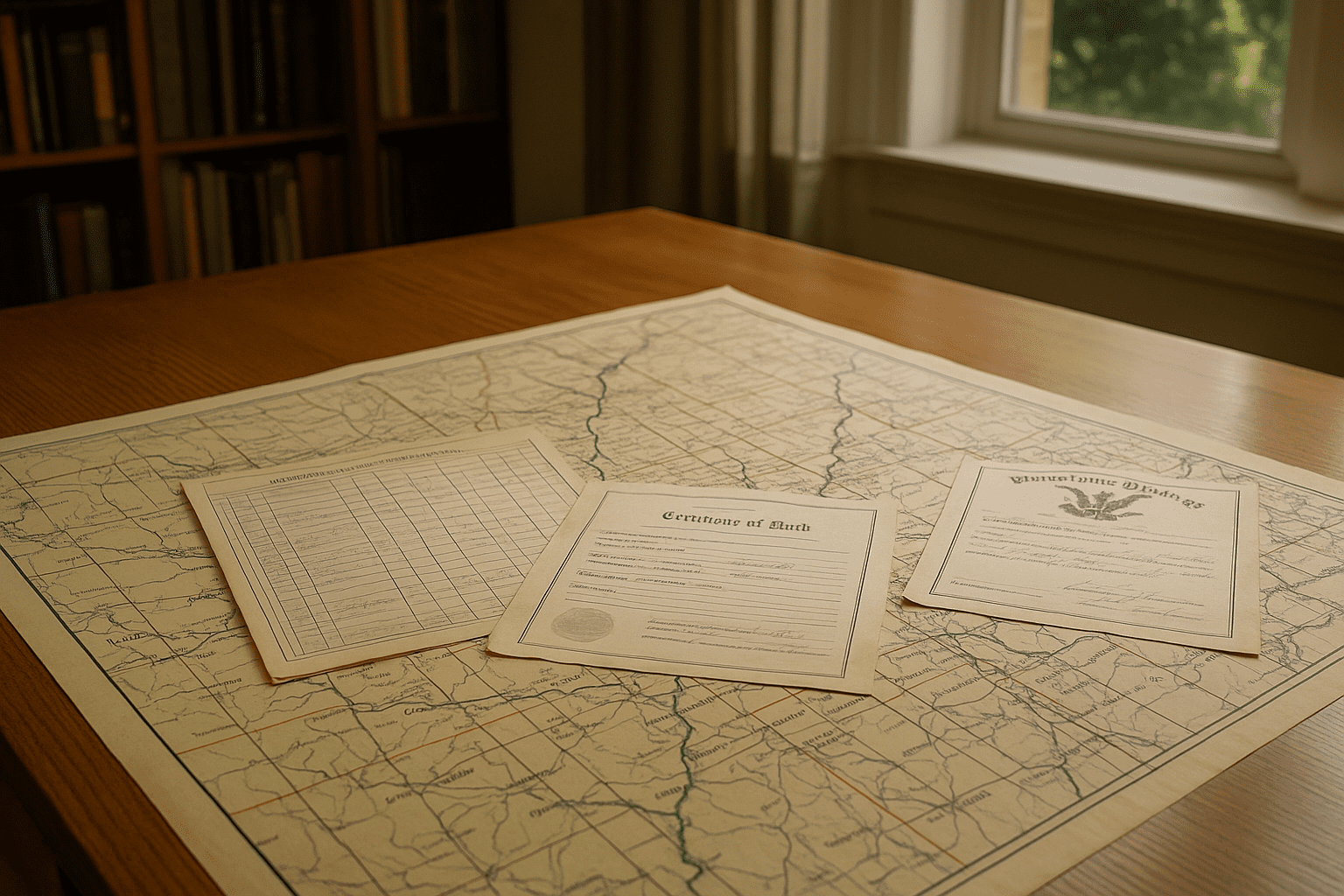
Tracing the journeys of extended families as they moved through regions or across states often depends on the clues found in public records. These documents capture moments when families intersected with official systems, leaving behind data points that can sketch stories of movement and transformation across years and even generations. Unlike personal memories, public records provide tangible snapshots of where families lived, worked, married, and connected, forming a patchwork of migration paths.
Addresses as Anchors in a Larger Story
Street addresses found in census records, property deeds, voter registrations, and court filings often serve as starting points for understanding how families migrated. These records anchor family members in particular places at specific times. Over decades, plotting these addresses draws a trajectory showing how an extended family shifted from rural townships to bustling urban centers or traced routes following economic opportunities.
The Great Migration in the twentieth century, for example, is well documented through public sources. African American families moving from southern states to northern cities appear clearly in census records and property documents. These moving dots on a map are more than numbers; they reflect social change, resilience, and the search for better prospects.
Public land records reveal more than addresses. They suggest family clusters when multiple relatives share property ownership or appear repeatedly in the same neighborhoods. This hints at how kinship ties influenced settlement patterns, with family members supporting each other’s relocation efforts or holding onto roots in familiar communities.
Government resources like the U.S. Census Bureau provide extensive data that genealogists and researchers interpret to connect family events across time and place, using addresses as one of several vital signals.
Vital Records: Windows into Family Intersections
Birth, marriage, and death certificates are rich sources of location data that map life’s milestones along migration routes. These records often specify small communities or local jurisdictions, helping to track family members who might not be easily found in broader datasets.
Marriage licenses stand out because they show when and where different family lines intersected. They can reveal new branches of extended families emerging in unfamiliar places or suggest when two geographically distant kin decided to unite. Marriage records may also signal the expansion of social networks beyond immediate hometowns, reflecting broader migration trends.
Legal records connected to inheritance, probate, or guardianship can also expose family ties spread across counties or states. They demonstrate how relatives stayed connected despite geographic separation, maintaining family obligations and relationships from afar.
Many of these documents are preserved by state or local agencies and are becoming increasingly accessible through digital archives. The National Archives offers guidance and access to these essential records, which form foundational layers for constructing family migration narratives.
The Role of Work and Service Records
Employment and military records add texture and context to geographic shifts, often explaining why families moved and how those moves shaped their stories. Jobs requiring relocation-whether mining, manufacturing, or railroad work-can be traced through labor or union documents, payroll records, or employment registries tied to public systems.
Military history is particularly illuminating because draft registrations and service files frequently record an individual’s home address and enlistment location, sometimes tracking overseas deployments. These records help illustrate how even extended family migration sometimes followed service commitments or government policies.
For some families, military service initiated new roots, leading relatives to settle in places connected to bases or demobilization centers. These links can explain unexpected leaps in migration patterns not evident from civilian records alone.
Piecing Together Movements Over Generations
Migration is not just about destinations; it is about movement over time and relationships. Public records require careful reading and cross-referencing because names repeat, addresses change, and circumstances evolve. An extended family appearing in multiple cities might represent sibling branches moving independently or cousins joining earlier settlers.
Online genealogical platforms like FamilySearch help assemble diverse public records with user-contributed family trees, creating interactive maps of family movements. However, verifying the accuracy of each connection remains crucial because not every match implies direct kinship.
Through sustained research, public records reveal patterns where families congregated near transportation routes, industry hubs, or agricultural areas-places shaped by broader historical and economic forces. Even when some pieces are missing, these traces suggest how extended families adapted to changing landscapes, influencing and influenced by the societies around them.
Seeing Migration as a Collective Human Experience
While migration studies often use broad statistical data, public records personalize these numbers by focusing on real families’ experiences. The threads connecting addresses, marriages, occupations, and legal events tell stories of human decisions, struggles, and connections in response to economic opportunities or social pressures.
This perspective highlights that extended families rarely move as isolated units. Their migration typically involves overlapping roles, obligations, and interactions that public records capture in their own formal way. Those formalities help us understand the complexities of migration-not just when and where, but how families negotiated change in their lives.
Ultimately, public documents become windows into the intertwining of individual lives and larger historical currents. They remind us that behind each record lies a network of relations constantly shaping the migration experience of extended families across time and place.
Sources and Helpful Links
- U.S. Census Bureau Government agency providing census data which tracks population and familial whereabouts over decades
- National Archives Genealogy Resources Official archive offering access to vital and legal records useful for tracing family migration
- FamilySearch A comprehensive genealogy platform that integrates public records with family histories to trace migrations