Families often chart paths more complicated than the neat lines drawn on simple genealogical charts. Modern family structures reflect a mixture of remarriages, adoptions, blended households, and legal guardianships – each presenting layers of connections that are not always visible from a single source.
The subtle signals hidden in public records
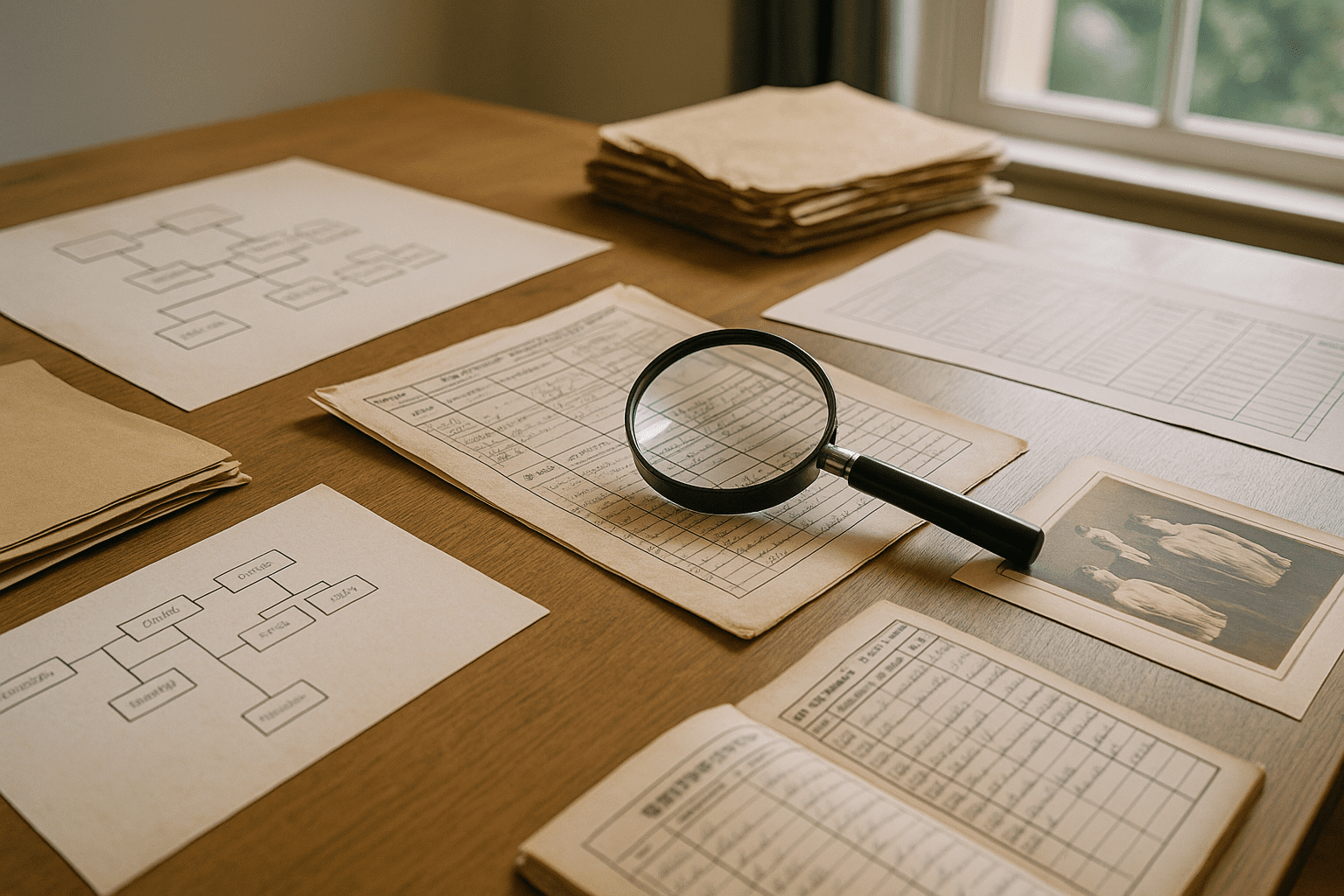
Public record data acts like a map with faint, overlapping trails, revealing delicate threads weaving through family ties. Birth certificates, marriage licenses, property deeds, and court records collectively form the backbone for understanding these relationships. For example, a birth record establishes parentage and can identify multiple parents in the case of adoption or assisted reproduction. Meanwhile, marriage licenses might connect half-siblings or stepparents by tracing spousal relationships.
Sometimes, probate records shed light on family roles left ambiguous elsewhere. Wills and estate settlements detail heirs and their relationship to the deceased in ways that might not appear in public directories or social media. A guardian’s appointment in court files provides insights about custodial arrangements within blended families, a detail often pivotal for legal or genealogical cases.
Unraveling multiple familial layers with data patterns
Complex family investigations often require seeing beyond an individual document. It is in the overlay of different record types and timelines that a fuller picture emerges. A property deed recorded with multiple names suggests shared residency or co-ownership that might hint at step-relationships or multigenerational living situations. Marriage records on close dates in different jurisdictions could indicate rapid remarriages or parallel family lines.
Address histories add another layer, suggesting family movements or highlighting guardianship when children’s registered addresses differ from biological parents. School enrollment records and health department data sometimes provide corroborative detail, especially when public accessibility varies by locality.
Challenges that come with interpreting public record connections
Interpreting these records demands caution. Names can repeat or be shared by unrelated individuals, records may contain errors or omissions, and non-traditional family arrangements might not be well documented in official files. The cultural context also impacts how relationships are recorded and recognized legally.
For instance, adoption records are often sealed in many states, limiting access to full parentage information. Surrogacy agreements or assisted reproduction might not appear transparently in public data, requiring secondary sources or sensitive inquiry. This means a researcher must balance reliance on public records with awareness of their gaps.
The practical gains for genealogy and legal work
When approached with patience and cross-checking, public record data empower researchers to piece together family biographies that otherwise would remain incomplete. Genealogists use this data to build trees that are more than names and dates, introducing stories of family shifts and merges that characterize much human experience.
In legal contexts, such as custody battles or inheritance claims, confirming family links through credible public records can be critical. These records provide evidence where memory or oral histories may fail, offering a reliable, document-based narrative of familial changes over time.
Tools that aggregate and connect records, like certain public records databases, add value by reducing the manual effort of tracking multiple sources and validating relationships. Nevertheless, no aggregation replaces the nuanced interpretation an experienced investigator brings.
Ultimately, public records present a powerful, though careful, pathway into understanding complex family structures that reflect how families evolve beyond traditional definitions. The convergence of various records helps uncover the stories hidden in everyday documentation, supporting both genealogical curiosity and necessary legal clarity.
Real world investigations into families rely on connecting dots between official filings and personal histories, making public record data a vital, if sometimes partial, archive of human connection.
For readers interested in exploring their family history or supporting legal inquiries, learning to navigate public record databases and understanding their limitations is increasingly important. As family dynamics continue to diversify, the role of comprehensive, accessible public data grows in significance.
Resources like local government registries, court archives, and national record aggregators provide starting points that are often supplemented by private records or personal testimonies. While no single file tells the whole story, the collective patterns guide us toward richer, more accurate representations of family life.
For those seeking more detailed information, exploring guides on census records and vital statistics from government archives can improve research efforts and offer context on how records have historically been collected and preserved.
Care, context, and connection remain the best tools for anyone working with public records to understand intricate family narratives.
A living archive needing thoughtful reading
Public record data is like a historical stage with cast members appearing and reappearing in different scenes. Recognizing the nuances of how these documents interact, and the human stories behind them, allows a deeper appreciation of family complexity today. The records do not just validate facts but illuminate lived experience across generations.
It is in this balance of evidence and empathy that the full meaning of family research emerges, anchored in the trusted fabric of public data but alive with the stories we uncover.
At its core, this work connects us to the reality that families adapt, reorganize, and redefine themselves continually. Public records offer a window into those ongoing stories, inviting both curiosity and respect.
Those who engage with these records learn not only about relationships but about the evolving nature of identity and belonging reflected through time in public archives.
Understanding this dynamic encourages a research approach that honors complexity rather than simplifying it, ultimately leading to more meaningful discoveries and insights.
National Archives genealogy research provides a foundational view of how family documents are preserved across generations. CDC’s Vital Records Access explains access to birth, death, and marriage certificates available for family research. For legal guardianship and custody context, the U.S. Courts’ records and archives offer insight into public access to court proceedings and files. Finally, a resource like FamilySearch aggregates a wide range of public records useful for genealogical investigations into complex family trees.
Sources and Helpful Links
- National Archives genealogy research – Foundational overview for historical family record collections
- CDC’s Vital Records Access – Information about obtaining birth, death, and marriage certificates
- U.S. Courts’ records and archives – Guidance on accessing court records related to family law
- FamilySearch – A repository of genealogical and public records for tracing family trees