
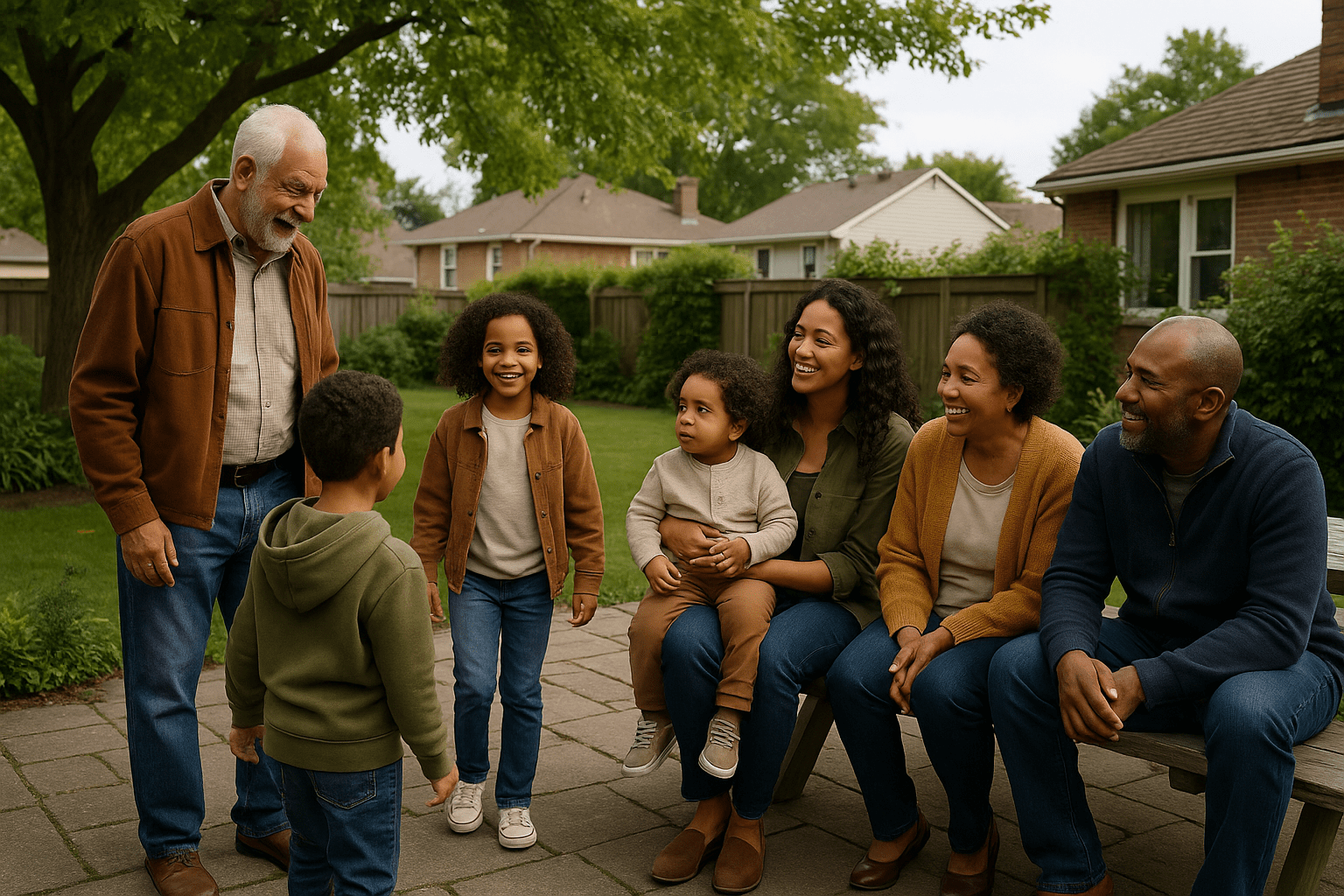
When you think about the word family, the traditional image that comes to mind often involves a mother, a father, and children living under one roof. Yet, as society grows more complex, the reality of family life frequently unfolds in ways that defy that archetype. Public records, which chronicle details like births, marriages, address histories, and legal guardianship across time, offer a quietly powerful lens for understanding these evolving family forms.
The stories hidden in public records shapes over time
Longitudinal public records track individuals across years or even decades, revealing patterns and connections that single snapshots might miss. For families that do not fit conventional molds – such as multi-generational households, co-parenting partnerships without marriage, or chosen families of close friends – longitudinal data can show how relationships form, shift, and endure through various life events.
For instance, address history in records often reflects how nontraditional families share living spaces; multiple adults legally unrelated may appear in proximity or at the same address for long periods. Likewise, surveys of marriage and divorce data can capture blended families, remarriages, or joint custody arrangements that reshape household compositions.
What makes longitudinal data compelling is the ability to see these family dynamics evolve, revealing resilience and adaptation beyond what typical family labels convey.
Nontraditional structures emerging from demographic patterns
It is common today to encounter families where caregiving roles transcend biological or legal ties. Grandparents playing primary caregiving roles, siblings raising younger relatives, or groups of friends cohabiting and sharing responsibilities can all appear in public datasets, providing evidence of how families function in real-world settings.
Longitudinal public records also underscore economic realities influencing family configurations. Housing affordability, employment changes, and health considerations often drive multiple adults pooling resources and sharing homes. These arrangements challenge assumptions that a family must be linked solely by marriage or genetics.
One example is the rise in multi-generational households recorded at the census level, which reflect both cultural traditions and economic necessity. These homes may include parents, adult children, grandparents, and even unrelated caregivers under one roof. Records can illustrate how these living patterns shift with economic ups and downs, health status, or major family events like births and deaths.
Legal documentation and its gaps in capturing family nuance
While public records are valuable, they can also reveal how the legal system lags behind social realities. Many nontraditional families exist in arrangements that are not fully recognized by law. For example, an unmarried couple with children, or a caregiving friend without legal guardianship, may share a household and responsibilities but appear fragmented or invisible across marriage and custody records.
This gap can complicate anyone researching family history or trying to understand relationships through public documents alone. Legal records such as wills, guardianship papers, and power of attorney filings sometimes fill in details, providing a fuller picture of how family roles extend beyond standard templates.
However, the absence of legal recognition in some contexts speaks to broader questions about how society defines family and whose experiences count in public data.
The role of technology and privacy in family data analysis
Increasingly, technology shapes how public records are collected, stored, and accessed. Digital databases allow for extensive linking of records over time, enabling more nuanced tracking of individual life courses and family connections. This opens new opportunities for researchers and individuals seeking to uncover complex family relationships.
At the same time, privacy concerns rise as data becomes more interconnected. The balance between providing insight into family histories and protecting personal information requires careful navigation. Public records are created with legal and administrative purposes in mind, not necessarily to depict the emotional and social fabric of families.
Users must approach this data with an understanding of its limits and respect for the individuals behind the names and dates. The stories must be pieced together thoughtfully, combining records with social context rather than assuming every relationship fits expected categories.
Exploring nontraditional family dynamics through longitudinal public records is a reminder that human relationships are not static or simple. Over years or generations, families reflect adaptation, cultural diversity, economic choices, and personal decisions that challenge narrow definitions. Public records, when observed carefully and over time, help us appreciate this complexity rather than reduce it.
The ongoing evolution of family life puts pressure on systems, from legal frameworks to social services, to better recognize varied forms of kinship and caregiving. For anyone interested in genealogy, social history, or personal identity, the long view provided by public records offers a nuanced window into how families grow, blend, and endure.
In the end, these records document more than just legal ties or household counts. They capture the human impulse to connect, support, and build networks of care that may not be conventional but are deeply real.
These insights encourage a broadening of the term family beyond fixed definitions and recognize the rich variety of human experience that public records silently archive and invite us to explore.
For people navigating their own family histories or researchers studying demographic changes, this perspective grounded in longitudinal observation can offer both clarity and empathy toward the stories these records quietly tell.
Finding this balance is part of the ongoing work of interpreting, respecting, and understanding family life as it truly is.
As public data continues to unfold across time, it will remain a valuable resource for uncovering how nontraditional families shape the social landscape from past to present.
Sources and Helpful Links
United States Census Bureau – Information on family and living arrangements data in the U.S.
National Institutes of Health – Research on family structure diversity and child wellbeing
LegalZoom – Overview of nontraditional family legal recognition challenges