
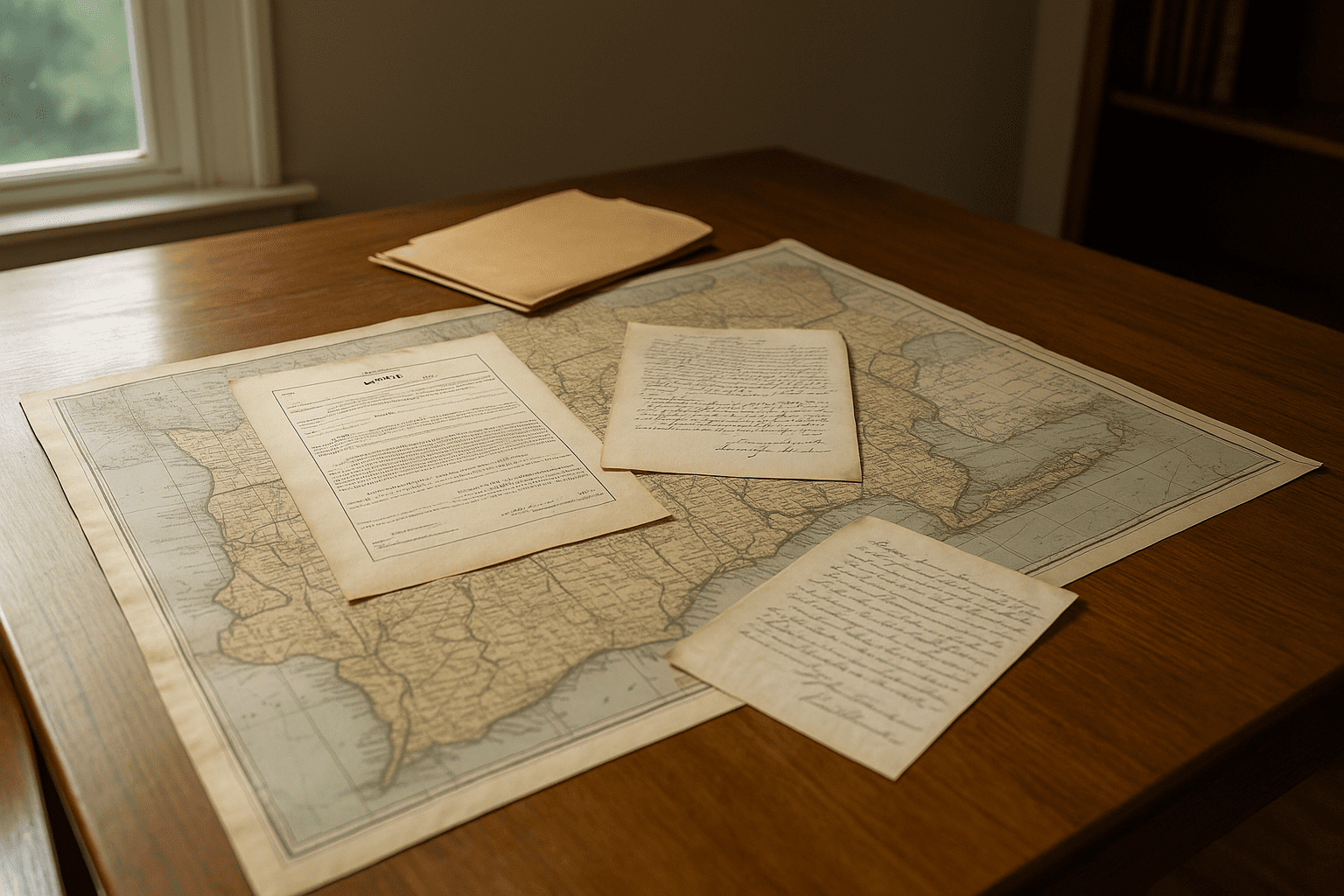
To anyone tracing back their family history, property records can sometimes feel like a treasure trove that defies straightforward storytelling. Unlike census data or birth certificates that list facts in neat order, property deeds and land records weave a more intricate narrative. These documents offer clues not only about where ancestors lived but also about how they moved, settled, and adapted across decades and often centuries. When properly examined, these plain records reveal the flow of families through time and place, opening a window on migration that feels surprisingly vivid.
A patchwork of places adds texture to migration stories
Many family trees start with a place attached to a name and a date, but the reality of migration is rarely so simple. Property records come with addresses, parcel descriptions, and transaction dates that together form a mosaic of locations connected to the same family. For example, a deed showing a sale in one county followed by a purchase in another indicates a move, whether a regional shift or something more dramatic. The details in deeds – seller, buyer, witnesses, the land’s boundaries – can suddenly populate a journey otherwise invisible in birth or marriage records.
This geographical layering helps explain why some families might have left one area for another. Economic prospects, land availability, or community networks all figure among the reasons families packed up or expanded. Sometimes a sudden jump in location signals a larger historical event such as westward expansion, industrialization trends, or even the aftermath of war. Tracing these property transactions alongside local history can give insight into the forces shaping those moves.
Names, relationships, and roles embedded in the records
One of the fascinating aspects of property documents is how they often record names not only of the main parties but also witnesses, neighbors, and related individuals. This helps uncover extended family relationships that might not appear in other records. For instance, finding multiple properties registered in the names of siblings or cousins living close by paints a picture of a family cluster that persisted over time.
Additionally, these records sometimes reveal familial roles such as inheritance patterns. A property passing from parent to child, or shared ownership between spouses, reflects social structures and even gender roles prevalent at the time. Tracing a parcel’s chain of title through multiple generations can hence illuminate more than just migration-it shows how property and family life intertwined.
Challenges and nuances in interpreting old property documents
Reading historical property documents requires careful attention because the language, measurements, and legal terms can be unfamiliar. Boundaries described by landmarks like trees, creeks, or roads may no longer exist or have changed drastically, making location tracing difficult. Deed books may also contain errors, or the nature of property transactions could be complex, with mortgages, liens, or land being subdivided.
Furthermore, migration patterns suggested by records need to be cross-checked with other sources such as census records, city directories, or newspaper archives. The presence of property without occupation or the absence of family names in subsequent records can imply temporary moves or shared ownership. Understanding these subtleties is key to avoiding overgeneralizations about why a family moved.
How digital archives and mapping tools bring new insights
The growing digitization of property records, land registries, and survey maps has unleashed powerful new possibilities for family researchers. Online databases allow quicker searches of large registers and connect isolated facts across distant locations. Integrating geographic information systems (GIS) with historical property data can display migration paths visually, highlighting patterns that were once hidden in obscure ledgers.
The National Archives, local government sites, and platforms like the Bureau of Land Management’s General Land Office Records offer valuable online access to property records. Using these resources, genealogists and historians can discover when an ancestor first appeared in a region and follow their movements with greater precision. The National Archives’ land research page outlines how federal land records document homesteading and settlement trends deeply linked to migration.
Moreover, sites like FamilySearch provide guides and digitized records useful for tracing land patents and grants associated with familial movements. Mapping old property lines against modern maps can clarify how far ancestors ventured and how their holdings expanded or contracted over time.
Historic property ties offer a human perspective on broader migration flows
Overall, historical property records are more than legal documents. They function as storytelling artifacts that bundle geography, family dynamics, economics, and local history. By piecing together when and where families bought, sold, or inherited land, researchers glimpse the physical footprints of migration and settlement beyond mere addresses.
These records remind us that every parcel of land once represented a choice, hope, or challenge for those who owned it. In studying them, family historians reconnect not just with names and dates but with lived experiences of movement, community, and place. This grounded understanding enriches genealogical research and brings ancestors’ journeys to life with the weight and texture of real places.
Exploring historical property records alongside other public records invites a deeper appreciation of migration as a continuous thread woven through family histories and the broader American story of movement and settlement.
Sources and Helpful Links
- National Archives: Land Records Research – Guidance on federal land records and homesteading documents
- FamilySearch on Bureau of Land Management Records – Digitized land patents and historic survey maps
- Library of Congress Land Patent Records Collection – Historical records related to property acquisitions