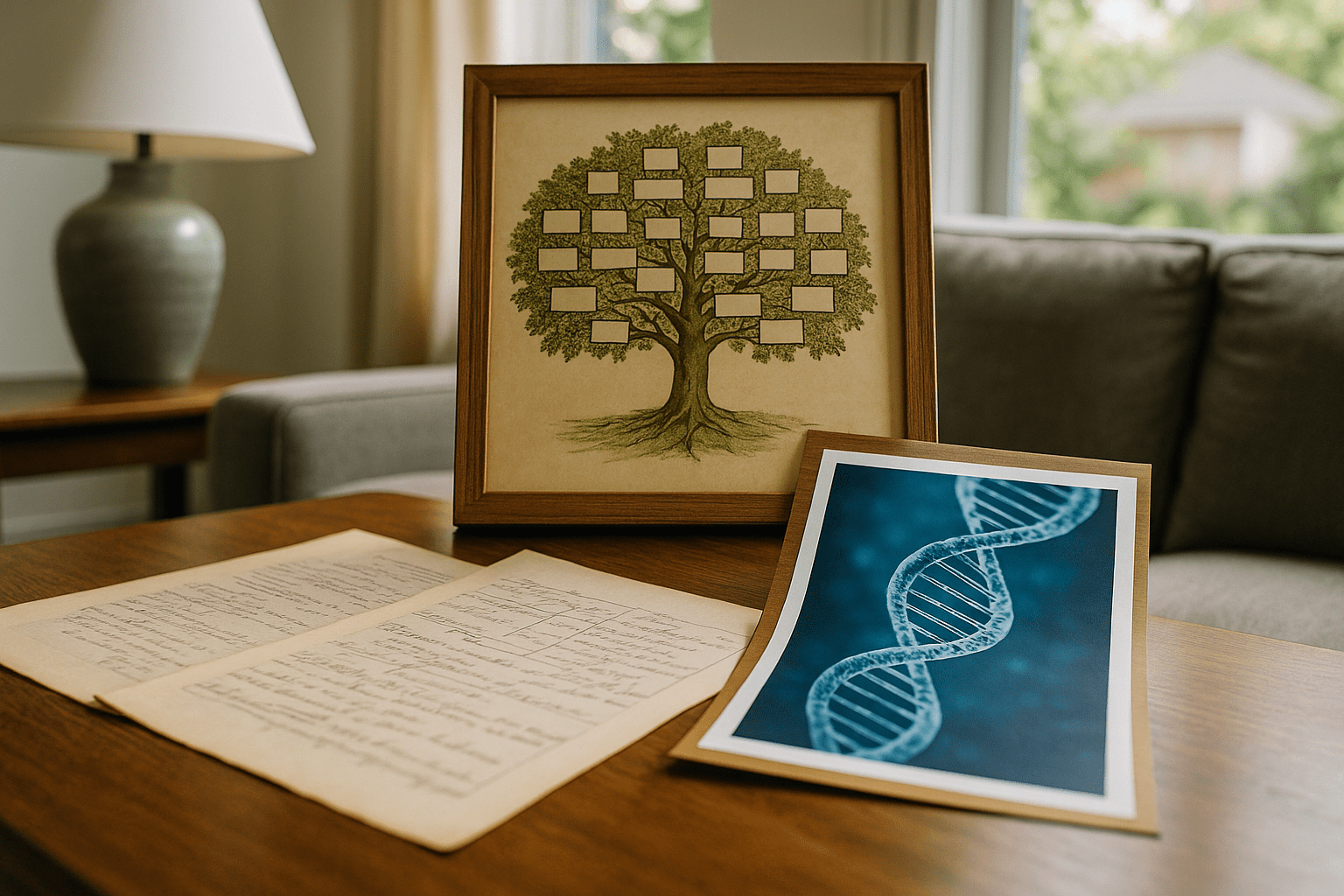
Delving into family history today often means juggling different kinds of evidence. Public records, those official documents spanning decades and generations, provide a sturdy framework. Meanwhile, genetic genealogy weaves in threads of DNA, offering fresh possibilities for discovery and questions alike.
When Old Records Meet New DNA Stories
Public records such as birth certificates, marriage licenses, census data, and immigration forms have long served as cornerstones in family research. They anchor names, dates, places, and sometimes glimpses into lives lived generations back. Yet these records come with their own puzzles. Missing entries, transcription errors, or changes in jurisdiction often complicate efforts to trace direct lineage.
Genetic genealogy entered the scene as a technological leap, shifting how people trace family roots. By comparing DNA test results through services like AncestryDNA or 23andMe, individuals can find genetic cousins and distant branches that might not show in the paper trail. But DNA is raw and mysterious unless paired with documents that help decode its story.
These two approaches complement one another in essential ways. For example, a DNA match might suggest a cousin connection, but the question remains which exact ancestor binds the family trees. Researchers turn to public records to confirm the identities, places, and timelines that DNA alone cannot explain. Occasional surprises happen when a genetic lead prompts a revisit of old records, uncovering errors or new branches previously overlooked.
A Dance of Certainty and Mystery
One of the most curious aspects of family research is how often it balances certainty against evolving mystery. Public records tend to offer what feels like concrete evidence, but even official documents can mislead. Names change, ages shift, and sometimes entire families move quietly between record systems.
Genetic genealogy adds nuance. DNA strands persist through time, but interpreting what they mean requires thoughtful context. Not every match points to a close relative. Sometimes the shared DNA fragments come from common ancestors hundreds of years ago, tangled in branches that public records might never clarify fully.
The combined use of records and DNA brings challenges too. Privacy concerns emerge as more people share their genetic data online, inviting new conversations about consent and information security. Meanwhile, public records themselves can be uneven across regions or eras, leaving gaps that only patient investigation can bridge.
Patterns Beyond the Obvious
Digging into both genetic and documentary sources often reveals patterns not just in individual families but across populations. For instance, surname studies connected with Y-DNA testing sometimes underscore migrations or cultural shifts unseen in census data alone. This crossover can point to ethnic roots, tribe affiliations, or historical events shaping gene pools.
Similarly, public records may expose social dynamics such as adoption records or guardianship documents that genetic testing initially cannot detect. These layers of human experience deepen the story beyond biological lineage, sometimes stretching into cultural identity or family narrative.
This complexity reflects how family research is rarely a straightforward pathway. It involves looking with fresh eyes and embracing ambiguity where historical or genetic clues don’t neatly resolve. Genealogists and family historians often describe this as a constant state of learning and re-learning, with each discovery altering the view of the past.
Forward Movement and Ongoing Questions
Technology continues to influence family research profoundly. New DNA analysis tools, improved database matching algorithms, and carefully digitized public records offer stronger lenses for piecing together heritage puzzles. Meanwhile, forums, social networks, and collaborative projects add the social element, where discoveries shared between strangers can generate surprising connections.
Yet some questions remain persistent. How to interpret discrepancies between DNA evidence and paper records? What about secrets that families or communities once intentionally obscured? How do researchers ethically navigate discoveries that might impact living relatives in profound ways?
These questions do not have simple answers but highlight the importance of slowing down to observe patterns, considering context, and reflecting on what records and DNA reveal – and what they do not. Family research in our era feels less like a checklist exercise and more like an ongoing conversation across time.
The interplay between public records and genetic genealogy shows family history as a layered narrative, dependable and fragile, certain and uncertain. Together, these sources invite us to appreciate how identity and ancestry form as much through discovery as through the records preserved in official archives and the strands carried invisibly within us.
For those embarking on this journey, collecting public documents and genetic data becomes a way of connecting to countless lives, providing a richer understanding of who we come from, how histories intersect, and how we fit into the larger human story.
Exploring more about how public records and DNA tests combine can deepen not only personal research but also broaden collective appreciation for genealogy as both science and art. It is a field where data meets humanity, inviting continual care and curiosity.
Resources like the National Archives or the FamilySearch database offer reliable public records to pair with genetic findings, making the research both manageable and compelling. In parallel, legal and ethical guides from genealogy societies provide important frameworks for respectful and responsible investigation.
Overall, the interplay between these tools shines a light on our past, fueling new questions and connections as family stories unfold with greater clarity and richness than ever before.
As more people engage with this blend of historical and genetic exploration, family research transforms into a dynamic process, moving beyond static facts towards a living narrative that bridges generations.
Sometimes the path winds around new information, considerate skepticism, and occasional surprises. That is where the heart of family research beats, with public records and genetic genealogy complementing each other in a dance that continues to reveal the layers of human experience.
Every discovery acts as a reminder that families are histories still waiting to be told, with science and recordkeeping acting as guides rather than final arbiters in an ongoing dialogue between past and present.
Whatever the moment of discovery, the combination of these sources fosters a deeper appreciation for the complex, interconnected nature of lineage. This more thoughtful approach ultimately empowers people to tell their family stories with both rigor and empathy.
That balance between evidence and empathy, document and DNA, history and memory, marks the evolving landscape of family research today.
It pushes beyond traditional boundaries and invites a humbler, richer understanding of what it means to know where we come from.
Each piece fits into a larger mosaic, illuminated by the interplay of records and genes, an interplay that continues to shape how we see family across generations.
The journey is ongoing, filled with curious turns and subtle insights alike.
Understanding Connections Through Different Windows
Public records show us the external facts of a person’s life-where and when they lived, legal events, and societal roles. Genetic genealogy, however, reveals the intimate biological ties that often lie beneath or beyond the paperwork. Connecting these two perspectives requires patience and a willingness to face conflicting information, yet it enriches the family narrative.
Unlike written records, DNA does not tell a story in a linear way. Instead, it highlights relationships and genetic inheritance patterns that must be matched with documented genealogy to make sense. This cooperation between recorded events and genetic clues produces the most comprehensive insights into ancestry.
It is also where collaboration plays a role. Many researchers benefit from community-built family trees and shared DNA results to confirm or question hypotheses. Community databases and genealogical societies help mediate these investigations, offering tools and shared knowledge that no single source could provide alone.
This evolving methodology highlights the importance of remaining open to revising accepted family histories. The addition of genetic tools reawakens some stories while reinterpreting others, making genealogy a living, breathing field rather than a fixed archive.