
The subtle shifts behind people search innovations
Over the last decade, people search services have quietly transformed from simple directories into complex platforms powered by cutting-edge technologies. This evolution reflects growing public demand for more accurate, faster, and privacy-conscious ways of connecting identities to public records and information. The landscape, once dominated by static databases and basic search functions, now includes artificial intelligence that enhances matching accuracy, blockchain that offers new possibilities for data verification, and integrated systems that weave together diverse data sources to create more reliable connections.
People search in this emerging world is less about merely finding a name and more about understanding the intricate web of signals that confirm identity, past addresses, contact data, and known relationships. Tech advancements have allowed services to move beyond raw data dumps, giving users refined and contextualized outputs they can trust more readily.
The role of artificial intelligence and machine learning
Artificial intelligence plays a prominent role in refining how people search platforms operate. AI models analyze patterns in public records, detect anomalies in data, and recognize nuances in names and locations that human eyes might overlook. This becomes especially valuable for bridging slight discrepancies in spellings, identifying individuals across name changes, or linking related records that traditional methods might fail to connect.
Machine learning algorithms also help prioritize search results based on relevance, pulling in subtle cues from multiple datasets to create a fuller picture. This technology is helping avoid common pitfalls related to false positives or outdated information by continuously learning which data points are more reliable or timely.
However, this growing reliance on AI requires vigilance around transparency and potential bias-an ongoing challenge as systems interpret varied public records. Providers often need to balance complex algorithmic processes with clear explanations to users so that trust remains grounded in the service’s accuracy rather than an inscrutable black box.
Blockchain and the quest for verification and privacy
Blockchain technology has entered conversations about people search mainly through its promise to improve data integrity and privacy protection. Since public records and personal data are sensitive by nature, the potential of blockchain to create an immutable ledger of verified records attracts interest from service providers looking to enhance trust.
With blockchain, users may eventually see new forms of data verification where identity claims or record changes are timestamped and provably accurate without giving up control over personal details. While widespread adoption is not yet a reality, several pilot projects and startups are exploring how this decentralized approach can reduce fraud and support rights to privacy within public data use.
Still, blockchain’s technical complexity and integration challenges mean it complements rather than replaces existing systems. It adds a layer of security and verifiability on top of traditional government and commercial records, potentially raising the bar for accuracy while respecting user consent.
Data integration and the unfolding digital puzzle
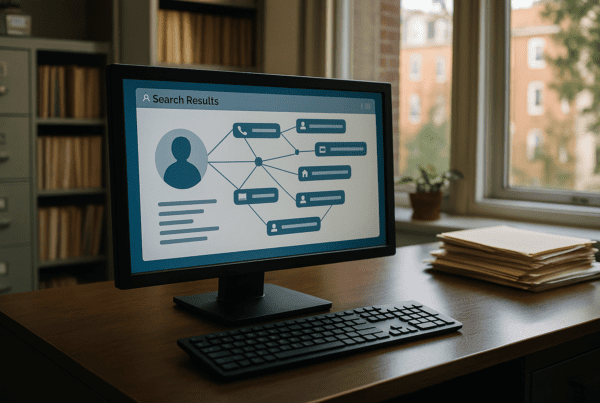
One of the more profound changes in people search services involves how diverse data streams are integrated. Public records no longer exist as isolated entities. Instead, they are connected with social media footprints, historical address data, professional directories, and even machine-generated behavioral signals. This blended approach improves the chances of linking fragmented records that once created confusion or left identity gaps.
Platforms today often work as attentive aggregators, compiling data from multiple sources, then cross-checking and reconciling differences to reduce errors. The rise of APIs, data-sharing agreements, and advanced parsing technologies supports these integrations. Yet this complexity also highlights the need for careful data stewardship, as combining sources increases the risk of amplifying outdated or inconsistent information if not curated properly.
Users benefit by gaining access to comprehensive and up-to-date profiles, but this comes with the obligation for providers to clarify data origins, update cycles, and the degree of certainty behind each connection. Transparency around these factors remains essential to maintain confidence in the expanding web of public and private data.
Technology’s unfolding impact on accessibility and ethics
These emerging technologies bring undeniable improvements to people search services but also raise new questions about accessibility and ethical use. While AI and data integration can speed up searches and deliver more relevant results, they also risk excluding groups with less digital footprint or exacerbating privacy concerns if data is misused.
Companies and regulators continue to grapple with where to draw boundaries around consent, data sharing, and individual rights. The challenge remains in crafting systems that are inclusive, equitable, and respectful of privacy while harnessing the power of new tools.
In practical terms, users should expect ongoing enhancements in how quickly and reliably they can locate information, balanced by clearer options to control personal data and correction mechanisms to fix inaccuracies when they appear.
While the future of people search services is still taking shape, observing current technology trends helps highlight where things are headed, especially as platforms become more intelligent, interconnected, and privacy-aware. This evolving journey underscores the importance of thoughtful data practices alongside continued innovation.
For those interested in further exploration, sites like FTC data privacy resources and privacy perspectives on blockchain provide useful contexts on regulatory and technological fronts in data handling. Specialized industry insights, like those from People Search Reports, offer detailed data about trends shaping this field. Academic overviews such as law and technology papers from SCU help ground these changes in legal and ethical frameworks.
Sources and Helpful Links
- FTC data privacy resources providing guidance on data safety and consumer protection
- Privacy perspectives on blockchain examining blockchain’s effects on personal data
- People Search Reports delivering in-depth analyses of people search market trends
- Law and technology papers from SCU exploring legal aspects of data and technology in public records