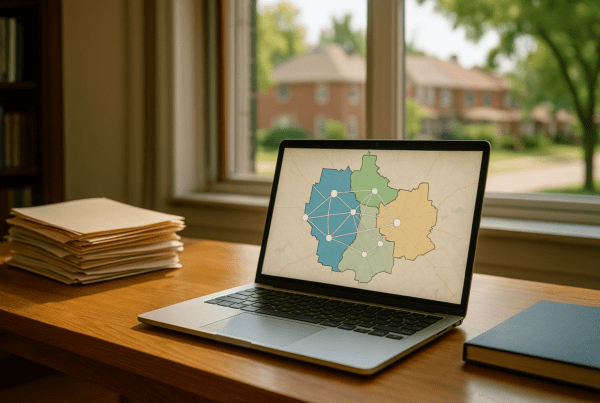

Watching urban life over time, the shifting patterns of who moves where start to emerge like a living map of social and economic change. Public records, scattered across address histories, change-of-residence filings, and property transfers, hold clues that help trace how cities evolve through the movements of their residents.
When Streets Tell Stories Beyond The Surface
Dig into public records and what seems like a simple change of address becomes a narrative thread. These records reveal more than just a new street name – they hint at changing economic fortunes, community dynamics, and even cultural shifts. One neighborhood bustling with short-term move-ins may be experiencing redevelopment or gentrification, while another with long-term residents might reflect stability or entrenched economic challenges.
For instance, examining migration into and out of urban centers can show patterns tied to job markets, schooling options, or housing affordability. Public data highlight periods when major influxes occurred, often aligning with economic cycles. This connection between numbers and real life moments paints a complex picture of urban life’s ups and downs.
Economic Threads Woven Into Urban Movement
Affordability underlies many relocation patterns observed in public records. Property deeds and rental registrations, along with mortgage data publicly available in some places, outline a story of who is moving based on financial capability. Rising housing costs in city cores notoriously push many to suburban or even smaller town options. Meanwhile, urban renewal projects attract newcomers who can invest in higher-priced real estate, shifting the demographic makeup.
This dynamic demonstrates a fluid push and pull, a layered reality that public records capture well. The movement isn’t just about geography but also about access, opportunity, and economic pressures. Neighborhood shifts tracked through property records and resident registrations reveal these forces silently driving urban landscapes.
Family and Social Networks Reflected in Address Changes
Beyond economics, public records of address changes and residency also trace social ties. Moves often cluster around family needs, such as seeking better schools, care facilities, or supportive communities. When multiple moves in close periods take place within extended families or social groups it suggests network-driven relocation rather than purely economic decisions.
Understanding these patterns requires looking at public records within a social context. It reminds us that migration choices are rarely isolated incidents but part of broader human connections and priorities. This social dimension adds a layer of depth to what public data can reveal about urban dynamics.
Transparency and Data Challenges in Urban Mobility Studies
Public records are rich sources of information, but they come with challenges that temper conclusions. Not all data is uniformly collected or easily accessed. Privacy laws, reporting inconsistencies, and record-keeping methods vary widely across regions. This patchwork nature means analyses must tread carefully, acknowledging gaps and potential biases.
Moreover, interpreting the data accurately involves recognizing that recorded moves may lag behind real-time events, or that certain populations are underrepresented in public records. Researchers and people search professionals interpreting these documents must balance the richness of available details with these limitations to avoid overreaching conclusions.
Long-Term Implications Encoded in Relocation Patterns
Over years and decades, public records paint a broad picture of urban transformation. Patterns of movement correlate with widening economic disparities, shifting cultural landscapes, and policy effects on housing and social services. They allow observers to pinpoint cycles of growth and decline, understand displacement trends, and assess how mobility shapes community identities.
The patience to sift through these records and observe trends rather than quick snapshots leads to a deeper comprehension of urban life. Recognizing these patterns helps policymakers, researchers, and residents consider more thoughtful approaches to community development, housing equity, and urban planning.
Public records become more than administrative artifacts when viewed as reflection points of urban life in motion. They reveal a landscape of continuous change, driven by real people’s choices and circumstances. Understanding the patterns behind relocation shifts not only informs history but also casts light on the present and possible futures for cities worldwide.
For those curious about this intersection of data and urban experience, resources like the U.S. Census Bureau provide accessible migration and housing statistics linked to public records. Similarly, insights about economic and demographic trends in urban areas are frequently updated by organizations such as the Urban Institute which explores policy implications tied to these movements. For individuals tracking address histories or attempting to understand personal or family relocation histories, private people search tools often draw upon publicly available data aggregated carefully to provide a clear view of change patterns.
These examples remind us how public records function as a lens on human geography, tracing the movements shaping neighborhoods and lives without always capturing the full story behind each choice.
Though no single dataset can fully explain why someone decides to move, the persistent layers of public records offer a nuanced, long view of urban relocation. They link economic signals, family ties, and community shifts, encouraging us to consider the deeper forces sculpting our cities beyond surface appearances.
In watching these patterns unfold, there is an invitation to look more attentively at the lived realities behind the data points, and at the continuous reshaping of urban life through the simple act of changing where we live.
Sources and Helpful Links
- U.S. Census Bureau – Offers detailed migration and housing data based on public records.
- Urban Institute – Research and analysis on urban trends and policy impacts.
- National Academies on Human Geography – Explores how geographic data relates to social science research.
- Consumer Financial Protection Bureau – Provides insights on housing finance that tie into public record trends.