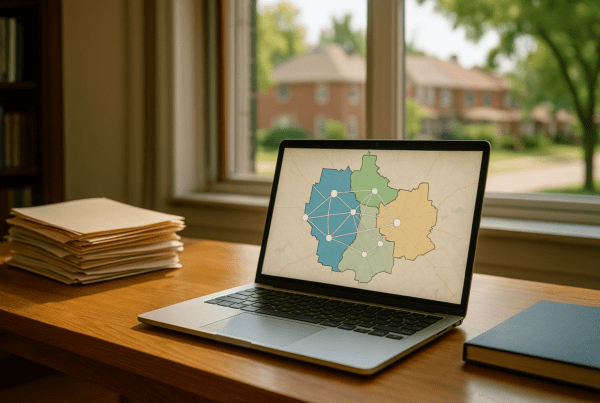

When you look up someone on a people search platform, the experience often feels seamless. You enter a name, perhaps a location or a detail such as a relative’s name, and the system returns a list of results, each connected to an identity pieced together from public records. However, beneath this convenience lurk common pitfalls linked to identity linkage, a process that tries to merge various data points into a coherent profile. These errors have been observed continuously, affecting both casual users and professionals relying on accurate data.
The delicate nature of connecting records across systems
Public records come from an array of sources with varying degrees of standardization and completeness. Birth certificates, property deeds, court records, professional licenses, and social media footprints all speak different languages in their data formats and update frequencies. People search platforms attempt to bridge these gaps by matching key identifiers-names, birth years, addresses, and sometimes relatives or employers.
Such efforts are complicated by inevitable variations. A single individual’s name might appear as “Jon Smith” in one dataset and “JonathanSmith” in another. Addresses can shift over time or be recorded with slight differences, such as abbreviations or misspellings. Common names multiply the complexity, making it all too easy to mistakenly connect records of two different people or misslink an individual’s own changing details.
Repeated patterns behind mismatched identities
The most frequent errors tend to revolve around name variations and incomplete address histories. For example, it is not unusual for variations in spelling or use of initials to cause platforms to fragment records into multiple separate profiles that fragment instead of consolidate.
Conversely, when platforms rely heavily on a few common attributes, they can mistakenly merge records from different individuals sharing names and demographic traits. This false linkage often appears in larger metropolitan areas with high population density and cultural diversity. Without unique identifiers, the software must guess, sometimes inaccurately combining the criminal record of one person with the clean record of another.
Another recurring issue is with changes in address. Records may lag behind when someone moves or fail to capture short-duration residencies, leading to gaps. When an address appears linked to multiple people across time, the platform must determine whether it signifies movement or cohabitation. Errors here often generate mixed household profiles or misplaced contact data.
Consequences beyond mere inconvenience
At first glance, these linkage errors might appear trivial-just a matter of clearing up confused search results. However, the stakes increase when people rely on these platforms for background screenings, reunions, or even legal considerations. Having an incorrect arrest record linked to your profile can hinder job prospects and damage reputations. On the other side, failing to find accurate contact information can block meaningful personal or professional connections.
Such identity mismatches also challenge platform operators. User trust depends on credible data. Each error exposes the limits of automated systems and reminds us of the human complexity behind data.
How ongoing patterns shape the public record ecosystem
The struggle to connect records illustrates wider patterns in public data management. Authorities and data providers do not always coordinate or update in real time, making search platforms depend on imperfect snapshots. As public records digitize more widely, more data becomes available but also more opportunity for errors to propagate if verification and linkage methods are not refined.
Regulatory dialogues increasingly emphasize accuracy and transparency in public records processing. Data privacy and consent also intersect with record linkage, prompting platforms to balance information utility with respect for individual rights. The U.S. government’s efforts around criminal justice data and identity verification provide some insight, but challenges remain in having authoritative, consistent identifiers across systems.
In the meantime, platforms continue iterating on algorithms, exploring machine learning techniques, and seeking user feedback to polish the accuracy of identity linkage. Keeping data fresh and encouraging users to suggest corrections have also become standard practices to catch errors that automated systems miss.
For anyone using these people search tools, awareness of how identity linkage errors arise can temper expectations and encourage cross-checking. Investigating multiple sources or verifying details with additional official records can help reduce misinterpretations.
Such a nuanced approach, where users engage with the data as part of a dynamic and imperfect system, matches the complex reality of public records. People’s identities are not static entities stored neatly on servers but evolving stories, embedded in social contexts and bureaucratic traces. Errors in linkage are a natural part of this complicated digital reflection.
Understanding this helps keep the experience grounded and lessens frustration when errors surface, while still appreciating the considerable advancement people search platforms represent compared to decades past when many records required manual retrieval or specialized legal requests.
Ultimately, identity linkage errors reveal how public data is both powerful and fragile, full of promise but demanding careful handling. Observing these dynamics underscores that getting a complete and accurate picture about a person involves much more than a search-it requires interpretation, skepticism, and patience.
For further insight on the nature of public records and identity linkage challenges, various organizations offer resources and explanations, including government sites detailing data collection practices and privacy guidelines. Likewise, expert discussions from data science communities shed light on technical approaches to minimize errors, helping platforms improve.
Continuing curiosity about these errors, their causes, and the real-world impact better equips everyone who depends on digital people search to approach the data thoughtfully and responsibly.
In a landscape shaped by ever-growing data visibility, the search for accurate, connected identity information carries on as an evolving frontier of both technology and trust.
For those interested, sites like the Federal Trade Commission offer perspectives on consumer rights relating to data accuracy and people search services. Meanwhile, Stanford University’s Criminal Justice Library provides structured views of criminal justice data and record linkage issues. Resources such as Privacy Rights Clearinghouse answer questions about personal data handling and record accuracy online, addressing common concerns with public record aggregators.
These connections between real-world data, user expectations, and technology help frame a wider understanding of identity linkage puzzles in people search platforms.
Sources and Helpful Links
- Federal Trade Commission – Official discussion on consumer rights related to data accuracy and people search websites
- Stanford University Criminal Justice Library – Academic resource on criminal justice data and record linkage challenges
- Privacy Rights Clearinghouse – Information about personal data privacy and public record accuracy