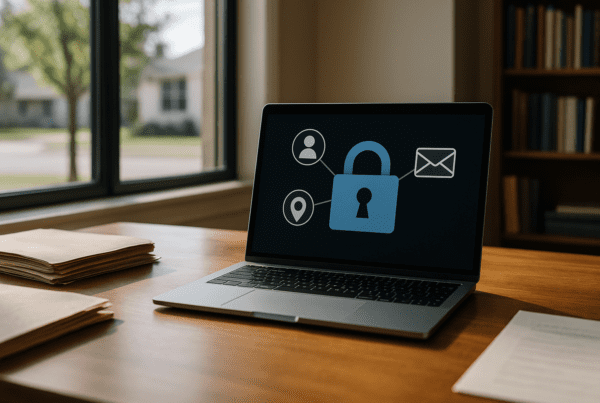

Across the digital landscape, a quiet transformation is unfolding in how personal information is gathered and interconnected. Data aggregation collects small details from many sources, combining them into multi-layered profiles. This process remains largely unseen, becoming apparent only when ads oddly fit interests, or when search results reveal more than expected, or even during encounters with comprehensive background reports.
From scattered clues to telling portraits
Privacy concerns no longer hinge mainly on what we directly share online. Instead, they revolve around countless fragments brought together, including public records, address histories, professional licenses, and contact data. Each piece individually may seem harmless, but their aggregation reveals behaviors, relationships, and identity nuances that shape a fuller story.
This gradual evolution means privacy depends less on safeguarding a single data point and more on the sweeping collection across platforms. Even when people are careful about their social media or devices, traces linger elsewhere, building a persistent digital footprint through public and semi-public records.
Public records weaving into everyday visibility
Traditionally, public records were accessed mostly by specialists such as journalists or genealogists. Today, they are funneled through data brokers and people search sites, making them readily accessible to anyone with an internet connection. This development floods everyday life with surprising transparency into one’s history, whether it’s property ownership, legal cases, or professional certifications.
Many remain unaware that these once disconnected pieces form a vast and intertwined database. As the Federal Trade Commission explains, information entered in one place often cascades across systems, amplifying its presence and leaving behind a trail much broader than initially imagined.
Weighing benefits alongside new vulnerabilities
These consolidated profiles can bring practical advantages. They help reconnect old friends or screen potential contacts. At the same time, their richness exposes individuals to threats like identity theft or fraud, since malicious actors may exploit the depth and accuracy of this collected information.
Another problem arises with errors embedded in these profiles. When many sources contribute data, correcting inaccuracies becomes complex. Outdated information can persist indefinitely, complicating efforts to protect one’s privacy and reputation in an increasingly linked digital environment.
The ongoing effort of guarding one’s privacy
Acknowledging the scope of data aggregation is just a starting point. Managing privacy today feels like an elaborate, continuous task. People can track their records, update inaccurate data, or adjust privacy controls across platforms. Yet these moves often seem like small pushes against an ever-expanding data tide.
The Privacy Rights Clearinghouse points out that protecting personal information is less about once-off fixes and more about ongoing awareness. Many digital traces remain invisible and passively collected, shaping profiles with little direct interaction.
Legal and regulatory frameworks struggle to keep pace with rapidly evolving technologies. Consequently, individuals shoulder much of the responsibility, needing to stay informed and cautious about how far their information travels and who might access it.
Interconnected lives and shared data footprints
Aggregated data reflects more than solitary details; it highlights relationships and social circles. Patterns formed from neighborhoods, families, and networks emerge within data sets, offering insights useful for identity verification and social research but also complicating privacy. An individual’s exposure can be influenced by others’ shared information, making personal control less straightforward.
Reflecting on privacy today means realizing that it is negotiated amid a conversation between diverse databases and dispersed records rather than through isolated moments. Control over digital identity becomes a layered challenge, given how many touchpoints contribute without explicit consent or awareness.
For those interested in how these profiles develop and their impact, the Consumer Financial Protection Bureau offers detailed analysis on how raw public data is transformed into consumer products that silently influence perceptions and decisions.
At its core, this expansion of data aggregation calls for sustained attention to both the technical measures that protect information and broader reflections about privacy’s definition and limits in an interwoven digital society.
Sources and Helpful Links
- Federal Trade Commission background checks overview explaining public record sources and their uses.
- Privacy Rights Clearinghouse guide on minimizing digital tracks and protecting personal information.
- Consumer Financial Protection Bureau analysis of public records data use in consumer reporting.