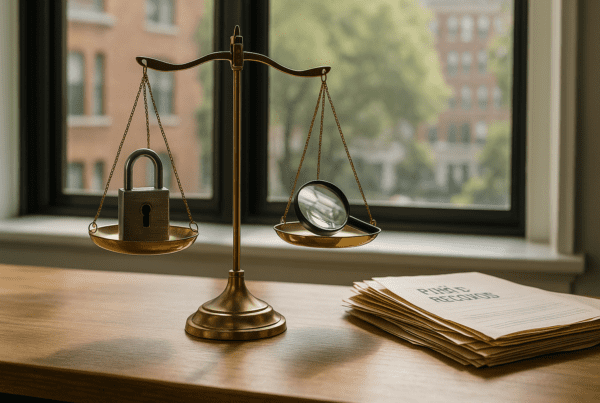

The rules around how people’s contact and address information can be accessed are quietly evolving. These changes affect everyone who searches public records for familiar faces, old neighbors, or contact details, yet the shifts can feel subtle until you try to access that type of data and find it more restricted or complicated than before.
Restrictions on Public Data and Emerging Privacy Norms
Traditionally, public records contained extensive address histories and contact information, accessible through various databases for reasons ranging from personal reconnecting to background verification. Over the years, the tension between public data transparency and individual privacy concerns has steadily grown. Regulators and lawmakers want to protect personal data from misuse, especially from commercial scraping, harassment, or identity theft, which has led to new policies targeting data brokers and aggregators.
For example, the implementation of laws such as the California Consumer Privacy Act (CCPA) and the European Union’s General Data Protection Regulation (GDPR) influenced certain data practices even outside their geographic boundaries. These regulations do not outlaw public records but impose limits on how businesses use and share personal information, affecting the flow and availability of contact and address details widely.
The ripple effect means that many data providers now implement more stringent verification and consent protocols before allowing access to historical contact or address records. This adds an extra layer of effort and sometimes cost for everyday users.
The Practical Impacts of Policy Shifts on Everyday Searches
If you remember the ease of typing a name into a people search site and seeing long address trails, current experiences often differ. New policy compliance forces providers to mask or exclude certain details, particularly when the addresses are recent or the individual has taken steps to limit their exposure online. It’s not uncommon to encounter notices explaining restricted data availability based on privacy laws or requests from the listed individuals.
This development is not simply an inconvenience. It reflects an ongoing recalibration between open data as a public good and the growing recognition that contact information can be sensitive and potentially dangerous when mishandled. Security experts and privacy advocates highlight that addresses linked to a person can lead to physical risks if widely exposed.
At the same time, there are practical exceptions for legitimate uses. Some government and authorized agencies maintain access privileges for specific public safety, legal, or research purposes. Real estate professionals, legal practitioners, and some investigative entities also find pathways to access more complete records, often with additional scrutiny or licensing requirements.
How Data Providers Adapt to Regulatory Challenges
Layers of compliance demand that data providers monitor policy changes and adjust their systems accordingly. This creates a patchwork landscape for contact and address history access, varying by state, country, and even provider. For instance, some services might limit how long address records remain visible publicly, deleting or obscuring entries after a few years to preserve privacy.
Others offer options for individuals to request removal or suppression of their information if it meets specific criteria. This consumer control aligns with expanding rights seen in laws like the GDPR’s right to be forgotten. Such features, while beneficial for privacy, complicate efforts to gather comprehensive historical records.
In the background, these regulatory realities prompt a consolidation among data companies, as compliance costs favor larger entities who can invest in necessary infrastructure. Smaller providers often struggle to keep up with evolving legal frameworks, shrinking the range of accessible public data sources for a given search.
Looking Through the Lens of User Awareness
As data availability narrows or becomes filtered by privacy layers, users find importance in understanding where data comes from and how policies affect its completeness. Transparency statements from data providers and resources explaining privacy rights are becoming features users rely on to make sense of search results.
Additionally, users increasingly consider the consequences of sharing their own contact and address data online or with third parties. The tradeoff between convenience and control emerges clearly when contact histories once public enough to track relatives or neighbors now demand more patience and verification.
Resources like the Electronic Frontier Foundation and privacy-focused platforms highlight these changes, advocating knowledge and caution even as public records maintain a foundational role in identity verification and reconnecting.
Ultimately, the broad shifts in data use policies are less about locking down all information and more about refining who sees what, when, and how. These adjustments mirror society’s faster-changing awareness of privacy expectations, technology’s role, and the risks embedded in even the simplest contact details.
Though some see new rules as barriers, they can also be interpreted as steps toward respectful data sharing in a more interconnected world. The key lies in continual observation of how these policies unfold and affect public data ecosystems over time.
For those who delve into public records today, whether out of curiosity or necessity, understanding these evolving dynamics enriches the experience. It encourages a more thoughtful approach to the data we seek and collect, recognizing its human dimensions beyond mere statistics or lists.
As policy landscapes shift, so too does the relationship between individuals and their contact and address histories, highlighting a complex but crucial dialogue at the intersection of privacy, technology, and access.
It remains essential to stay informed through official sources and privacy advocacy groups to grasp the full context around access and use restrictions. This enables a balanced view that respects both privacy needs and the practical realities of public information.
For those interested in monitoring these developments, government resources such as the Federal Trade Commission and consumer privacy law pages provide authoritative updates and guidance on evolving data use regulations.
Similarly, established people search services update their privacy policies and user agreements in response to these changes, reflecting a landscape that, while more cautious and controlled, still supports many everyday uses of address and contact data.
Being aware of the ongoing policy impact helps individual users and professionals alike set realistic expectations, navigate access challenges, and advocate for balanced solutions that honor privacy without obscuring vital public records when needed.
In time, these evolving rules shape not just data availability but how society collectively understands the role of contact history in identity and connection.
Public data watchers and users alike will find this an unfolding story, marked by ongoing adjustments and a growing awareness of the limits and possibilities of accessible information.
The journey continues as policy and technology evolve, demanding thoughtful engagement and careful stewardship of information once taken for granted.
More details about these policies and their implications often circulate through official regulatory sites, industry commentary, and privacy advocacy, providing a richer frame for interpreting current access realities.
Awareness is the first step in adapting to the new normal of contact and address history access, one shaped as much by human concerns as legal frameworks.
Sources and Helpful Links
- Federal Trade Commission – Data Protection: Comprehensive resource on data privacy rules and enforcement in the US.
- Electronic Privacy Information Center on GDPR: Explanation of European data privacy laws and their impact on data use.
- California Consumer Privacy Act (CCPA): Official consumer guidance on key California privacy protections.
- Privacy Rights Clearinghouse: Offers detailed information and news about privacy laws and consumer rights in the US.
- PeopleFinders Privacy Policy: Example of a people search service adapting to evolving privacy policies.