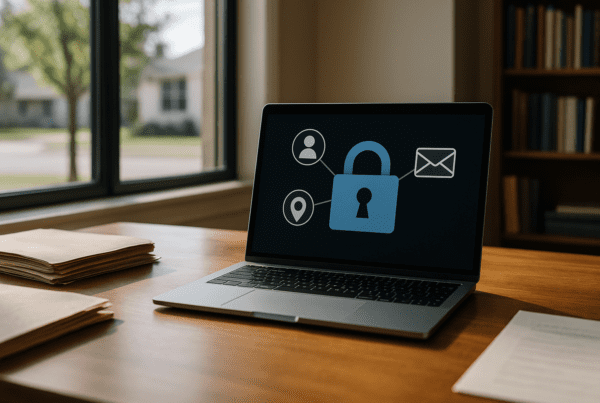
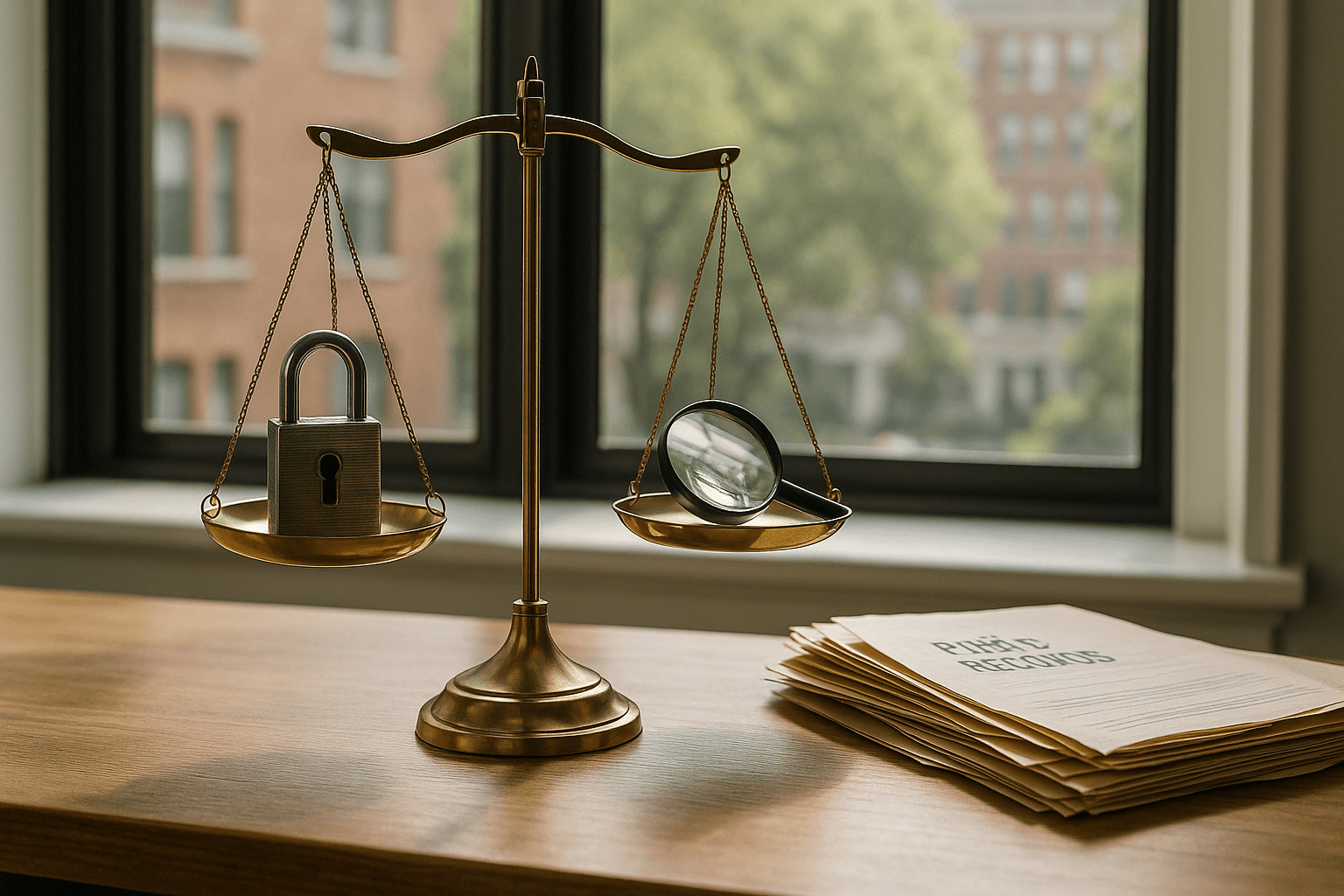
Anyone who has dived into the labyrinth of public records notices the tension simmering under the surface. On one hand, there’s a firm commitment to transparency, a desire to peel back curtains and shine light on government activities, officials’ conduct, and the use of public funds. On the other hand, the privacy of individuals who intersect with those records-sometimes as witnesses, employees, or even innocent bystanders-begs for protection against unnecessary exposure.
The Uneven Landscape of Records and Rights
Public records exist in a patchwork of state and federal rules, each grappling with the interplay of openness and privacy in different ways. Some states treat requests with almost militant transparency, while others lean towards safeguarding personal information, especially in sensitive areas like health or juvenile records. A seemingly straightforward request for a document can become a negotiation between what should be open and what must stay confidential.
This patchwork sometimes leads to real-world consequences you might not expect. For example, a single homeowner who participates in a municipal program might find details of their involvement easier to access than they anticipated, while equivalent personal data handled by a private organization remains locked down. This difference shows how publicness is less about uniform rules and more about varied practical applications layered with evolving court interpretations.
Where Technology Pushes and Privacy Holds Back
Digital advances have radically changed how records are stored, retrieved, and shared. Government portals and searchable databases make transparency far more immediate and accessible than the physical filing cabinets of old. But greater access also means a sharper need for filtering sensitive content. Metadata, for example, can carry more personal information than the record itself, and unintentional oversharing has happened when agencies fail to scrub files carefully.
Encryption and redaction tools improve attempts to shield private details, but they require resources and thoughtful implementation. Budget constraints in public offices can mean privacy measures are uneven, or redactions are handled manually, leaving room for error. Digital archives also raise questions about how long data sticks around, with some agencies unable or slow to remove outdated or irrelevant personal information once made public.
The Human Angle in Requests and Privacy Risks
Beyond the technical, the human dimension shapes how records requests play out. Consider someone looking up a former employer or a neighbor involved in a legal proceeding. What the requester seeks could be entirely legitimate, yet the exposure of certain personal data may have unintended ripple effects, from identity theft to harassment. Legal frameworks like the federal Privacy Act and state-specific public records laws often try to thread this needle, but they can only do so much when real life blurs clear lines.
Moreover, agencies tasked with releasing records might face ethical considerations in deciding what stays hidden. Journalists, researchers, and the public rely on government data to hold power accountable, yet the cost to individuals’ privacy keeps some details sealed. Sometimes, a requestor’s intention matters little to the agency; protecting sensitive information is baked into the system because the risks of disclosure are broad and unpredictable.
Legal Challenges That Shape the Balance
Regulations and court rulings regularly nudge the limits on information access. Lawsuits regarding records requests often highlight conflicts between the public’s right to know and personal privacy expectations. A noteworthy example is the controversy around releasing police body camera footage, where transparency interests clash with the privacy rights of both officers and civilians.
The United States Freedom of Information Act (FOIA) sets a federal benchmark, encouraging openness but also listing exemptions that protect privacy, trade secrets, and law enforcement interests. Interpreting these exemptions can lead to delays or disputes, but they also underscore that transparency is not absolute. It exists alongside rights carefully preserved to maintain dignity and security.
The Future’s Many Questions on Public Access
Looking ahead, the growing use of artificial intelligence and big data analytics within government records raises new questions. How do machine learning tools respect privacy when scouring extensive digital archives? What standards should govern the automated release or anonymization of data? These emerging concerns will likely challenge existing laws and push for forms of oversight that balance transparency with evolving privacy expectations.
The public’s attitude towards privacy has also evolved. Surveys suggest people want more control over their personal information and more clarity about what is shared publicly, even in government records. Agencies that collect and disseminate information may face rising pressure to refine how they handle requests and determine what content truly belongs in the public eye.
Besides the official spaces, educational and consumer advocacy groups contribute to the conversation. Organizations like the Privacy Rights Clearinghouse help demystify privacy laws in public records and help users understand their rights and limitations. Their work contributes to more informed requests, better agency responses, and, ideally, a more thoughtful balance between openness and protection.
This ongoing dialogue is essential because public records do not exist in a vacuum. They reflect complex relationships between governments and citizens, individuals and communities, transparency and privacy. Each request poses a small but real question about where society draws lines and how those lines evolve as values and technology shift.
Sources and Helpful Links
- United States Freedom of Information Act (FOIA) – The federal law setting standards for transparency and exemptions protecting privacy.
- U.S. Department of Justice Open Government Guide – Details on the Privacy Act and how it intersects with public records law.
- Privacy Rights Clearinghouse – A nonprofit resource offering consumer guidance on privacy issues related to public records.
- National Conference of State Legislatures – Overview of state public records exemptions and how states differ in balancing privacy and access.