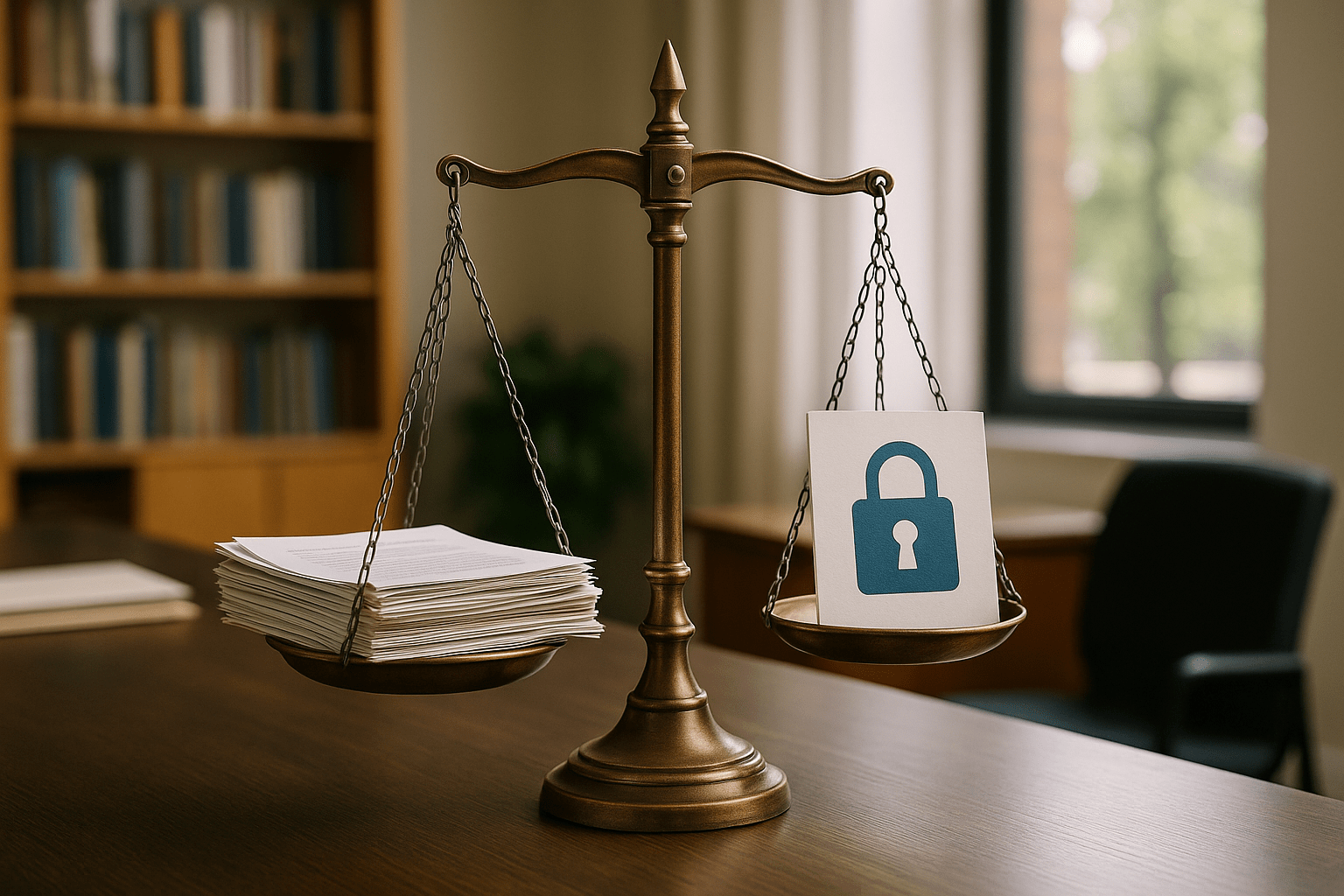
Public records serve as a cornerstone of transparency, holding governments and organizations accountable to the public they serve. At the same time, privacy laws impose necessary boundaries, protecting individuals from unwarranted disclosure of personal information. When these two important societal goals intersect, the result is often a complicated negotiation around what information must be accessible and what deserves protection.
Access to Public Information in the Shadow of Privacy Concerns
Public record requests provide a formalized way for citizens, journalists, and researchers to inquire about government operations and decisions. They grant visibility into actions that would otherwise remain behind closed doors. However, as electronic records grow and databases become more interconnected, requests can reveal sensitive data that privacy law aims to shield.
The tension often stems from the broad definitions under open records laws versus the specific protections enshrined in privacy statutes. Laws such as the Freedom of Information Act (FOIA) in the United States generally favor disclosure unless there is a clear exemption. Those exemptions might include personal privacy, protection of law enforcement techniques, or information that could jeopardize public safety. While the principle of openness is key, the recognition that some details are not meant for wide circulation leads to intricate interpretations by agencies and courts.
For anyone navigating these waters, the practical challenge lies in discerning where transparency ends and privacy begins. Public bodies are tasked with sifting through records to redact information that could violate privacy rights, yet this process is not always consistent or predictable. Advocates for open records emphasize that excessive redaction can undermine the very purpose of the law, while privacy advocates argue that unchecked access puts individuals at risk.
Privacy Protections Evolve With New Data Realities
As digital footprints expand, the types of data covered by privacy regulations have increased in complexity. Older public record laws were not designed with modern data use in mind, posing unique challenges today. The rise of biometric data, GPS tracking, and detailed transaction histories creates new categories of sensitive information that were simply not contemplated decades ago.
State and federal privacy laws strive to catch up with these developments. For instance, the California Consumer Privacy Act (CCPA) and related regulations recognize broader user rights over personal information that overlaps with public records held by government or quasi-government entities. When those laws interact with open records statutes, officials find themselves trying to honor requests for information while complying with robust privacy protections.
The patchwork nature of these laws-different states applying varied privacy principles alongside federal standards-means that the scope of what can be accessed through public record requests tends to shift depending on jurisdiction. With each new legal development, agencies must adjust policies and reconsider legacy practices to address these demands responsibly.
The Human Element in Data Disclosure Decisions
Outside the legal texts, the decisions about what to release often come down to human judgment. Records custodians and public information officers serve as gatekeepers who must carefully balance transparency with privacy concerns. This work frequently requires sensitivity, whether dealing with information about individuals related to criminal investigations, family matters, or health records that appear in government files.
These roles bring a certain weight because a wrong decision could expose someone to harm or undermine the principle of an informed citizenry. This nuance makes the process slower and more cautious than many requesters anticipate. Agencies also face limited resources and potential liability, leading to conservative stances on releasing information that could spark controversy or legal challenges.
For example, in situations where victims’ identities risk being revealed through a public record, custodians must decide if withholding that data overrides the public’s right to know. Such judgments highlight the unpredictability inherent in balancing competing values-there is rarely clear-cut guidance, only best practices shaped by precedent and policy reflection.
Recent Trends and Shifts in the Legal Landscape
Courts continue to play a significant role in delineating the boundaries between privacy and access rights. Judicial rulings often come from specific disputes over records requests, and these cases provide insight into how the balance is struck in different settings. Some decisions have reinforced strong privacy claims, while others have emphasized the public’s right to government-held information even if it includes personal details.
Technology also shapes these outcomes. As artificial intelligence tools become more capable of quickly aggregating and analyzing data from public record dumps, privacy advocates worry about unintentional exposures and re-identification risks. This concern pushes lawmakers to rethink exemptions and data minimization strategies.
Legislators and regulators globally are watching these trends closely, seeking ways to harmonize privacy and transparency goals in a landscape where both are essential but occasionally at odds. A constant through all developments is the recognition that neither unrestricted access nor absolute secrecy offers a viable path forward for democratic societies.
For researchers or citizens engaged in public record requests, awareness of evolving privacy statutes and growing legal nuance helps frame expectations. It also underscores the importance of measured approaches and constructive dialogue between requesters, record custodians, and policymakers as they navigate this tricky intersection.
Learn more about how privacy laws interface with public record requests through resources like the FOIA.gov site, which offers details on access rights and exemptions, or the Privacy Rights Clearinghouse, which explains personal data protections in government records. The ongoing reporting and analysis published by the Reporters Committee for Freedom of the Press provides case studies and current legal developments shaping the delicate balance between openness and privacy in the public record arena.
Sources and Helpful Links
- FOIA.gov – Official information on freedom of information and public records requests in the United States
- Privacy Rights Clearinghouse – Comprehensive resource on privacy protections and issues related to public data
- Reporters Committee for Freedom of the Press – Legal research and updates about media access to government information
- California Department of Justice CCPA Information – Details on California’s consumer privacy act and its impact on public data