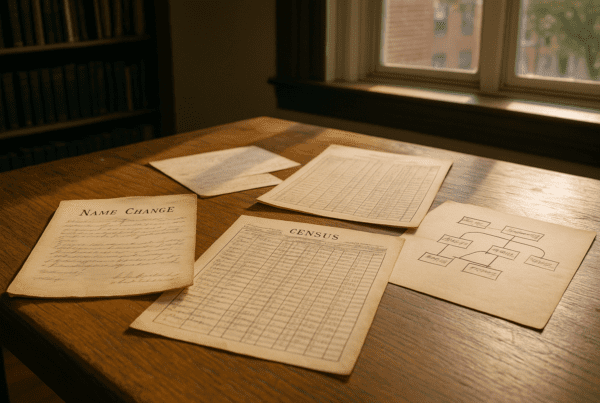

When tracing family roots, most researchers focus on names, dates, and official records such as birth certificates or census data. Yet, a crucial and often overlooked piece of the puzzle lies in the times and places people called home across the years. Address histories offer a quiet but rich thread running through generations, hinting at movements, social ties, and changes that can deepen our understanding of where family stories began and unfolded over decades.
Not Every Address Tells a Straightforward Story
Address records can feel like a trail of breadcrumbs scattered across decades, sometimes erratic and fragmented. A single move might reveal a shift in economic status, a change in occupation, or even an escape from societal pressures. In older records, addresses may be tied to things as ephemeral as a relative’s boarding house or a short-term rental rather than a long-term home, introducing complexities to the search.
This is visible in public records that capture where a person was during a census year or where a voter was registered. Sometimes the address reflects a place of work, a seasonal residence, or a location related to extended family rather than the person’s primary household. Understanding the context behind these addresses requires patience and occasionally triangulating with other documents like city directories or property records.
Address Clusters Reveal Social and Familial Networks
Looking at multiple family members’ addresses side by side often reveals a wider network than just bloodlines. Close geographic ties among relatives or neighbors can hint at support systems, emigration patterns, or even migration within a community. For example, several cousins living within blocks of each other or moving between the same cities might suggest factors such as job opportunities or familial care arrangements driving their choices.
Some genealogists overlook these patterns, focusing instead on direct connections. Yet address histories allow researchers to consider family within a social ecosystem, weaving in neighbors, friends, and even community leaders who might appear across various public records. This broader perspective is central for understanding the lived experience of ancestors beyond neat family trees and registration dates.
Shifts in Address Can Illuminate Major Life Events and Trends
When families change addresses regularly, it often corresponds to important moments such as marriage, property inheritance, or economic pressures. A sudden move to a rural area might indicate an agricultural livelihood, while relocation to a city could correspond with industrial job opportunities. These details are invaluable when trying to contextualize why ancestors made certain decisions.
For instance, examining address histories during periods of known historical upheaval – like the Great Depression or wartime years – can help researchers grasp how broader events impacted family units. Such moves might include temporary displacement or migration to places with better support, all recorded as part of evolving address trails.
Modern Tools Bring New Light to Old Addresses
Digital archives and online people search tools now often compile address histories alongside other personal data, making it easier than ever to reconstruct where individuals lived at different points. These digital footprints allow researchers to cross-check records more efficiently, spotting inconsistencies or multiple residences that previously slipped under the radar.
However, this also means being cautious about the quality of data and its sources. Some addresses might be outdated, incorrect due to data entry errors, or represent locations associated loosely with the person. Good research practice means corroborating address data with additional records like deeds, wills, or directories to verify their significance.
Additionally, exploring historical maps and city layouts adds context to address findings. Knowing a family’s house was near a particular landmark or factory can reveal more about daily life, local culture, and economic context that shape genealogical narratives.
Address Histories Connect Generations in Unexpected Ways
One of the most fascinating outcomes of tracing address histories is discovering how places serve as physical connectors between generations. Families often return to ancestral towns or neighborhoods across decades, strengthening ties to those places. Recognizing these geographic patterns can be a breakthrough, helping pinpoint previously unknown relatives or branches of a family.
Address research sometimes also uncovers stories of displacement, such as forced relocations or escapes from persecution. These narratives, while often painful, are essential in appreciating the resilience and movement of family lines through history. They transform mere data points into lived experiences with emotional weight and historical significance.
For family researchers, paying close attention to address histories enriches the picture of where ancestors lived and why. It complements names and dates with geography and movement, inviting a more nuanced and human portrait of the past.
Learning to read these address patterns is like slowly solving a puzzle. It requires piecing together formal records with maps, stories, and sometimes intuition about the social realities behind the numbers. This work can be revealing, rewarding, and profoundly grounding for anyone seeking to understand not just who their family was, but how they inhabited places across time.
For those interested in delving deeper, several resources provide a good starting point on address histories in genealogical contexts. University genealogy departments and national archives often offer guides to property and residence records with advice on how to interpret them. Additionally, databases like the FamilySearch database compile a wealth of historical address data linked to vital records and censuses that can help track families over time.
Understanding the way families interact with places also touches on broader areas of identity, social history, and migration studies. For those looking beyond the personal, resources such as the National Archives genealogy section provide context for how address records fit into larger historical narratives across the United States and beyond.
In the end, the address history is more than an addendum on a family tree. It is a pathway into the textures of daily life, the decisions and upheavals that shaped family journeys, and the tangible places where ancestors laid roots, however temporary or deep.
Sources and Helpful Links
- FamilySearch, a comprehensive database for genealogical records including address data linked to censuses and vital records
- National Archives Genealogy Resources, for historical context and access to property and residential records
- Cyndi’s List – Addresses, a curated collection of links focused on address and location records for genealogy research
- Library of Congress Collections, for historical maps and documents that help place family addresses in geographic context