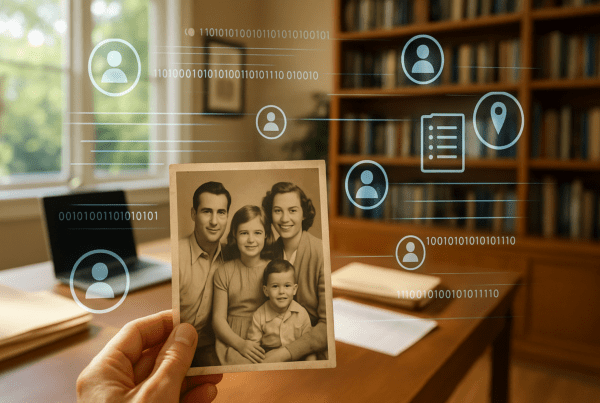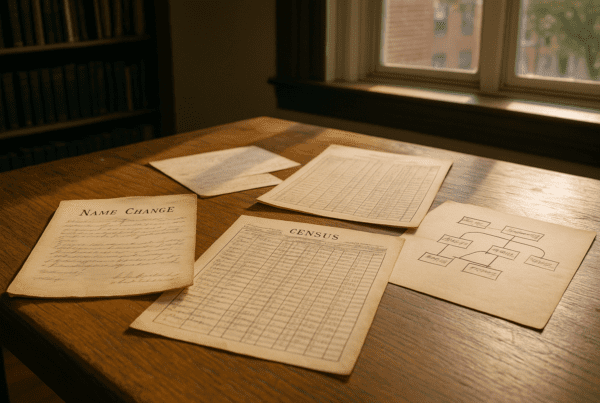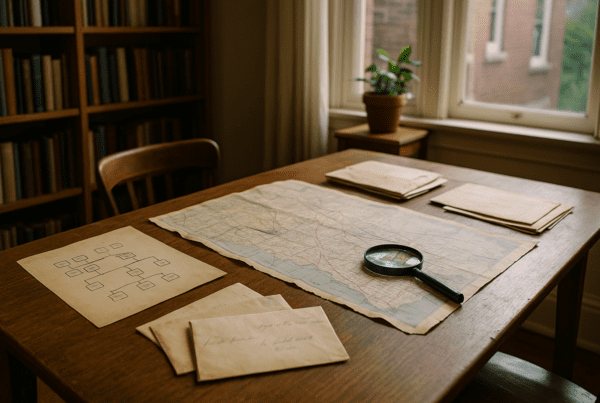

In looking through public records, the story of family life emerges clearly, marked by shifts that reflect wider social changes. Names, dates, and addresses are more than just data points. They tell us about marriages that ended, partnerships that began anew, multigenerational households, and the varying compositions of what people call family. The public record acts like a historical tapestry where the threads of family connections continually unravel and reweave.
Families Growing Beyond Traditional Boundaries
Once upon a time, census records and vital statistics predominantly mirrored a more conventional family model: two parents and their biological children sharing one household. Yet over decades, these government documents silently chart a gradual dissolution of that pattern as other arrangements become visible. Single-parent homes, blended families, cohabiting couples, and extended relatives living under one roof started to show more regularly in the data. This is not just a statistical evolution but a lived reality for many, quietly noted in records that were never intended to capture social nuance.
Public records from agencies like the U.S. Census Bureau illustrate these trends by displaying how household composition tables have expanded from basic definitions to detailed classifications. Researchers and genealogists alike find that acknowledging this diversity is critical when tracing family histories or interpreting demographic shifts. The entries for guardianship, partnership registration, and even those reflecting changing surname conventions further enrich what the records reveal about evolving kinship structures.
The Subtle Shifts Reflected in Address Histories
Beyond family trees themselves, address histories found in public data show the practical side of changing family life. People appear and disappear from households, moving between shared residences, care facilities, and rental arrangements. These transitions often mirror life stages-young adults leaving home, older generations moving in with their children, or families breaking up and rebuilding in different locales.
Spotting patterns in address data requires careful interpretation. A single address with multiple occupants noted over time may indicate a multigenerational dwelling or a shift from a nuclear family to a communal or extended format. This can sometimes complicate people searches or background checks because relationships are not always apparent from a simple name-to-address match. Nonetheless, such detail offers clues about how families adapt to economic reality and cultural expectations reflected in the public and private spheres.
Marriage, Divorce, and Partnerships on Record
Marriage certificates and divorce decrees are among the most concrete evidence of shifting family statuses in public records. Their accessibility through state or county clerks’ offices allows us to trace how unions have changed over time, including the rise of second marriages, remarriages, and even legal recognition of non-traditional partnerships. This is especially insightful when viewed alongside birth and death certificates, which help map out genealogical links despite interruptions in family lines.
The growing presence of civil unions and domestic partnerships in some public data repositories points toward an evolving legal definition of family beyond traditional marriage. This change shows the multiplicity of ways people formalize relationships and the subsequent reflections in genealogical records. It also challenges researchers and consumers of public data alike to reconsider assumptions about lineage and family permanence.
Genealogy and Its Expanding Horizons
The rise of genealogy as a popular pursuit shines a spotlight on these changing family structures through public records. Searching for ancestors used to mean following straight lines of birth, marriage, and death. Now, it often involves navigating complex networks of half-siblings, step-parents, adoptions, and non-biological kinship ties.
This complexity demands richer datasets and more thoughtful approaches to interpreting them. Public records that once served purely official or administrative roles have become vital resources for discovering personal histories and understanding how family stories unfold across generations. Genealogists increasingly rely on a combination of records sources-from vital statistics to property deeds and court files-to piece together lives that do not always fit traditional molds captured in simple family trees.
At the same time, new insights emerge on how social and economic forces shape family life. Public records of births outside marriage, for example, reveal changing social mores and the normalization of diverse family forms. The patterns uncovered in the data often parallel shifts in society’s values around identity, heritage, and belonging.
Technology also influences what public records can reveal about families. Digital archives and platforms that aggregate historical documents now allow for unprecedented connections between people, places, and events. When combined with traditional records, these tools help reconstruct nuanced views of family life that grow organically rather than follow rigid categories.
Although public records might seem impersonal, the stories they contain voice the human side of social change. By reading between the lines, one sees more than names and dates. These documents reflect real-life decisions, challenges, and adaptations made over time. Family structures are fluid, layered, and deeply tied to lived experience. Public records, therefore, serve as both mirrors and maps of how family life continually redefines itself.
Exploring these data threads shows us that the idea of family has never been static. It changes with culture, law, economics, and personal choices. Whether through blended households registered in official documents or genealogical connections discovered in archives, understanding the shifting contours of family helps us appreciate the complexity behind the public records that many turn to for answers.
For anyone engaged in tracing family history, verifying identity, or simply trying to understand societal trends, these public traces offer a kind of living history-one that acknowledges change as much as continuity.
As public records continue to evolve in scope and detail, so too will our understanding of what makes a family. That makes careful examination and interpretation essential for anyone looking beyond the surface of the data.
In this way, public records serve not only as tools for verification and research but as quiet testimony to the diverse and changing realities of family life in modern times.
For further exploration, sources like the U.S. Census Bureau on Families provide an overview of demographic changes, while legal records access sites such as uscourts.gov offer insight into court records shaping family law history. Genealogy enthusiasts often turn to repositories like National Archives Genealogy Research to trace these evolving family narratives.
These reflections from public records remind us that family is a dynamic, adaptive part of human identity, continuously documented in ways that offer both challenges and opportunities for understanding our social histories.
Sources and Helpful Links
- U.S. Census Bureau on Families covers demographic aspects and trends related to family and household structures.
- uscourts.gov Family Law discusses access to court records related to family matters and legal history.
- National Archives Genealogy Research explains how to use public records for tracing family lineages and understanding personal histories.