Family names connect us to history, culture, and identity, yet they are not always permanent fixtures in our lives. Exploring public records reveals the often understated stories behind how and why people have altered their last names over the years.
The cautious rewriting of identity
Looking through decades of public records, one sees not random alterations but thoughtful adaptations. People have shown a steady preference for changing family names in ways that reflect shifting social climates or personal circumstances. In some cases, these changes were motivated by a desire to simplify pronunciation or spelling for ease in official paperwork and daily interactions.
For immigrants arriving in new countries, particularly the United States, this became a recurring theme. Public immigration and naturalization records often show family names evolving to fit linguistic expectations, shedding complex or foreign-sounding elements. This wasn’t always about erasing heritage, but more about navigating the social environment efficiently.
Legal procedures governing name changes, which vary significantly by locality and over time, also appear in public records, and they illuminate how formal these shifts have been. Some name modifications were enacted to follow marriage traditions, others to escape past associations or even discrimination.
Patterns across generations in public documents
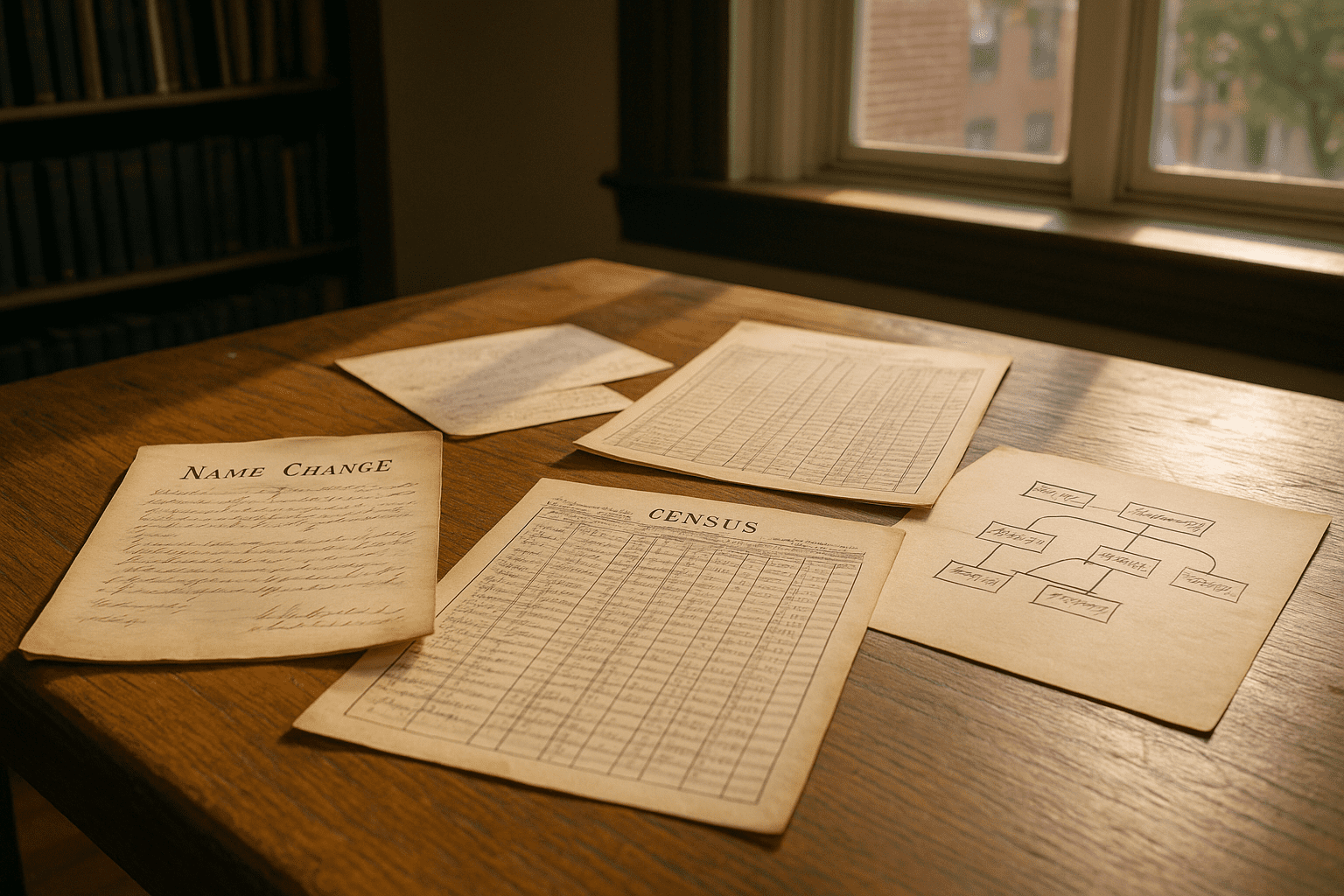
Reviewing census forms, court records, and vital statistics across different eras highlights unique patterns. For example, in some communities, the transition from patronymic or matronymic naming conventions toward fixed surnames is visibly traceable in public registries of births and marriages. This slow standardization marked changes in recordkeeping and societal organization as much as family choices.
Public records also make evident the disparities in name change trends between rural and urban areas. Urban environments, with greater cultural diversity and mobility, showed more frequent and varied name changes. In contrast, rural records often reveal more stability in surnames, reflecting smaller, long-established populations.
Additionally, subtle clues about family circumstances emerge. Widows or widowers sometimes opted to retain or alter their spouse’s surname, depending on social pressures or inheritance matters. Legal name change petitions archived in courts provide context, occasionally revealing emotional or economic motivations rather than purely cultural ones.
Recordkeeping challenges and data patterns
One complexity observed while examining public records is the inconsistency in how name changes were documented. Before digitization and modern standards, clerks sometimes spelled names phonetically, or older forms resurfaced unexpectedly, complicating genealogical tracing.
This inconsistency, while challenging for researchers, also offers insight into how identity was negotiated in real world interactions. Names served as practical identifiers but also carried the fluidity of human experience. In certain cases, families reverted to older versions after trial changes, as if testing which version better eased their social navigation.
The growing availability of online public records platforms has expanded access to name change data over centuries, allowing researchers and curious individuals alike to identify regional differences and temporal trends. These discoveries often cross-reference with demographic data, immigration waves, and legal reforms.
When history and personal choice meet the law
Behind every official name change recorded in public records, there is often a story blending personal agency with external forces. Court rulings, legislative enactments, and notary records reflect how states and communities balanced individual desires with societal order.
For example, specific waves of legislation during the 20th century imposed stricter regulations for name changes in some states, motivated by concerns ranging from fraud prevention to cultural assimilation. Public records hold these annotations, revealing the evolving relationship between identity and governance.
Interestingly, modern records show renewed interest in reclaiming ancestral names or hyphenating surnames to honor multiple heritages. This trend, visible in marriage licenses and court petitions, signals a more diverse understanding of identity in today’s social fabric.
Ultimately, public records provide a patient observer with a layered view of how family names have shifted alongside cultural tides, legal frameworks, and personal stories. They illuminate a world where names are not fixed labels but living parts of history and identity.
Looking carefully, one finds not only the names but the echoes of lives seeking belonging and recognition through generations.
References to explore name change histories further include open government vital records offices, archives of local court name change petitions, and immigration databases. Tools like the National Archives or state-level registries can offer starting points for anyone intrigued by the ebb and flow of surnames across time.
For legal details about obtaining or contesting name changes, resources such as [Nolo’s overview on name change laws](https://www.nolo.com/legal-encyclopedia/name-changes) or state government websites provide reliable, straightforward explanations. In genealogical contexts, sites like [FamilySearch](https://www.familysearch.org/) offer extensive records that reveal naming practices in historical populations.
Meanwhile, privacy-focused sites such as the [Privacy Rights Clearinghouse](https://privacyrights.org/) discuss public data use and limitations to keep in mind when accessing personal information through public records.
Observing the past offers gentle perspective on identity
Family name changes, traced through decades of public documents, show an ongoing conversation between who we are, who we appear to be, and how society perceives us. A closer view reveals no consistent pattern of erasure but rather a tapestry of adaptation and continuity.
Each name alteration recorded in the public sphere reflects choices that carry weight beyond the paper forms. They document personal and collective shifts in identity, resilience, and belonging at the interface of history and modern life.
When we think of names as flexible rather than fixed, the records become less like static documents and more like living narratives tracing the human journey through time.
Sources and Helpful Links
- National Archives Vital Records offering access to historical birth, marriage, and death records influencing surname research
- Nolo Name Change Laws explaining the legal frameworks and processes of name changes in the United States
- FamilySearch hosting extensive genealogy databases that reveal naming patterns across generations
- Privacy Rights Clearinghouse providing perspective on privacy and data use related to public records