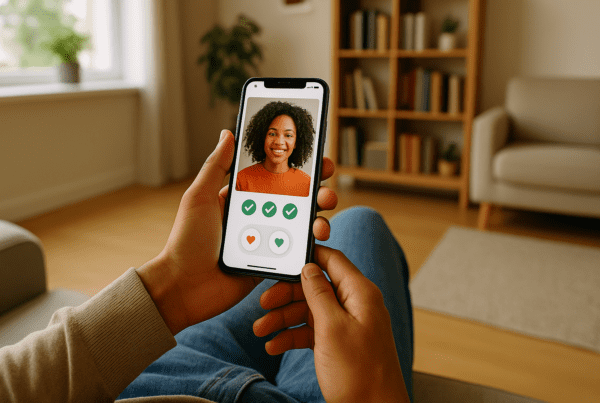
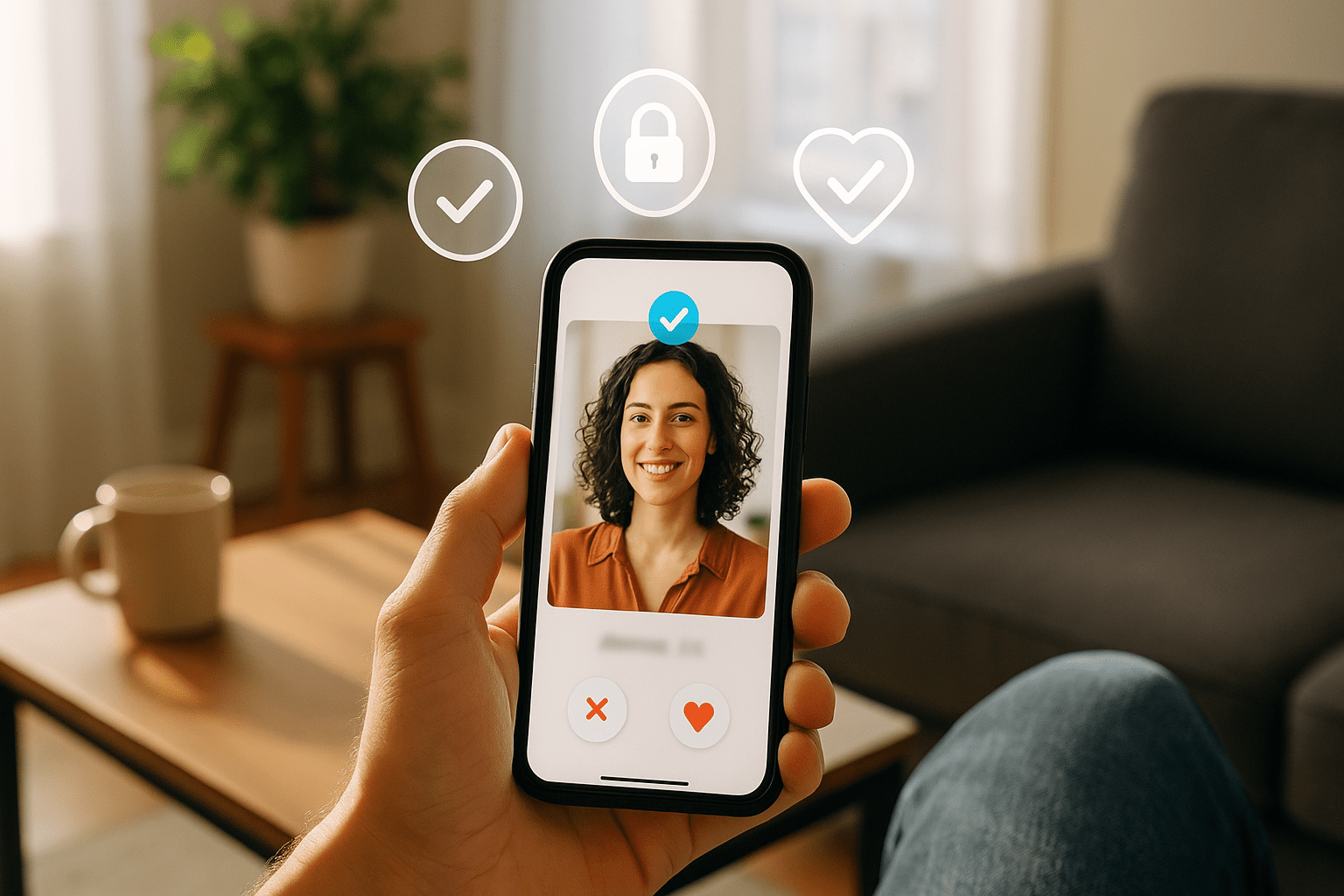
It feels routine now to come across badges, checkmarks, or little confirmations on dating profiles. They promise that the person you’re chatting with is indeed who they claim to be. But this shift toward verification tools on dating apps and websites reveals something bigger happening between strangers trying to meet online: a layered, evolving trust game that extends beyond just matching photos and interests.
When trust used to grow face to face
Looking back, dating felt like a process grounded in physical proximity or community connections. Meeting someone was usually through friends, family, or shared spaces where social cues served as real-time verification. That natural world context gave trust a foundation that was hard to fake.
Online dating replaced those face-to-face nuances with profiles that were little more than pixels and text. Profiles changed fast and lacked the sensory proof people relied on before. Out of this gap between virtual presence and real trust emerged a demand for some kind of authentication.
Verification tools grew from this demand, evolving from simple email or phone number confirmations to facial recognition and government ID checks. Some apps let users link social media or other digital footprints to their profiles as added signals. Each of these represents a distinct attempt to build trust in a space where strangers meet by design.
The response from users is revealing. Profiles with verified badges clearly get more glances and chats. According to a Pew Research Center study, roughly one in four users has used some form of verification, with many noting it made them feel safer. Still, these badges communicate something more nuanced than just identity confirmation.
The quiet signals behind a verified badge
Verification markers function subtly. They tell a story about effort and transparency without spelling it out. Essentially, they suggest that the person has passed at least one hurdle toward authenticity. This acts as a social nudge, hinting that this profile belongs to someone who is less likely to be deceptive.
This creates an unspoken pact between users, something like a handshake in a busy digital market. You show me your verified badge, and I can afford to loosen suspicion a little. It is a reassurance that while all profiles are just pixels, some have extra grounding in reality.
However, this reassurance has limits. Verification confirms “who you are,” but it cannot guarantee personality, values, or honesty beyond the document or photo check. It answers an important question but leaves many others open. The actual chemistry in a relationship depends on many things verification does not cover.
Apps approach this challenge with various verification techniques. Services such as Tinder and Bumble have integrated selfie scans that compare live images to official IDs or previous profile photos using biometric algorithms. This technological layer creates new complexities in dating, including concerns about how personal biometric data is stored and safeguarded.
The complicated dance of trust and caution
Meeting strangers always includes a mix of hope and hesitation. Verification tools can reduce some worries but are not a cure-all for online dating anxieties. Emotional safety still needs careful cultivation around how people communicate, share boundaries, and gradually build connection.
Think of verification as a first gatekeeper, designed to block fakes before conversations start. Beyond that gate, trust unfolds slowly through shared experience, conversation, and vulnerability. Users often apply additional layers of assurance, like video chats or referrals from mutual contacts, to feel secure as the relationship deepens.
The legal and cultural contexts around verification also add complexity. Privacy policies vary across countries, and some regions have strict rules about how apps can collect and store identity information. Many users hesitate to hand over government IDs to third-party apps without clear understanding of data use and protection. Platforms that handle these aspects transparently tend to foster more user confidence.
At the same time, not every user reacts the same to verification. Some appreciate the added safety, but others worry about the loss of anonymity or potential misuse of personal data. This split reflects how digital trust is subjective and tied closely to individual preferences and experiences.
Trust building as an ongoing negotiation
Looking ahead, online dating verification may evolve beyond confirming documents or selfies. It might include subtle behavioral analysis, compatibility insights, or vetted background details. Apps could offer multi-layered profiles that synthesize various trust elements. However, increasing layers bring fresh debates on privacy and control versus the need for safety and transparency.
The experience of trusting someone unknown over a screen remains a human challenge, as much about digital signals as genuine chemistry. Verification tools influence this delicate balance, nudging users toward cautious optimism rather than blind trust.
These trends reflect wider shifts in digital culture. As more parts of life move online, figuring out how to show authenticity while protecting privacy becomes crucial. Online dating verification tools, with all their benefits and limits, offer a glimpse of how technology and people are adapting to this ongoing quest.
It is worth noting how the rise of verification relates to broader concerns about online dating scams and misinformation. The Federal Trade Commission warns about common tactics scammers use and encourages users to look for verified indicators among other cautionary signs. Resources from organizations like the Federal Trade Commission and National Cyber Security Centre UK offer practical advice on staying safe while engaging in online dating.
In the end, profiles with badges are just one piece of a much larger picture involving communication, intuition, and ongoing assessment. Trust in online dating is never a simple yes or no, but a gradual, negotiable process that includes technology as a tool and people’s judgment as the guiding force.
Sources and Helpful Links
- Pew Research Center, an analysis of online dating trends and user behavior.
- Federal Trade Commission, guidance on recognizing and avoiding online dating scams.
- National Cyber Security Centre UK, advice on safe online dating practices and verification tools.
- Get Safe Online, resources on privacy and security when dating online.